A Mamdani-Backed Progressive’s Challenge to a Veteran Democrat Highlights Party Fractures
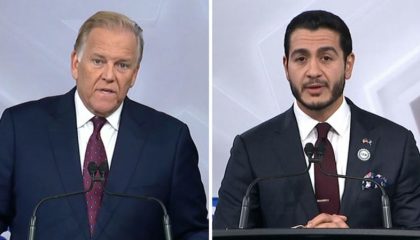
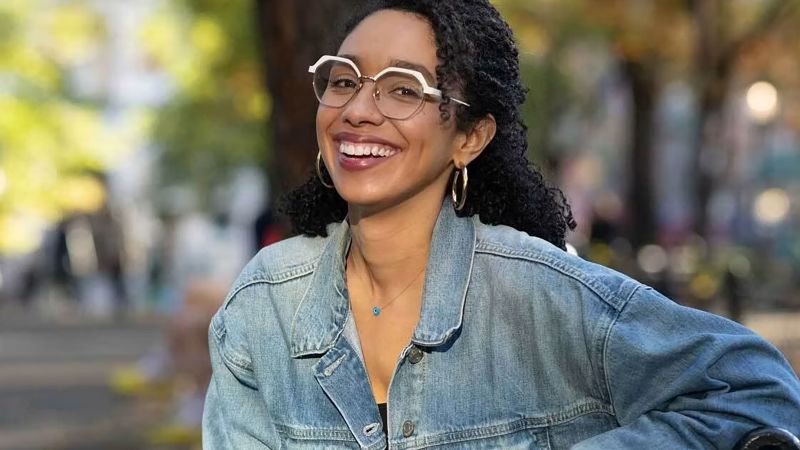
Sandego.net – Tuesday night’s debate in New York’s 13th District became a microcosm of the growing rift within the Democratic Party, as a young, left-leaning candidate endorsed by Mayor Zohran Mamdani faced off against an established incumbent. The clash centered on past remarks that had sparked controversy, with Darializa Avila Chevalier, a 32-year-old democratic socialist, expressing regret over her earlier criticism of Vice President Kamala Harris. The event underscored how ideological differences and generational divides are reshaping the party’s internal dynamics, even in traditionally strongholds.
The Debate and the Apology
During the heated exchange, Avila Chevalier found herself defending her comments when pressed by Rep. Adriano Espaillat, the 71-year-old incumbent representing the district since 2017. “To Vice President Kamala Harris, I sincerely apologize,” she said, acknowledging her past language that had drawn ire. “You did not deserve that language from me. And I would’ve loved to have seen a Black woman president. As a Black woman, I know how much that would’ve meant to so many, including myself.” Her words highlighted both her personal evolution and the broader tensions within the Democratic base.
Avila Chevalier’s criticisms of Harris had initially been seen as youthful indiscretions, but they resurfaced during the debate, reigniting debates about her alignment with the party’s current priorities. Espaillat, however, was unrelenting in his critique, arguing that her remarks reflected a pattern of irresponsibility. “This is not just some common statement that was made when you were a young person, a teenager, an adolescent. This was just a couple of years ago. And I think it’s irresponsible for someone that has a chronically irresponsible social media to go to Congress. Words really matter,” he asserted.
Deleted Posts and a Changing Narrative
Avila Chevalier’s political journey has been marked by both fervor and controversy. CNN’s KFile previously reported on her now-deleted tweets, which included sharp critiques of Democratic leaders and even a post captioned “F**k Kamala Harris” following her 2021 remarks about Guatemalan migrants. These posts, which called for abolishing police, borders, and prisons, as well as seizing private property and nationalizing industries, have since become a focal point of scrutiny. However, Avila Chevalier has consistently maintained that her current views diverge from those early statements.
“Yes, I was critical of Kamala Harris’ record. And I voted for her because like so many Black and brown people, I am someone who has been forced to save the Democratic Party from itself,” she said during the debate. “That is because we have had representatives like my opponent who have refused to listen to their constituents, who have refused to actually listen to the will of their Democratic base. And it’s time that we have representatives who actually listen to their Democratic base.” Her remarks framed her candidacy as a response to the party’s perceived failures, positioning her as a voice of reform within a system she believes has stagnated.
The Israel Divide
Another key point of contention emerged as Espaillat invoked the ongoing debate within the Democratic Party over Israel. He accused Avila Chevalier of supporting a stance that undermines the country’s existence, citing her attendance at a pro-Palestinian rally the day after Hamas’ October 7, 2023, attack. The rally, which drew widespread condemnation, saw participants protest Israel’s actions in the aftermath of the violence, which killed 1,200 people and captured over 250 hostages.
“Even Mayor Mandani and Comptroller Lander did not attend this rally,” Espaillat said, emphasizing that Avila Chevalier’s presence was seen as symbolic of her alignment with more radical positions. He argued that her participation suggested a lack of commitment to the two-state solution, a cornerstone of Democratic foreign policy. Avila Chevalier, however, defended her actions, stating, “I would never celebrate the death of any human being.” She claimed the rally was a response to what she called an “outsized reaction” to the attack, warning that it could “cause the death of thousands upon thousands of people” in Gaza.
Her critique of Israel’s treatment of Palestinians in Gaza has become a central theme in her campaign, contrasting with Espaillat’s more traditional approach. The incident has also drawn attention to the broader ideological splits within the party, as figures like Brad Lander, another Mamdani-endorsed candidate, canceled his membership with the Democratic Socialists of America over the rally. This move reflects how internal disagreements are increasingly influencing primary races across the country.
Generational and Ideological Tensions
The race in New York’s 13th District, which spans parts of Manhattan and the Bronx, is emblematic of a larger trend: the clash between veteran Democrats and a new generation of progressive activists. Avila Chevalier’s endorsement by Mamdani, a prominent figure in New York City politics, has given her a platform to challenge the status quo. Yet, her past social media activity has also painted her as a symbol of the party’s more radical wing, particularly its focus on systemic change and anti-establishment rhetoric.
Espaillat, meanwhile, has positioned himself as a steadfast defender of Democratic principles, emphasizing consistency in policy and values. His criticism of Avila Chevalier’s deleted posts and her stance on Israel underscores his belief that the party needs leaders who prioritize unity over division. “The difference between me and my opponent is that I believe in a two-state solution and she doesn’t believe in the existence of Israel,” he said, framing the issue as a test of loyalty to Democratic ideals.
Avila Chevalier, however, argues that the party’s leadership has failed to address the needs of its diverse base. “We have had representatives like my opponent who have refused to listen to their constituents,” she said, highlighting the disconnect between the party’s progressive wing and its older, more centrist members. Her campaign has become a battleground for debates about identity, policy, and the direction of the Democratic Party, with voters in the district divided over which vision better represents their values.
Broader Implications for the Democratic Party
As the 2024 primaries unfold, the Avila Chevalier-Espaillat race serves as a case study in the shifting landscape of Democratic politics. The district, historically a stronghold for the party, now finds itself at the center of a generational struggle. For many young voters, Avila Chevalier’s bold rhetoric and focus on social justice issues resonate deeply. But for older, more moderate Democrats, her past actions and statements raise questions about her commitment to the party’s core values.
“This race is about more than just policy—it’s about who we are as a party and what we stand for,” Espaillat said. “If we don’t address these internal divisions, we risk losing the very people who have supported us for decades.” Meanwhile, Avila Chevalier sees her candidacy as a necessary step toward modernizing the Democratic Party. “We need to listen to the voices of our base,” she argued, “and that means challenging leaders who have ignored their concerns for too long.”
As the debate rages on, the outcome of this race could have far-reaching implications for the Democratic Party’s future. Whether it signals a shift toward progressive dominance or a reaffirmation of traditional values remains to be seen. But one thing is clear: the cracks in the party’s unity are widening, and this election is just the beginning of a larger transformation. The struggle between old guard and new voices is not just a local issue—it is a national reckoning, shaping the political landscape for years to come.