Supreme Court Lets New Hampshire Restrict Student IDs at the Polls
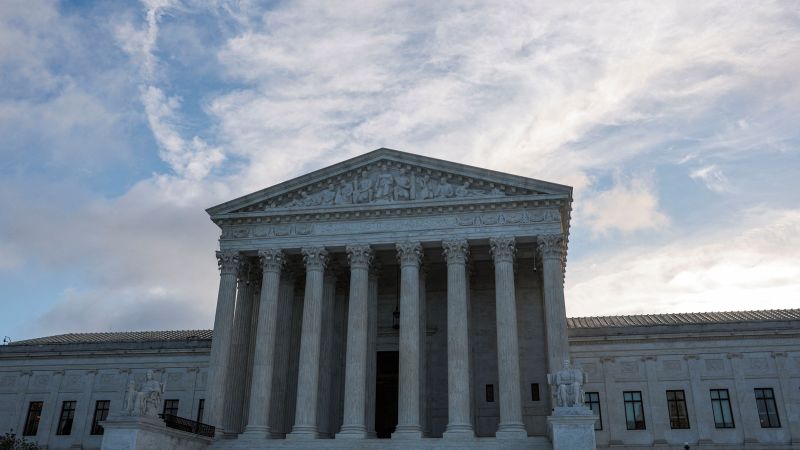
Sandego.net – New Hampshire may continue enforcing its limits on the use of student identification cards in voting, the Supreme Court ruled Thursday in an order issued shortly before Election Day.
The decision favors Republican Secretary of State David Scanlan and the Republican National Committee, which supported the state in the dispute. The court’s unsigned order set aside a lower-court ruling that had prevented officials from applying their reading of the state’s new voter-identification law.
Although the justices did not disclose a vote count, the order briefly cited the principle commonly known as Purcell. That doctrine cautions federal courts against making late changes to election procedures when voting is near, because abrupt rulings can create confusion for voters and election workers.
What the dispute involves
The case stems from legislation approved by the New Hampshire Legislature this spring. The law generally bars voters from relying solely on a student ID to establish their identity when seeking a ballot.
Its central restriction was allowed to take effect by lower federal courts. The narrower Supreme Court fight concerned a separate provision that gives voters an opportunity to offer other evidence of their identity. In those situations, the question was whether a student card could still be considered alongside additional documentation or information.
State officials maintained that the new law excludes student IDs even as one part of a broader identification review. The Coalition for Open Democracy, a voting-rights organization, challenged that position in federal court.
On October 2, a federal district court blocked New Hampshire from enforcing the state’s interpretation. The court’s action did not erase the legislature’s basic prohibition on using a student ID alone; it addressed whether election officials could disregard such an ID entirely when a voter presented other evidence.
Thursday’s Supreme Court order allows the state’s interpretation to remain in place for now. As a practical matter, voters who might have expected a student ID to support other proof of identity should be prepared to bring documentation that does not depend on that card.
Jackson challenges use of Purcell doctrine
Justice Ketanji Brown Jackson dissented. She questioned whether the Purcell principle properly applied because the lower court had not altered New Hampshire’s enacted law, but had instead rejected the state’s interpretation of it.
This so-called “Purcell principle” arose in a particular context, and this court has yet to fully define its limits.
Jackson’s dissent highlighted a recurring concern about the doctrine: while courts often invoke it to avoid late election-related interventions, its boundaries have not been fully defined. Critics have argued that it can prevent courts from correcting errors or unlawful practices precisely when voters most need clarity.
In Jackson’s view, the district court had a sound basis for ensuring that voters received accurate guidance about the state’s voting process. She wrote that approaching elections should not automatically displace a justified judicial order.
I respectfully dissent because – even, and perhaps especially, when an election is looming – I would not disturb a clearly justifiable federal-court order issued to ensure that the public receives accurate information about a state’s electoral processes.
Election-year consequences
The ruling arrives as New Hampshire prepares for a November election that includes an open US Senate seat. Voters will choose a successor to retiring Democratic Sen. Jeanne Shaheen.
Younger adults could be an especially important group in a dispute involving student identification. A recent poll found Democrats holding a 31-percentage-point advantage over Republicans among younger adults. That does not establish how any individual voter will be affected, but it underscores why rules governing student IDs have become politically significant.
Student cards can be a convenient form of identification for college students and other young voters, especially those who may not regularly carry a driver’s license. The New Hampshire law does not mean students cannot vote. Instead, it changes the role their campus IDs can play when election officials are determining identity.
For voters, the immediate lesson is straightforward: those who plan to vote in New Hampshire should review the identification rules before arriving at the polls and should not assume a student ID will be accepted either by itself or as support for other materials. Election rules can be detailed, and the consequences of arriving without acceptable documents may be significant.
A broader pattern of election disputes
The New Hampshire matter is one of several prominent election controversies that have reached the Supreme Court ahead of next month’s midterm elections. The court was also asked in mid-September to consider President Donald Trump’s proposal to alter how mail ballots are sent to voters nationwide. The justices rejected that proposal.
Election cases often force courts to weigh two competing concerns. One is the need to protect voting rights and ensure that state procedures comply with federal law. The other is the need for stable, understandable rules as an election approaches.
The Supreme Court’s order does not fully resolve every legal question surrounding New Hampshire’s statute. It does, however, determine which rule will govern in the immediate period before the election: state officials may decline to consider student IDs even when voters present them with other evidence of identity.
The Coalition for Open Democracy and Scanlan’s office were contacted for comment. For now, New Hampshire election administrators will proceed under the interpretation backed by the Supreme Court’s emergency order, while the debate over how broadly courts should apply the Purcell principle is likely to continue.
Related Reading
Frequently Asked Questions
What is Supreme Court says New Hampshire can limit?
Supreme Court says New Hampshire can limit is the main topic of this guide. The article explains the context, practical details, and next steps readers should understand.
Why does Supreme Court says New Hampshire can limit matter?
Supreme Court says New Hampshire can limit matters because readers are looking for a useful answer, not just a short summary. Good content should match search intent and help them decide what to do next.