Vance’s political message: Winning matters more than the method
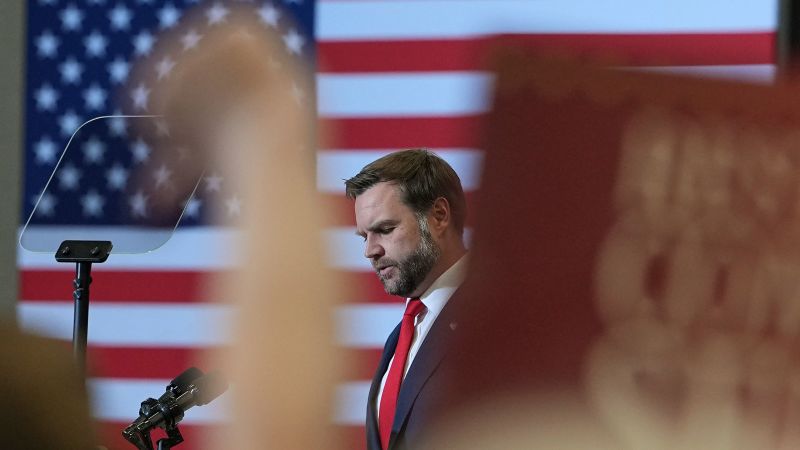
Sandego.net – Vice President JD Vance has offered an unusually direct defense of hard-edged political tactics, arguing that Republicans should focus on electoral victory rather than debate whether a controversial advertisement crossed a moral line.
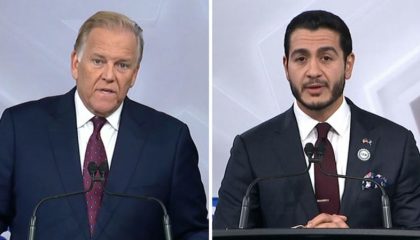
His comments came after Ohio gubernatorial candidate Vivek Ramaswamy released an ad involving the estranged mother of Democrat Amy Acton. The spot quickly drew condemnation because Acton has said she has not seen her mother since she was 12. Her stepfather was later indicted on accusations of sexually abusing her, while her mother remained with him.
Critics viewed the commercial as an attempt to turn a deeply personal family trauma, involving allegations of child sexual abuse, into campaign ammunition. Prominent Ohio Republicans, including Gov. Mike DeWine, Secretary of State Frank LaRose and Sen. Jon Husted, have sought to separate themselves from it. Husted is on the November 3 ballot alongside Ramaswamy.
Vance, however, took the opposite approach. Rather than weigh in on the ad’s fairness, he urged fellow Republicans to stop dwelling on it and concentrate on the race.
“Well, I’ll be honest with you: Whether the ad was appropriate or not is not really my concern.”
He followed that statement by pointing to conduct he said Democrats had directed at Republicans. His broader argument was that politics is inherently rough, and that Republicans who believe in their agenda should not be distracted by internal criticism of campaign messaging.
“Politics is a tough business, and my message to my fellow elected Republicans,” Vance said, “is if you actually believe in the things you say you believe in, stop whining about an advertisement and go win the race in 13 days.”
At another Ohio campaign event, Vance went further, saying the commercial “calls it out like it is, and calls Amy Acton a liar.”
An explicit political calculation
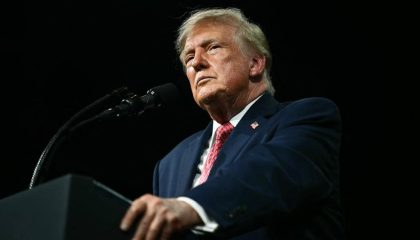
The exchange illustrates a recurring feature of Vance’s public style. President Donald Trump has long been willing to make provocative claims, disregard conventional political restraints and challenge criticism head-on. Vance often embraces similar tactics, but he also tends to articulate the strategic logic behind them.
In this case, that logic was clear: whether an ad is proper matters less than whether it helps achieve a political objective. The position combines a familiar whataboutism — citing alleged wrongdoing by opponents as a reason not to scrutinize one’s own side — with an openly instrumental view of campaign conduct.
That approach has appeared repeatedly in Vance’s defense of controversial claims and rhetoric. During the 2024 campaign, he defended the false allegation that Haitian migrants in Springfield, Ohio, had taken or eaten residents’ pets. The claim circulated widely despite lacking factual support and drew national attention to the city.
When pressed about the accusation in an interview with Dana Bash, Vance said he was prepared to “create stories” in order to focus attention on what he described as the effects of mass migration in communities such as Springfield. He did not acknowledge that the particular allegation promoted by him and Trump was false. Instead, he argued that raising public awareness of a larger concern could justify amplifying sensational rumors.
That was not an isolated response. A few weeks later, Vance defended Trump’s assertion that a Venezuelan gang had seized control of broad areas of Aurora, Colorado. The city’s Republican mayor had described those claims as “grossly exaggerated.” Vance answered by suggesting that an exaggeration still had to rest on some factual basis.
“That means there’s got to be some element of truth here.”
The statement reflected the same pattern: dramatic claims can be defended, in Vance’s telling, if they point toward a smaller underlying problem. The difficulty is that public debate does not always preserve that distinction. A claim repeated by prominent officials can shape perceptions even when its factual basis is partial, disputed or nonexistent.
Arguments about moral limits
Vance has also applied this framework to other contentious episodes. After the Trump administration acknowledged that it had wrongly deported Kilmar Abrego Garcia last year, Vance overstated the evidence tying Abrego Garcia to a gang, a connection that remains unproven. He then redirected the argument toward crime victims.
“Gross to get fired up about gang members getting deported while ignoring citizens they victimize.”
The phrasing shifted attention away from the admitted wrongful deportation and toward a larger debate about immigration enforcement. It is a familiar political maneuver, but Vance’s willingness to state it so plainly makes it notable. The question becomes not whether the individual case was handled correctly, but whether critics are focused on the wrong moral priority.
He has taken a similarly guarded stance during Republican disputes over antisemitism and far-right figures. Vance has said that “antisemitism and all forms of ethnic hatred have no place in the conservative movement.” Yet he also resisted demands to publicly denounce or exclude particular conservatives, including Nick Fuentes, amid debates over Tucker Carlson and the party’s direction.
“I don’t bring a list of conservatives to denounce or to deplatform.”
Vance argued that conservatives had more consequential work than “canceling each other.” The position allowed him to reject ethnic hatred in principle while declining to make the denunciation of individual figures a central political priority.
After revelations that young Republican leaders had exchanged racist and vile comments in a group chat, Vance again appeared reluctant to make the conduct the focus of his response. He instead highlighted violent messages sent by then-Democratic Virginia attorney general candidate Jay Jones, framing the matter as a comparison between partisan offenses.
A revealing approach to public life
For voters, the significance of these episodes lies less in any one advertisement or comment than in the governing philosophy they reveal. Political campaigns inevitably involve conflict, negative messaging and competing narratives. But they also force candidates and officeholders to decide whether there are boundaries that should not be crossed even when crossing them might offer an advantage.
Vance’s recent defense of the Ramaswamy ad suggests that he sees those boundaries through the lens of political necessity. If the cause is important and the opponent has committed perceived offenses of their own, concerns about fairness can be treated as secondary.
That may resonate with supporters who believe Republican candidates have spent too much time apologizing to critics. But it also raises a broader question for Ohio and national politics: what happens when victory is treated as the answer to objections about truth, decency and the personal costs of political warfare?
Related Reading
Frequently Asked Questions
What is JD Vance is happy to tell?
JD Vance is happy to tell is the main topic of this guide. The article explains the context, practical details, and next steps readers should understand.
Why does JD Vance is happy to tell matter?
JD Vance is happy to tell matters because readers are looking for a useful answer, not just a short summary. Good content should match search intent and help them decide what to do next.