
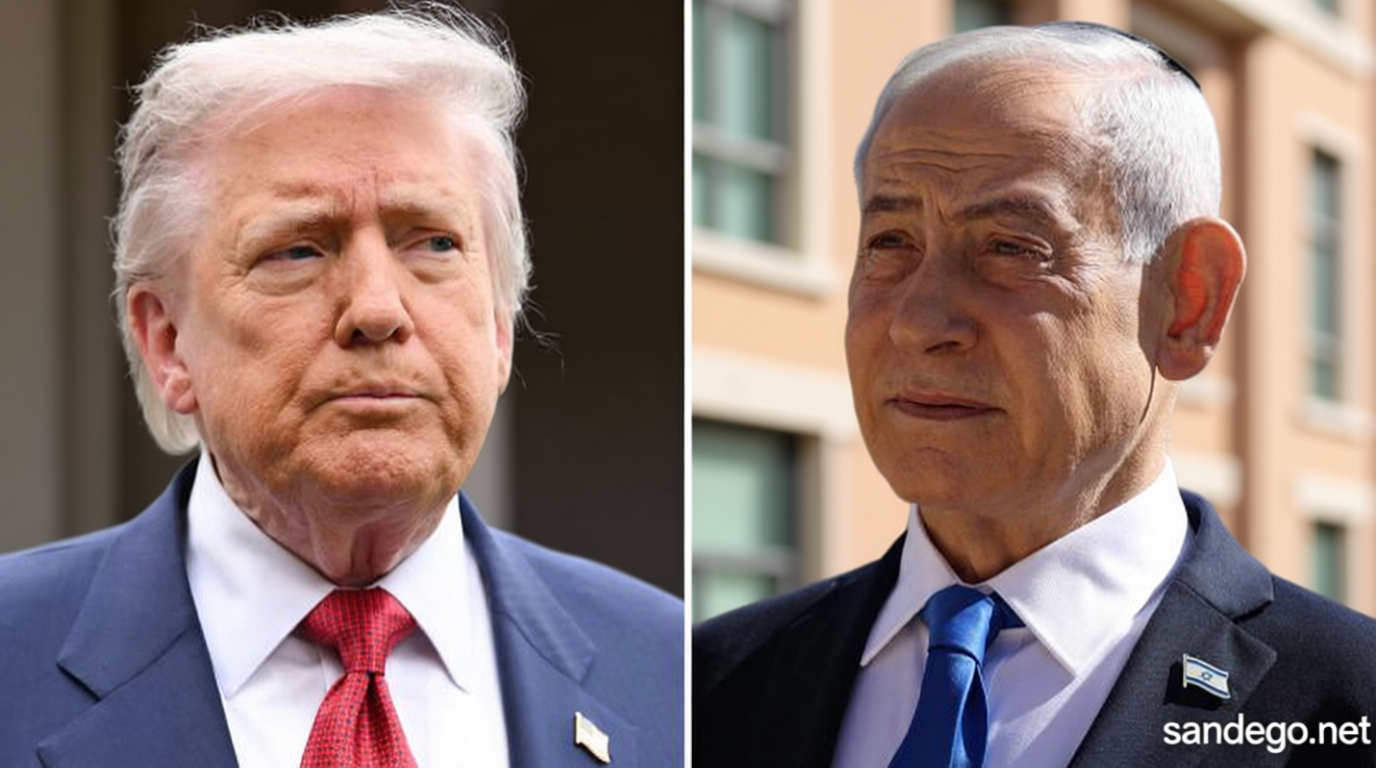
Trump and Netanyahu Diverge on Iran War’s Future in Tense Phone Call
Trump and Netanyahu diverge on Iran – Donald Trump, the current US president, engaged in a high-stakes dialogue with Israeli leader Benjamin Netanyahu on Tuesday, reflecting their contrasting perspectives on the trajectory of the conflict with Iran, a senior US official disclosed to CNN. This exchange marked a critical juncture in their relationship, as both leaders grappled with the implications of shifting from military escalation to diplomatic engagement. The conversation had occurred just days prior, with Trump having already hinted at plans for a new phase of targeted strikes on Iran during a prior call on Sunday. According to the official, this operation—named Operation Sledgehammer by CNN—was intended to intensify pressure on Tehran, though its execution was ultimately delayed.
Less than 24 hours after their Sunday discussion, Trump announced a pause in the impending strikes, citing requests from allies in the Persian Gulf region. Qatar, Saudi Arabia, and the United Arab Emirates had pressed for a temporary halt, fearing the operation might destabilize the region further. In the subsequent days, these nations collaborated with White House representatives and Pakistani mediators to craft a framework that could pave the way for broader diplomatic discussions. Despite this effort, the Israeli prime minister remained unsatisfied, expressing frustration over the delay. “We’re in the final stages of Iran. We’ll see what happens,” Trump remarked on Wednesday, signaling his openness to a potential agreement. However, he warned that if negotiations fail, “we’ll either have a deal or we’re going to do some things that are a little bit nasty,” adding that the goal remains to avoid more severe consequences.
Netanyahu, however, has long advocated for a more assertive strategy against Iran. Israeli officials have consistently emphasized the urgency of military action, arguing that hesitation risks giving Tehran time to consolidate its position. During the Tuesday conversation, the prime minister voiced his discontent, asserting that delaying the strikes was a misstep. “We’re not going to let them have it,” Trump had previously stated, confident in the US’s ability to secure Iran’s enriched uranium. Yet Netanyahu’s frustration extended beyond the immediate decision, with officials in his administration reportedly skeptical of the prospects for a diplomatic resolution. “None of the rumors about a breakthrough are credible,” an Israeli source noted, highlighting the prime minister’s doubt in the effectiveness of talks.
The divergence between Trump and Netanyahu became evident during their recent discussions. While the US president prioritized diplomatic avenues, the Israeli leader pushed for a return to military action, underscoring his belief that the conflict must continue without interruption. This tension was further amplified by Iran’s own stance, as Reuters reported that Supreme Leader Mojtaba Khamenei had issued a directive to keep near-weapons-grade uranium stockpiles within the country. However, a US official clarified that this directive had not yet been shared with the White House, suggesting a delay in the communication of key Iranian positions.
Iran’s Foreign Ministry spokesperson, Esmaeil Baghaei, addressed these claims on Thursday, dismissing them as “media speculation” and insisting that there was no formal directive to prevent the export of enriched uranium. IRNA cited his statement, emphasizing that Tehran’s position on nuclear enrichment remains unchanged. Baghaei also refuted reports of progress in negotiations, stating that “claims about nuclear issues” were lacking in substance. This contradiction raised questions about the extent of Iran’s willingness to compromise, as the country’s leadership appeared to be balancing between hardline resistance and strategic flexibility.
Trump’s confidence in his leadership role was evident during a Wednesday interview, where he claimed to have the final say in the decision-making process. “He’ll do whatever I want him to do,” the president asserted, framing his approach as the driving force behind the ongoing talks. This sentiment contrasted with Netanyahu’s concerns, which had been voiced to Trump the night before the pause in strikes. The Israeli prime minister argued that the US’s hesitation to act could embolden Iran, but Trump maintained that diplomacy was the path to a lasting solution. “Things with Iran are right on the borderline,” he said, adding that granting diplomacy a few more days might prevent loss of life.
Amid this unfolding dynamic, Israeli officials expressed growing impatience with Trump’s strategy, particularly as the prime minister’s allies urged a renewed push for military operations. The tension within Israel’s government was palpable, with some senior figures advocating for immediate action, while others supported the diplomatic effort. This internal debate mirrored the broader geopolitical chess game, where the US and Israel sought to align their goals while managing divergent priorities. For Israel, the primary objective has always been to weaken Iran’s nuclear capabilities through direct military intervention, whereas the US aims to achieve a broader diplomatic settlement that addresses multiple issues, including regional stability and Iran’s enrichment program.
The role of Pakistan in mediating these discussions has also come under scrutiny. While the country has acted as a communication bridge between Tehran and Washington, its influence remains limited. The recent collaboration between Gulf nations and Pakistani mediators suggests a multi-pronged approach to the crisis, with each player seeking to advance their interests. However, the lack of clear alignment between the US and Israel has complicated the process, leaving the outcome uncertain. As the talks continue, the balance between diplomacy and military action remains a central issue, with both leaders vying to shape the future of the Iran conflict in their favor.