
Trump sent a message by targeting Bill Cassidy. In defeat, Cassidy delivered one back
Trump Targets Bill Cassidy in Louisiana Senate Primary
A Political Shift in Louisiana
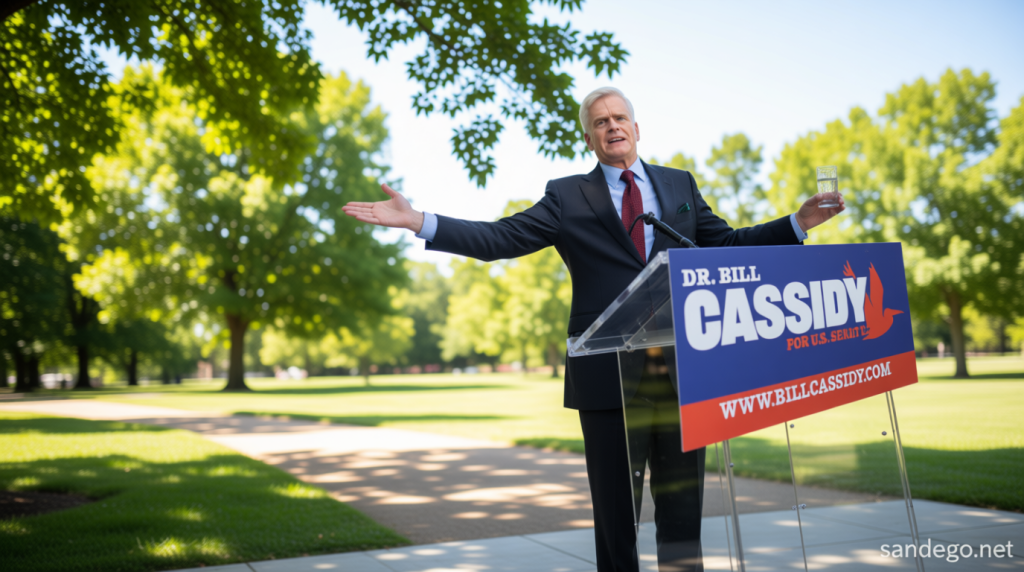
Trump sent a message by targeting Senator Bill Cassidy in Louisiana’s Senate primary, a move that backfired as Cassidy turned the tables on his former ally. Five years after Cassidy supported Trump’s impeachment during the second trial, the GOP incumbent faced a pivotal moment when he lost to two Trump-backed candidates—Rep. Julia Letlow and Louisiana State Treasurer John Fleming—who will now face off in a runoff. This outcome marked the first time a Republican Senate candidate had been defeated in a tight race in nearly a decade, signaling the deepening impact of Trump’s influence within the party.
Throughout the campaign, Cassidy’s vote to convict Trump during the impeachment proceedings became a central issue. Despite his attempts to reframe his message as one of bipartisan cooperation, the decision to oppose the president during the 2020 election had left a lasting mark. Trump’s targeting of Cassidy was not just a personal attack but a strategic effort to highlight the senator’s perceived disloyalty. The race underscored how internal party divisions are increasingly shaped by Trump’s political messaging, even as his allies pushed to consolidate power.
“Our country is not about one individual—it’s about the welfare of all Americans and our Constitution,” Cassidy said in his concession speech. “When you use the levers of power to control others, you’re not serving the people, and that person isn’t qualified to lead.”
His remarks emphasized the tension between loyalty to Trump and the broader ideals of governance, framing the primary as a referendum on both leadership and ideology.
Strategic Implications for the GOP
Cassidy’s loss underscored Trump’s targeting strategy, sending a clear message to other Senate Republicans who have occasionally challenged his authority. The senator’s defeat could serve as a cautionary tale for figures like John Cornyn of Texas, who faces a May 26 runoff against Ken Paxton. While Cornyn has maintained a more independent stance, Trump’s active role in Louisiana’s race demonstrated how aggressively he can deploy his influence to reshape the GOP landscape.
Letlow and Fleming’s path to the runoff reflected Trump’s targeting influence, each leveraging distinct aspects of his base. Letlow, a young congresswoman, positioned herself as a fresh voice for the party, while Fleming emphasized his experience in Republican governance. Their campaigns highlighted the diverse factions within Trump’s coalition, with Fleming’s alignment with the president becoming a key talking point. House Speaker Mike Johnson, who previously held Fleming’s congressional seat, praised both candidates, acknowledging Trump’s strong presence in the state.
Trump’s victory in Louisiana’s primary was a rare achievement, as he had never before defeated a fellow Republican in a primary race. This success bolstered his resolve to challenge mavericks like Kentucky Rep. Thomas Massie in the upcoming House primary. By comparing Cassidy to Massie, Trump reinforced his narrative that disloyalty to his leadership is a defining trait of political weakness, further cementing his strategy of wielding influence to shape the party’s direction.
Legacy of the Impeachment Vote
Cassidy’s primary loss highlighted the enduring consequences of his 2020 vote to convict Trump. The senator had sought to balance his record, noting Trump’s support for legislation he co-authored. However, the impeachment vote became a flashpoint, with Trump’s allies using it to undermine Cassidy’s credibility. The president’s frustration was evident in his social media posts, where he framed Cassidy’s defeat as a testament to his own political power and the loyalty of his base.
Despite the loss, Cassidy framed his exit as a reaffirmation of democratic principles. In his concession speech, he acknowledged that while his re-election bid did not succeed, it had allowed him to engage in the political process. “Sometimes it doesn’t turn out the way you want,” he said, suggesting that the outcome was a reflection of voters’ priorities rather than a personal failure. This perspective hinted at a broader narrative about the role of ideology in shaping the GOP’s future.
