Trump Revises Reflecting Pool Renovation Estimate to Under $20 Million Amid Legal Challenge
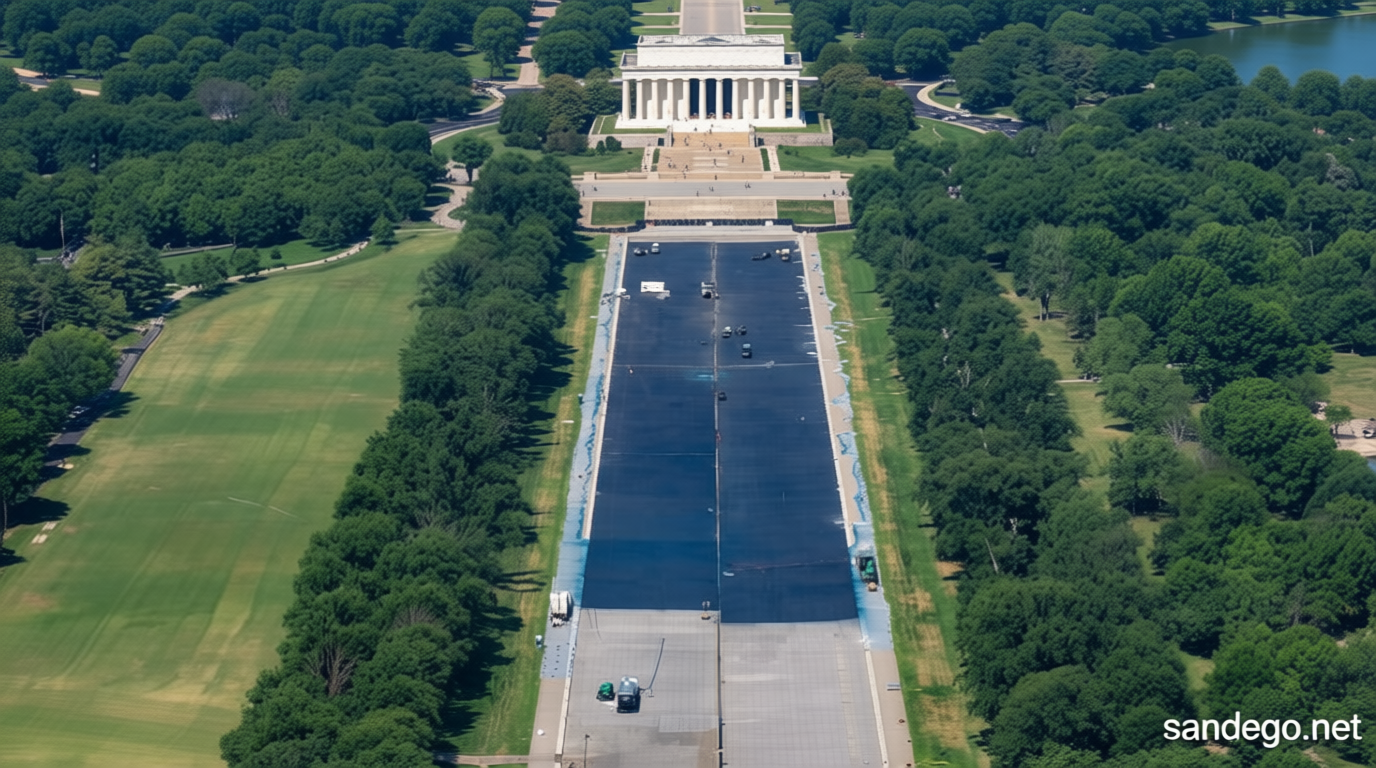
Trump ups Reflecting Pool renovation projections – President Donald Trump has revised the projected cost of the Reflecting Pool renovation to “less than $20 million,” a notable reduction from earlier estimates. The update, announced during a legal hearing near the Lincoln Memorial, came after an assessment of the site’s condition revealed the need for additional exterior improvements. “I initially thought the project would cost $2 or $3 million,” Trump stated, “but now that we’re focusing on the exterior, the total will be under $20 million.” This adjustment has sparked renewed debate, with critics questioning whether the changes to the historic monument align with its original design or historical importance.
Renovation Details and Legal Context
The Reflecting Pool, a key element of the National Mall, has been a central point of Trump’s cultural revitalization efforts. Originally budgeted at $1.8 million, the project’s scope expanded significantly, with federal records indicating a revised cost of $13.1 million. CNN reported the discrepancy, emphasizing that the increased budget reflects broader work on the pool’s structure and aesthetics. The legal challenge, led by the Cultural Landscape Foundation, argues that the renovations lack proper federal consultation and could alter the monument’s intended function as a reflective civic space.
The nonprofit organization contends that the project’s expansion has compromised its historical integrity. They claim the Interior Department failed to notify the public or seek input from other agencies before proceeding. The lawsuit seeks an injunction to pause the work, citing potential irreversible damage to the pool’s design. Judge Carl Nichols, a Trump appointee, has been evaluating the case, with the outcome yet to be determined. His ruling could influence whether the renovation continues or faces delays.
Trump’s Rationale and Public Messaging
Trump has framed the renovation as a necessary and efficient upgrade, contrasting it with previous estimates of $350 million for similar projects. During the hearing, he defended the revised cost, asserting that the work would be completed in a “couple of months” at a fraction of earlier budgets. “It was going to take four years, $350 million,” he reiterated, “but I’m doing it in a few months for less than $20 million.” His emphasis on affordability has become a recurring theme, though opponents argue the savings may come at the expense of the pool’s historical authenticity.
The color of the pool has also been a focal point of the controversy. Trump introduced the term “American Flag Blue” to describe the new dark hue, which he claims enhances the monument’s visual appeal. However, legal representatives for the plaintiffs argue that this change transforms the Reflecting Pool into a “large swimming pool,” diminishing its role as a symbolic civic landmark. The lawsuit highlights concerns that the aesthetic shift could redefine the site’s legacy for future generations.
Judicial Deliberations and Project Flexibility
During the legal proceedings, Judge Carl Nichols questioned the immediate need for an injunction, suggesting that the ongoing renovations could be reversed if required. “If there is any harm, it’s both reparable and temporary,” the judge stated, indicating that the government has the capacity to restore the pool to its original state. This perspective has been a key point in the court’s consideration, as it balances the urgency of the project against the potential for irreversible alterations.
Nichols also highlighted the flexibility of the renovation, noting that the paint applied to the pool can be modified to match its original color scheme. The Justice Department acknowledged this possibility, which has eased concerns about permanent changes. While the judge has not issued a final ruling, the case underscores the importance of federal oversight in preserving historical landmarks. The outcome may set a precedent for future cultural projects under the administration.
Despite the legal uncertainty, Trump’s team remains committed to the renovation, viewing it as a demonstration of cost-effective governance. The pool’s transformation, they argue, will enhance its appearance and usability for visitors, aligning with modernization goals. As the case progresses, the public awaits a decision that could shape the future of this iconic Washington site. The stakes for the Reflecting Pool renovation extend beyond aesthetics, reflecting broader debates about the balance between preservation and progress in American landmarks.