Russian Drone Strike Near Polish Border Highlights Growing Security Risks
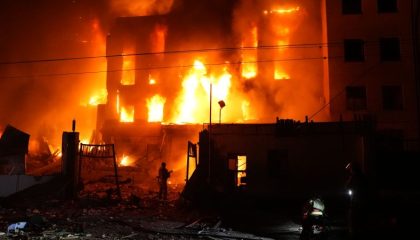
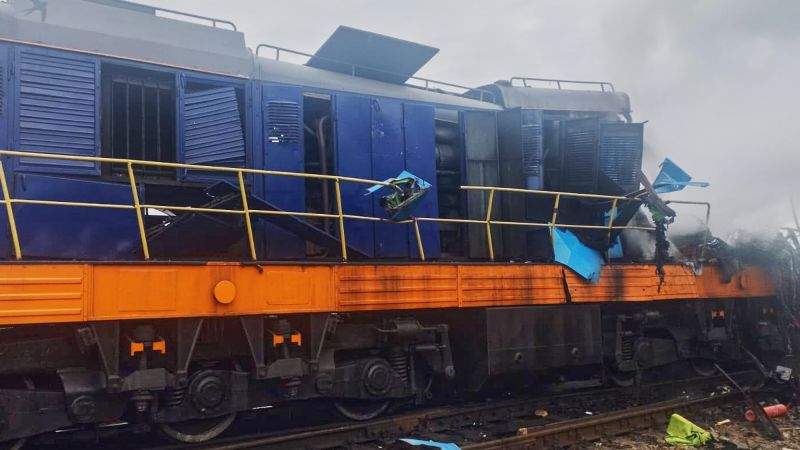
Sandego.net – A Russian drone struck a passenger train at Yahodyn station in northwestern Ukraine on Sunday while former CIA director David Petraeus was at the station, underscoring the danger facing civilians and foreign visitors near Ukraine’s border with Poland.
The attack took place shortly after a separate diplomatic train carrying former British Prime Minister Boris Johnson, European security figures and former political leaders departed the station for Poland. That train had crossed the border by the time of the strike.
Yahodyn lies roughly two kilometers from Poland and is a critical rail and border route for goods, humanitarian assistance and support entering Ukraine from Europe. Its proximity to a NATO member has made the incident especially significant for Ukrainian and European officials.
Diplomatic Train Left Early
Ukrainian Railways said the diplomatic delegation left Yahodyn ahead of schedule because of the continuing risk of Russian attacks. Petraeus was traveling separately and remained at the station when the drone hit a passenger train.
The railway operator said details were still being established, but it considered it highly possible that the drone had intentionally targeted the train linked to the visiting officials. Russian drones also struck a gas station in Yahodyn on Sunday, temporarily interrupting operations at the border crossing.
Petraeus and several European representatives had attended the Yalta European Strategy conference in Kyiv, a major gathering focused on Ukraine’s security, the war with Russia and Europe’s future defense posture.
Russia’s Defense Ministry said its forces had targeted railway infrastructure in western Ukraine used to move military cargo from European countries. The strike nevertheless occurred in an area used by civilian passengers and close to an international frontier.
Ukrainian Officials Call It a Warning to Europe
Ukraine’s Foreign Minister Andrii Sybiha described the strikes at the border crossing as a direct demonstration of the broader danger posed by Moscow’s campaign.
“This is Putin’s terror ‘knocking’ directly on the doors of the EU and NATO,” Sybiha said.
The incident comes amid a series of Russian attacks in western Ukraine, including locations close to Poland. Ukrainian authorities have repeatedly stressed that attacks on transport links and energy-related infrastructure can disrupt civilian life while also threatening routes used for aid and supplies.
For neighboring countries, the concern is not only the immediate damage inside Ukraine. Strikes near a NATO border raise the risk of escalation, accidental spillover and pressure on European governments to strengthen air defense and regional security cooperation.
Polish Foreign Minister Radoslaw Sikorski, speaking in Kyiv on Sunday, said the attacks carried implications beyond Ukraine.
“This is an escalation. It is another major challenge for Ukraine, but also for the potential future victims of Russian aggression,” Sikorski said.
Former Leaders Describe Attack Near Their Route
Johnson, who has remained an outspoken supporter of Ukraine since leaving office, condemned the strike in a message posted on X. He said he could not understand the reasoning behind an attack on a stationary Ukrainian locomotive and pointed to the daily insecurity endured by Ukrainians.
“What we can say for sure is that this is the kind of random and senseless attack Ukrainians are enduring every day – even on civilian railways.”
Former Swedish Prime Minister Carl Bildt was also traveling near the Polish border at the time. In a post on X accompanying video that appeared to show a drone hitting a nearby train as passengers fled, Bildt said the train struck was not the one carrying his group.
“This wasn’t our train, but the one just minutes after us by the Polish border crossing,” Bildt wrote.
The timing of the strike illustrates the difficult security environment for international delegations visiting Ukraine. Rail travel has become a common means of reaching Kyiv and other Ukrainian cities during the war, but western routes are not beyond the reach of Russian drones and missiles.
Attacks Near NATO Territory Add to Regional Tension
British Defense Minister Wes Streeting said late Sunday that the attacks near Poland served as a reminder of the conditions Ukrainians confront every day. He described the strikes on civilian infrastructure as reckless and dangerous, particularly because they occurred so close to Polish territory.
“Reckless, dangerous attacks on civilian infrastructure so close to Poland also underline the wider security threat Russia poses,” Streeting said.
He added that Britain would continue coordinating with allies to reinforce European security. The response reflects a central concern among Ukraine’s partners: attacks may occur inside Ukraine, but their strategic effects extend across the continent through threats to transport routes, border areas and civilian infrastructure.
Sunday’s strike followed another tense episode less than a week earlier, when a Russian drone entered Moldovan airspace as Ukrainian President Volodymyr Zelensky was preparing to depart from an airport in Chisinau. Moldova is not part of NATO, though it has maintained a longstanding partnership with the alliance.
Both events have drawn attention to the vulnerability of countries and transport corridors surrounding Ukraine. As Russia continues to use drones against targets far from the front lines, communities near Ukraine’s western border face the same uncertainty that has long affected cities elsewhere in the country.
For Yahodyn, a town whose location makes it vital to Ukraine’s connection with Europe, the train strike was a sharp reminder that distance from the battlefield does not guarantee safety.
Related Reading
Frequently Asked Questions
What is Ex CIA boss was at Ukrainian?
Ex CIA boss was at Ukrainian is the main topic of this guide. The article explains the context, practical details, and next steps readers should understand.
Why does Ex CIA boss was at Ukrainian matter?
Ex CIA boss was at Ukrainian matters because readers are looking for a useful answer, not just a short summary. Good content should match search intent and help them decide what to do next.