
A Small Town, A Major Shift: The Makerfield By-Election
Sandego.net – Amid the quiet rhythm of everyday life in northern England, a modest community center in Ashton-in-Makerfield has become the epicenter of a political storm. Its plain walls and functional design contrast sharply with the grandeur of Westminster, yet this unassuming space now holds the potential to reshape the future of British leadership. The upcoming by-election, a local contest with a turnout of around 76,000 voters, could decide not just the fate of a single parliamentary seat but the direction of the Labour Party and, by extension, the nation’s prime minister. At stake is a leadership battle that has taken on existential stakes, as the battle for control of the party’s future unfolds in a place that few would have predicted as the heart of the political revolution.
Burnham’s Bid for Parliament: A Strategic Move
Andy Burnham, the Greater Manchester Mayor, has been quietly maneuvering for months to reclaim his place in the House of Commons. His campaign team, based in a community center typically used for bingo nights and sports watch parties, is preparing for a fight that could catapult him into the national spotlight. If Burnham wins, he will not only return to parliament but also position himself as a formidable contender for the Labour Party’s leadership, challenging Prime Minister Keir Starmer’s grip on power. This by-election, however, is not just about Burnham’s personal ambitions—it is a test of whether the party can recover from a recent drubbing in May’s local elections, which, while not directly impacting the national government, have exposed deep cracks in its electoral appeal.
The stakes are unusually high for a local contest. Starmer, who has been in power since his landslide victory two years ago, faces mounting pressure as his authority crumbles. Seven ministers have already resigned from his government, signaling a loss of confidence among Labour ranks. Without Burnham’s presence, the leadership race would lack momentum, even as the party grapples with a fragmented base. Many of its traditional supporters are shifting toward the Green Party or Reform UK, two populist movements that have gained traction in constituencies once loyal to Labour. The Makerfield by-election, therefore, represents a microcosm of this broader political realignment, where the outcome may determine whether Labour can reestablish its dominance or succumb to internal divisions.
Starmer’s Decline: A Political Crossroads
The prime minister’s declining popularity has created a vacuum in Labour’s leadership. Since his election, Starmer has been accused of failing to deliver on promises of transformative change, with several key policies reversed in the face of public discontent. His inability to articulate a clear vision for the country has left the party struggling to connect with voters, despite governing with a substantial majority. The by-election in Makerfield, though localized, has become a barometer for the party’s survival, as both supporters and critics look to the result as a sign of whether Starmer’s tenure is nearing its end.
With Burnham’s ally Josh Simons resigning his seat last month, the path to candidacy for the mayor was finally cleared. This development has allowed Burnham to step into the spotlight, making the Makerfield contest a pivotal moment in British politics. The electorate, spread across a modest constituency, now wields the power to tip the balance of influence within Labour. For many, the belief is that a new leader is essential to revitalize the party’s fortunes, particularly as its traditional voter base continues to splinter. The Green Party’s rise on the left and Reform UK’s appeal on the right have left Labour in a precarious position, with the Makerfield result potentially serving as a turning point.
The Broader Implications: Labour’s Future in Uncertain Times
While the immediate focus is on the by-election, its ripple effects extend far beyond the town center. Campaigners and MPs from across the country have flocked to Ashton-in-Makerfield, underscoring the contest’s significance. Senior government ministers have traveled from London to lend support, implicitly endorsing Burnham’s bid to challenge Starmer. This level of national attention is rare for a by-election, which usually serves as a bellwether for public sentiment rather than a catalyst for leadership changes. Yet, in this case, the stakes have been raised to an unprecedented level, with the potential to redefine the political landscape.
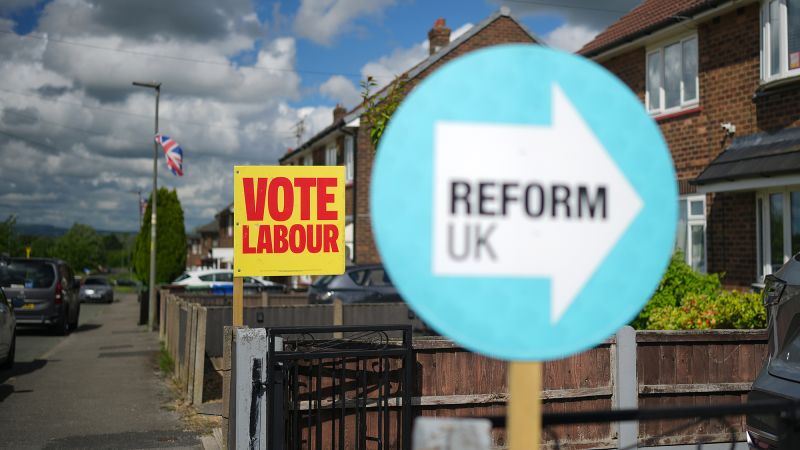
As the campaign intensifies, the atmosphere in Makerfield has grown electric. Outside local shops, pro-Labour activists engage residents in passionate debates, while the vibrant town center becomes a stage for political theater. However, the impact of this energy is most palpable in Ashton-in-Makerfield, where national media have descended to cover the event. Elsewhere in the constituency, life continues as it always has, with campaign materials and signs marking the significance of the race. The message is clear: this election is not just about a single seat, but about the survival of Labour as a cohesive political force.
Despite the heightened focus, Burnham and Reform UK’s Robert Kenyon have remained elusive, declining to speak with CNN. Their silence reflects a strategy of staying close to constituents, avoiding the scrutiny of media headlines. Yet, the pressure is mounting, and the campaign’s intensity has drawn the attention of journalists and analysts. In a local cafe, suited reporters huddle over laptops, exchanging updates on the latest developments. They speculate on how many MPs might back Burnham’s leadership ambitions, should he emerge victorious. The phrase “Restore Britain” is often heard, a rallying cry that encapsulates the electorate’s hopes for a return to stability and a new political direction.
For Labour, the Makerfield by-election is a chance to prove that it can still command public support. If Burnham wins, it could signal a shift in power, with the party’s leadership reevaluated in light of his success. Conversely, a loss might embolden Starmer’s opponents, who argue that his leadership is no longer viable. The result will be closely watched not just by Labour members but by all political observers, as it may set the stage for a leadership contest that could determine the next prime minister. In a country where political fortunes are often shaped by small-town dynamics, this by-election is a reminder of the power of local voices in a national arena.
The irony of the situation is not lost on many. A by-election, traditionally a minor event, has become the fulcrum of a political revolution. The community center, once a hub for community activities, now hosts the highest concentration of political activity in the country. This transformation highlights the extent to which the political landscape has shifted, with the fate of Britain’s leadership hanging in the balance. As the campaign reaches its climax, the people of Makerfield are not just voting for a representative—they are casting their ballots for the future of the Labour Party and the nation itself.