Why Trump’s Secret and Vague MOU Is Stirring a Political Storm
Sandego.net – President Donald Trump’s memorandum of understanding (MOU) with Iran, now set for formal publication, has not yet silenced the chorus of critics who fear it may be a flawed compromise. Despite initial claims of a major breakthrough, the agreement’s ambiguity has only deepened skepticism. Leaks from Middle Eastern media suggest the document lacks definitive terms, benchmarks, and a clear timeline, leaving room for doubt about its effectiveness. As the political fallout intensifies, the White House faces mounting pressure to clarify its position.
The MOU and the Vacuum of Clarity
Trump’s announcement of the deal on Sunday had been hailed as a pivotal moment, yet the absence of a public text has sown uncertainty. Republican factions, already wary of the administration’s approach to the war, have seized on the delay to question the deal’s substance. Meanwhile, Democratic opponents have amplified their critiques, arguing that the MOU could signal a retreat from hardline policies. The situation has only worsened as leaked details paint a picture of a pact that may not fully address Iran’s nuclear ambitions or its regional influence.
“Framing the agreement as a game changer was a bold move, but the lack of specifics raises concerns about its real impact.”
The MOU’s vague language has also left room for interpretation. U.S. officials admitted to CNN’s Alayna Treene and Kevin Liptak that the text is intentionally indistinct, allowing Iran to promote its progress in a politically volatile environment. This strategy, while common in diplomacy, has drawn sharp criticism. Some argue that the ambiguity undermines the deal’s credibility, especially when key details like the $300 billion reconstruction fund for Iran are still contested.
Trump’s Defense and the Reconstruction Fund
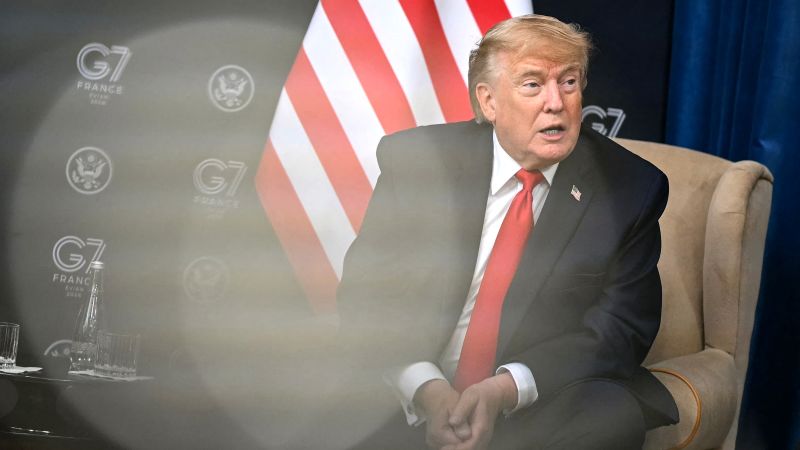
At the G7 summit in France, Trump attempted to reassure allies of the MOU’s value, vowing to read it aloud if needed. Yet his insistence on a “grand bargain” for Iran has sparked debate. Vice President JD Vance, who has been charged with promoting the deal domestically, emphasized that the agreement’s terms depend on Iran’s commitment to abandon nuclear weapons. He attributed the delay to logistical challenges in the Muslim and Arab world, suggesting the process was more complex than initially portrayed.
“We fundamentally have transformed the Middle East, whether they comply or not. This is just icing on the cake, assuming they do all the right things.”
Vance’s remarks hint at a strategic vision for the MOU, positioning it as a stepping stone toward Iran’s reintegration into the global community. However, the deal’s potential to end Iran’s status as a pariah state remains uncertain. Critics point to the contradiction between Trump’s promises and the reality of the agreement’s terms, particularly the reconstruction fund. Reports indicate this fund would be supported by regional powers and guaranteed by the U.S. government, a claim that has drawn accusations of hypocrisy from some quarters.
The Struggle for Diplomatic Legitimacy
US officials have described the MOU’s language as deliberately broad, designed to accommodate Iran’s domestic political needs. This approach, while pragmatic, has complicated efforts to establish a clear narrative. The document’s digital signing on Sunday, followed by a formal ceremony in Switzerland, has been a subject of speculation. Analysts note that the delay in releasing the full text has allowed tensions to escalate, with the agreement’s terms now seen as a battleground for competing interests.
The political stakes are high. The deal’s success or failure could shape perceptions of Trump’s legacy, particularly in light of the war’s toll on both sides. So far, 13 US service members have lost their lives, and the humanitarian cost for Iranian civilians remains unquantified. The financial burden, too, has been significant, with tens of billions spent on military operations and ordnance. Trump’s critics accuse him of perpetuating a cycle of conflict, where the MOU serves as a temporary fix rather than a lasting solution.
Leaked Details and the Debate Over Commitments
Leaked information has fueled the controversy, revealing that the MOU may not include strong enforcement mechanisms. Some reports suggest the agreement relies on Iran’s willingness to meet Washington’s demands, with the US acting as a guarantor for regional partnerships. This has raised questions about the deal’s reliability, especially given Trump’s history of making bold claims about Iranian assets. During the Obama administration’s nuclear deal, he had frequently cited the transfer of billions to Tehran, now facing accusations that the MOU repeats that pattern.
Canadian Prime Minister Mark Carney, a vocal critic of Trump, acknowledged the MOU’s potential as a game changer during the G7 summit. However, he also described it as a preliminary understanding rather than a comprehensive resolution. This distinction is crucial, as the deal’s scope remains unclear. While the MOU may pave the way for a ceasefire, its long-term implications for the conflict are yet to be defined.
The Art of Diplomacy and the Path Forward
Diplomacy, by its nature, involves compromise and nuance. The MOU’s vague language reflects this complexity, particularly in dealing with a government known for its repressive policies. Trump’s assertion that the next stage of nuclear program discussions will be “easier” has been met with skepticism, given the 18 months of arduous negotiations that preceded the Obama-era deal. Yet, the current approach may be necessary to navigate Iran’s domestic constraints and maintain momentum.
Despite the challenges, there are reasons to remain optimistic. Both Iran and the United States have clear incentives to end the war, and the MOU represents a potential bridge between their goals. However, the administration must address concerns about transparency and accountability to solidify support. The upcoming release of the full text in Switzerland will be a critical moment, with officials hoping to present a unified front amid growing domestic and international scrutiny.
As the political heat continues to rise, the MOU’s fate will depend on how its terms are perceived. While some see it as a strategic victory, others view it as a temporary truce that may not resolve the deeper tensions. The coming days will reveal whether this agreement can deliver real progress or further entrench the divisions it aims to mend.