
France Reports First Human Case of Shamonda Virus
Sandego.net – France reports first human case of the Shamonda virus, a livestock disease transmitted by biting midges. French health authorities said the patient, a man in his 60s from the Lyon area, died after being hospitalized with another serious illness. Officials stressed that the discovery does not represent a public-health emergency.
The case is scientifically unusual because Shamonda virus is normally associated with animals, not people. Authorities believe the man may have been bitten by an infected midge in eastern France, where the virus circulated among livestock during spring and summer.
France reports first human case under exceptional circumstances, according to health officials. The patient had a severely weakened immune system, which authorities consider important in understanding the infection. There is no evidence that Shamonda virus spreads from cattle to people or from one person to another.
“We are clearly dealing with a case that is unprecedented from a scientific and virological point of view. It is linked to this man’s severely weakened immune system,” Gregory Emery, head of France’s health directorate, told reporters.
Authorities See No Evidence of Wider Spread
The World Health Organization is working with French authorities to assess the situation. Based on current information and knowledge of closely related viruses, the WHO said the infection appears to be isolated and is unlikely to lead to wider transmission at this time.
“From a medical and public health point of view, there is no alert and no crisis,” Emery said.
France reports first human case in a setting where biting midges are believed to be the crucial part of the virus’s transmission cycle. These insects can carry Shamonda among susceptible animals, particularly cattle, rather than the virus spreading through direct contact between infected hosts.
How Shamonda Affects Livestock
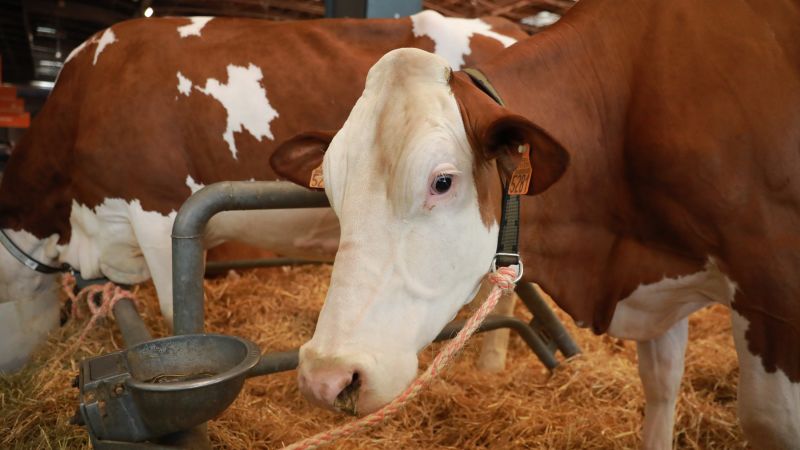
Shamonda virus has mainly been detected in cattle, although infections have also been identified in horses, alpaca, sheep and goats. In cattle, symptoms can include diarrhea, weakness and reduced appetite, while fever is reported less often.
The effects can be serious for farms. A study of nine French dairy farms found that milk production fell by as much as 75% after infections were identified. These losses can add pressure on livestock producers managing animal health and seasonal midge activity.
The virus is not included among diseases regulated under the European Union’s Animal Health Law. It is therefore not subject to formal EU surveillance or control requirements, although veterinary authorities continue to monitor animal-health developments.
Virus Detections Across Europe
First identified in Nigeria in the mid-1960s, Shamonda was confirmed in Europe only in late July. Genomic testing detected the virus in sick cattle in southern Germany, Switzerland and eastern France.
France’s weekly animal-health surveillance bulletin has subsequently recorded detections in Austria, Belgium, Ireland, Italy, Liechtenstein, Luxembourg, the Netherlands, Portugal, Slovenia, Spain and Jersey, as well as France, Germany and Switzerland.
France reports first human case against this wider backdrop of animal detections, but officials have emphasized that one isolated infection does not indicate a new person-to-person threat. For livestock owners, signs including weakness, poor appetite and digestive illness may warrant veterinary assessment.
Frequently Asked Questions in France
Is Shamonda virus a public-health emergency?
No. French officials said there is no public-health alert or crisis, and the WHO considers the known infection an isolated case based on available information.
Can people catch Shamonda virus from cattle?
Authorities said there is no evidence that the virus passes directly from cattle to people. Biting midges are considered the main transmission route among animals.
Should livestock owners in France be concerned?
Farmers should remain attentive to animal-health concerns and seek veterinary advice if livestock show symptoms such as weakness, diarrhea or reduced appetite. The principal impact described so far remains on affected animals and farm production.