Seoul Shortens Major Joint Drill After Washington Demands Reduction
Sandego.net – The annual Ulchi Freedom Shield exercise, one of the most consequential bilateral military operations conducted in the Asia-Pacific theater, will conclude five days ahead of its original schedule after the United States asked its South Korean ally to compress the event. South Korea’s Joint Chiefs of Staff confirmed the altered timeline on Wednesday, stating that both governments had agreed to trim the exercise’s duration and overall scope at the American side’s insistence. The decision lands amid heightened scrutiny of how Washington manages its alliance commitments in East Asia and how those commitments intersect with its broader diplomatic posture toward Pyongyang and Tehran.
A Ten-Day Drill Reduced to Five
The Ulchi Freedom Shield operation, which launched on Monday, was originally designed to run for a full ten days. Under the revised arrangement, the exercise will now close by Friday, August 21, effectively cutting the planned window in half. The adjustment encompasses not only the calendar but also the scale of participating units and activities, though specific details of which elements were scaled back were not itemized in the public statement.
“South Korea and the US have decided to partially adjust the exercise period and size at the request of the US,” the joint chiefs said in a statement.
The Pentagon had not issued a public explanation as of Wednesday. The shortened schedule represents a notable departure from recent practice, in which the exercise has typically maintained its full-length format without mid-cycle interruptions.
Trump’s Stated Rationale
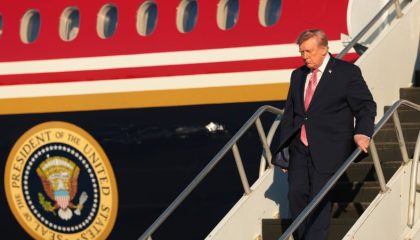
The compression follows remarks made by President Donald Trump on Sunday, when he disclosed that he had directed Secretary of Defense Pete Hegseth to reduce the scope of the joint exercises with South Korea. Trump offered two justifications for the request. First, he pointed to what he described as a positive personal relationship with North Korean leader Kim Jong Un, implying that large-scale drills near the Demilitarized Zone could be perceived as provocative by Pyongyang. Second, he cited what he framed as Seoul’s reluctance to extend assistance to the United States on the Iran question, suggesting that alliance obligations run in both directions and that Washington expects reciprocal support from its partners.
The linkage between a bilateral exercise schedule and a third-country dispute — in this case, Iran — is unusual and has drawn attention from analysts who track alliance dynamics in the region. It underscores a broader pattern in which the current administration has signaled willingness to recalibrate traditional security arrangements based on transactional calculations rather than long-standing institutional commitments.
The Weight of Camp Humphreys and the Alliance Infrastructure
South Korea hosts the largest United States military installation outside the continental United States: Camp Humphreys, located near Pyeongtaek roughly 50 kilometers south of Seoul. The base is home to tens of thousands of American service members, their dependents, and Korean nationals employed in support roles. Its presence anchors a permanent forward-deployed posture that has defined the US-South Korea security relationship since the Korean War armistice of 1953.
The Ulchi Freedom Shield exercise itself is the successor to the long-running Ulchi Focus Exercise, which for decades served as the centerpiece of annual bilateral training. The exercise simulates command-and-control operations, combined arms maneuvers, and integrated air-defense scenarios across the Korean Peninsula. Its scale — involving tens of thousands of troops from both nations — makes it one of the largest joint drills conducted anywhere in the Indo-Pacific region. Shortening the exercise by half therefore reduces not merely a calendar entry but a substantial volume of combined training hours, interoperability practice, and command-level coordination that both militaries rely on to maintain readiness.
Broader Implications for Regional Security Posture
Observers in Seoul and across the region have long treated the size and timing of joint exercises as a signal of alliance resolve. A mid-cycle reduction, particularly one attributed to the president’s personal diplomatic preferences, raises questions about the predictability of US commitments that South Korean policymakers and their counterparts in Tokyo and elsewhere have come to depend upon. North Korea, for its part, has historically condemned large-scale US-South Korea drills as rehearsals for invasion, and any visible scaling back could be read in Pyongyang as a concession to its stated objections.
At the same time, the exercise’s shortened window does not eliminate the forward-deployed force structure. Camp Humphreys and the surrounding garrison network remain operational, and the US Eighth Army’s presence on the peninsula is unchanged. What changes is the tempo and intensity of combined training during a given annual cycle — a variable that affects readiness metrics but does not, by itself, alter the treaty-based security architecture in place since 1953.
The situation remains fluid. Both governments have indicated that further adjustments to the exercise’s remaining days are possible, and diplomatic channels between Washington and Seoul are expected to remain active through the shortened window. Whether this episode marks a one-time accommodation or the opening of a broader recalibration of bilateral military planning will become clearer in the weeks ahead.
Related Reading
Frequently Asked Questions
What is Joint military drills with South Korea?
Joint military drills with South Korea is the main topic of this guide. The article explains the context, practical details, and next steps readers should understand.
Why does Joint military drills with South Korea matter?
Joint military drills with South Korea matters because readers are looking for a useful answer, not just a short summary. Good content should match search intent and help them decide what to do next.