Delcy Rodríguez’s Venezuela Is in Dire Straits, Forcing Acceptance of Aid from All Sides
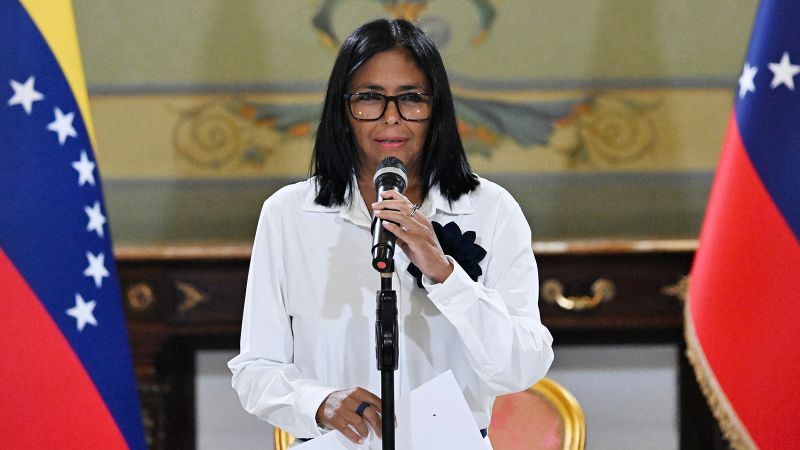
Sandego.net – Less than an hour after catastrophic earthquakes shook Venezuela’s northern coast and the capital of Caracas, El Salvador’s President Nayib Bukele took to X to announce his country’s offer of assistance. The gesture, though modest in scale, highlighted a growing trend of international support for the South American nation. Within 90 minutes, Venezuela’s acting president, Delcy Rodríguez, shared the message, expressing gratitude for the offer and directing her government to collaborate with Bukele’s team. This move underscored her precarious position: with the country’s infrastructure in ruins and its economy teetering on the edge, Rodríguez has little choice but to accept aid from allies and adversaries alike.
Political Rhetoric Meets Practical Necessity
Rodríguez, the former vice president of ousted leader Nicolás Maduro, has long been a figurehead for the Chavista movement. Yet, her recent retweet of Bukele’s offer revealed a pragmatic shift. “Solidarity between our peoples is an invaluable force at times like these,” she wrote, a statement that blends emotional appeal with strategic calculation. The phrase, while echoing the socialist ethos of Chávez’s era, also signals a departure from the ideological rigidity that once defined the regime’s stance on foreign aid.
Historically, Venezuela has been selective in its acceptance of international help. The 1999 landslide, which destroyed Carmen de Uria and claimed hundreds of lives, served as a stark example. At the time, President Hugo Chávez had rejected U.S.-sponsored aid, even as the disaster displaced thousands. The decision was seen as a bold assertion of sovereignty, but it also sparked criticism for its timing. Years later, when I spoke with then-defense minister Raúl Salazar, he hinted at deeper motivations: Chávez’s alignment with Cuba’s Fidel Castro and his broader vision of Latin American independence.
The Economic Downturn and Its Consequences
Venezuela’s current crisis is the result of decades of mismanagement, political upheaval, and external pressures. The country’s economy has shrunk by three-quarters since 2013, with the Central Bank of Venezuela reporting external debt at US$108.369 billion as of 2019. Economist Asdrúbal Oliveros, from Andrés Bello Catholic University, estimates the figure has since risen to US$161.3 billion, a projection that contrasts sharply with the Financial Times’ claim of US$240 billion. Despite these discrepancies, the magnitude of Venezuela’s financial burden is undeniable, leaving Rodríguez with no margin for political posturing.
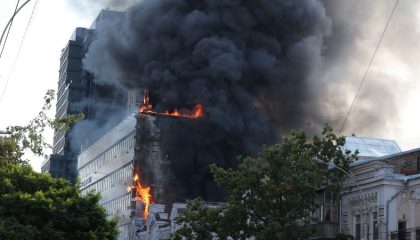
The earthquakes have only exacerbated existing challenges. With healthcare systems overwhelmed and infrastructure crumbling, the nation’s ability to respond to the disaster is severely limited. The U.S. Geological Survey’s grim forecast—projecting billions in losses and thousands of fatalities—has reignited memories of past crises. For Rodríguez, this moment is a test of her leadership, as she navigates the dual pressures of domestic hardship and international scrutiny.
A New Era of Diplomacy and Debt
The political landscape has shifted dramatically since the U.S. captured Maduro and his wife, Cilia Flores, in early 2026. Once a staunch critic of American influence, Rodríguez now finds herself in a position of relative strength, bolstered by the Trump administration’s recent efforts to deepen ties with Venezuela. This alliance, unthinkable just months prior, has transformed the country’s diplomatic standing, allowing Rodríguez to solicit aid without appearing overly subservient to Washington.
Yet, the same economic vulnerabilities that once made Venezuela a target for sanctions persist. The Central Bank of Venezuela and PDVSA have been under U.S. sanctions for years, further straining the nation’s ability to access global markets. These measures, combined with the collapse of oil revenues—a cornerstone of Venezuela’s economy—have left the government in a difficult spot. The earthquakes have forced a recalibration of priorities, with Rodríguez now relying on a broader coalition of supporters to stabilize the situation.
Revisiting the 1999 landslide, which marked Chávez’s rise as a revolutionary leader, offers a revealing comparison. That disaster had occurred just days after a constitutional vote that solidified Chávez’s power, a moment he framed as a triumph for Venezuelan sovereignty. However, his refusal to accept U.S. aid at the time was met with skepticism, as critics questioned whether the nation’s needs outweighed its political ambitions. Fast forward to the present, and the same decision is being scrutinized anew, with Rodríguez’s acceptance of aid seen as a necessary concession rather than a betrayal.
From Crisis to Opportunity: The Power of Solidarity
Rodríguez’s retweet of Bukele’s offer is more than a diplomatic maneuver—it’s a signal of hope. The Central American leader, a longtime adversary of the Chavista regime, has now become an ally in the face of shared adversity. This act of solidarity, while symbolic, may pave the way for broader international cooperation. “The world needs to understand that Venezuela is not just a victim but a resilient nation,” Rodríguez emphasized in her statement, a sentiment that resonates with both supporters and skeptics of her government.
However, the aid is not without controversy. The U.S. has long accused Venezuela of using its oil wealth to fund regional influence, while countries like Cuba and Russia continue to provide critical support. This dichotomy reflects the complex web of alliances that define Venezuela’s foreign relations. As the earthquakes ravage the same regions that suffered in 1999, the nation’s ability to recover depends on its capacity to balance these competing interests.
Even as the rubble settles and aid arrives, the challenges remain. The healthcare system, already stretched thin, must now contend with a surge in demand. Hospitals in Caracas, where the quakes were most severe, are struggling to manage the influx of injured and displaced citizens. Meanwhile, the government faces pressure to ensure that aid is distributed efficiently, without accusations of corruption or misallocation.
The events of June 2026 serve as a reminder of the fragile state of Venezuela’s governance. While Chávez once dismissed foreign help, his successor now embraces it, a reversal that speaks to the country’s current desperation. The financial figures, though debated, underscore the scale of the crisis: a debt burden that dwarfs the nation’s annual GDP and a population increasingly reliant on external support. In this context, the phrase “solidarity between our peoples” takes on a new meaning, symbolizing the pragmatic realignment of priorities in a country on the brink of collapse.
As the White House’s influence grows in the region, the stage is set for a new chapter in Venezuela’s international relations. Trump’s declaration of readiness to assist, even before Rodríguez formally requested aid, highlights the U.S.’s renewed interest in the country’s recovery. This shift, coupled with the easing of tensions between Venezuela and its former foes, may signal a broader realignment of power in Latin America. For Rodríguez, the challenge is not just to manage the immediate aftermath of the quakes but to position herself as a leader capable of uniting a fractured nation under the banner of resilience.
Amid the chaos, one fact remains clear: Venezuela’s survival hinges on its ability to accept help from any source. Whether it’s a former adversary like Bukele or a traditional ally like Russia, the choice is no longer about ideology but about necessity. The country’s history of rejecting aid, from the 1999 landslide to the 2026 earthquakes, now serves as a cautionary tale. As the world watches, Rodríguez must navigate the fine line between pragmatism and principle, ensuring that her government’s decisions reflect both the urgency of the moment and the aspirations of the people it serves.
“Solidarity between our peoples is an invaluable force at times like these.”
These words, penned by Rodríguez, encapsulate the duality of her leadership. On one hand, they acknowledge the global community’s role in Venezuela’s survival; on the other, they reinforce the regime’s identity as a regional power. The earthquakes, in many ways, have become a catalyst for change, forcing the government to confront its limitations and seek partnerships that were once considered unthinkable. As the nation rebuilds, the question remains: will this newfound willingness to accept aid mark the beginning of a more stable future, or will it be a temporary measure in an ongoing struggle for survival?