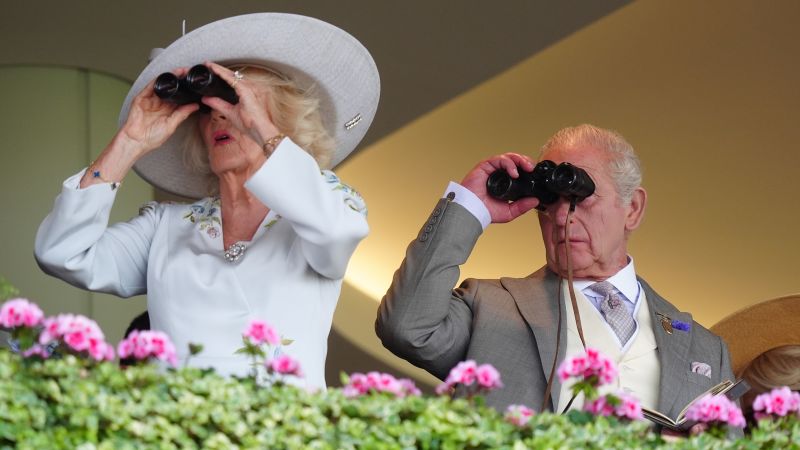
Maddest Hats at the Frightfully British Royal Ascot Races
Sandego.net – The Royal Ascot, a cornerstone of British tradition, has long been synonymous with opulence, ritual, and a strict adherence to fashion. Held annually over five days in June at the Ascot Racecourse, this event draws an estimated 300,000 attendees to witness the spectacle of high-stakes horse racing and elite socializing. While the races themselves are a draw, the true highlight lies in the extravagant headwear that defines the occasion. From towering creations to whimsical designs, the hats at Royal Ascot are not merely accessories—they are statements of status, creativity, and a shared sense of absurdity.
For centuries, the Royal Ascot has been a stage for sartorial grandeur, with its formal dress code evolving alongside the event’s history. The tradition of headwear dates back to the 18th century, when the racecourse was established in 1711. Today, the Royal Enclosure, the most exclusive area for spectators, enforces a specific dress code: men wear top hats and waistcoats, while women are required to don headpieces with a base of at least 10 centimeters (3.9 inches). This rule, however, is not one-size-fits-all. The strictness varies depending on the enclosure, allowing for a spectrum of styles from the rigidly formal to the playfully avant-garde.
The Royal Enclosure: A Citadel of Etiquette
The Royal Enclosure, reserved for the most distinguished guests, is a world unto itself. It begins with the arrival of King Charles and Queen Camilla in a horse-drawn carriage, a ceremonial moment that sets the tone for the day’s proceedings. While the area is invitation-only, its dress code is legendary for its intensity. Women must sport headpieces that are both elegant and substantial, ensuring they make a visual impact without overshadowing the proceedings. Men, in contrast, are expected to wear top hats and waistcoats, a nod to the 19th-century formalities that still linger in the air.
Yet, even within this strict framework, there is room for eccentricity. Fascinators—those delicate, off-center headpieces adorned with feathers, flowers, and intricate netting—are banned in the Royal Enclosure. The exception is made for children, who can enjoy the more whimsical designs without fear of censure. This rule underscores the event’s blend of tradition and theatricality, where even the most formal settings allow for a touch of mischief.
A Legacy of Elegance and Eccentricity
The cultural significance of hats at Royal Ascot is deeply rooted in the event’s history. Over the decades, the headwear has transformed from a practical necessity into a symbol of aristocratic flair. One of the most iconic figures in this tradition is Gertrude Shilling, the British socialite and muse of milliner David Shilling. For nearly three decades, Shilling captivated attendees with her audacious creations, which ranged from towering giraffe-print hats to orange feathery designs wide enough to take flight.
Her contributions to the event’s fashion legacy are legendary. During the late 1960s to the 1990s, Shilling’s hats became a focal point of the Royal Ascot experience. Among her most memorable pieces was a five-foot-tall headpiece that seemed to defy gravity, as well as a broad-brimmed orange design that left spectators in awe. Her style, described as “madcap” by contemporaries, embodied the spirit of the event: a celebration of artistry and the occasional disregard for convention.
Shilling’s influence is still felt today, as the Royal Ascot continues to embrace innovation within its formal boundaries. While the event’s modern attendees may not replicate her extremes, the ethos of creativity persists. In the Queen Anne and Village Enclosures, the dress code is less rigid, allowing for a wider range of headwear, from practical caps to more elaborate designs. The Windsor Enclosure, perhaps the most lenient, permits nearly anything—except sneakers. Here, the line between fashion and performance blurs, as guests trade conventional attire for bold statements.
Beau Brummell’s Timeless Influence
The dress code at Royal Ascot is not a modern invention. Its foundation was laid in the 19th century by Beau Brummell, a figure who redefined British fashion and became a close confidant of future King George IV. Brummell’s vision for elegance was meticulous: he advocated for waisted black coats, white cravats, and well-polished boots, all paired with a touch of refinement. His principles, though centuries old, remain relevant at the event, where the balance between formality and flair is a delicate dance.
“Men of elegance should wear waisted black coats and white cravats with pantaloons. Boots should be polished with Champagne.”
Brummell’s words echo through the Royal Ascot’s current practices, which blend his vintage ideals with contemporary flair. The event’s dress code, while strict, is also a canvas for individuality. For instance, the Royal Enclosure’s requirement for a 10-centimeter base on women’s headpieces is a nod to Brummell’s emphasis on structure, yet it allows for designs that are as imaginative as they are precise.
From Tradition to Theater
What makes Royal Ascot unique is its ability to merge centuries-old traditions with modern experimentation. The hats, in particular, serve as a bridge between the past and present, reflecting both the event’s historical roots and its status as a cultural spectacle. While the Royal Enclosure maintains its austere elegance, the Queen Anne and Village Enclosures offer a more relaxed environment where creativity can flourish. Here, spectators might be seen in hats that range from classic to absurd, each adding to the event’s charm.
The Windsor Enclosure, meanwhile, is a hub of unapologetic style. With no strict rules beyond the prohibition of sneakers, it becomes a space where fashion enthusiasts can let their imaginations run wild. This diversity of headwear mirrors the broader spirit of the Royal Ascot: a celebration of the British love for the theatrical and the tasteful. The event is not just about horse racing; it is about creating an atmosphere where formality and fun coexist.
As the sun sets over the racecourse, the hats remain a lasting symbol of the day’s extravagance. They are a testament to the event’s ability to preserve tradition while allowing for personal expression. Whether it is the towering creations of the past or the more subdued designs of today, the headwear at Royal Ascot continues to captivate, ensuring that the event remains as much about fashion as it is about racing. In this way, the hats are more than accessories—they are a living archive of British culture, woven into the fabric of the Royal Ascot experience.