‘If it doesn’t work out, I’m blaming JD’: Vance’s risky gambit on Iran peace efforts
Sandego.net – JD Vance’s role in the ongoing Iran peace initiative has become a precarious balancing act, with the vice president now bearing the weight of a deal that could either elevate his political standing or tarnish his reputation. After months of failed negotiations, the administration’s decision to place him at the forefront of the talks has drawn sharp scrutiny, particularly as the final summit was abruptly canceled just hours before it was set to begin. This last-minute collapse has cast doubt on the entire effort, leaving Vance in the spotlight as both a potential savior and a possible scapegoat for the administration’s current strategy.
The Iran conflict, which has kept the country in a state of military tension for over a year, has tested Vance’s diplomatic acumen. Known for his skepticism of foreign wars, he has been thrust into a position that requires him to advocate for a truce while managing the ire of his own party’s hardline members. The summit’s cancellation on Thursday evening, with Vance canceling his flight to Switzerland, has only intensified the pressure, raising questions about the viability of the agreement and the vice president’s ability to navigate the complex political landscape.
Opposition from GOP Hawks
Republican lawmakers, particularly those aligned with the party’s interventionist wing, have been vocal in their criticism of the peace accord. They argue that the administration’s reluctance to share the deal’s specifics early on has left the public and allies in the dark, creating an environment ripe for skepticism. One senator, who spoke anonymously, called the agreement “a monumental mistake” that undermines American credibility in the region. These frustrations have been compounded by conflicting statements from Trump and Vance, who have offered divergent visions for the agreement’s future.
“Somebody has told JD Vance that a bad deal is better than no deal,” said a former senior Trump administration official. “And, clearly, nobody else wants to wear the jacket on this when it goes south.”
The tension between Trump and Vance has become a defining element of the peace process. While Trump has consistently framed the agreement as a strategic win, Vance has taken a more cautious stance, emphasizing the need for immediate results. Their differing perspectives have fueled speculation about whether the deal is a genuine breakthrough or a political maneuver to shift blame if the situation worsens.
Vance’s Dilemma
For Vance, the stakes are high. As a former critic of U.S. involvement in foreign conflicts, his support for the Iran peace agreement has been a bold departure from his earlier rhetoric. Over the past week, he has made a concerted effort to position the deal as a necessary compromise, appearing on multiple media platforms to defend the approach. However, his commitment to peace has not gone unchallenged, with some within the administration wary of his influence on the war’s direction.
Two senior advisers described Vance’s contrarian nature as a potential liability, fearing it could complicate decision-making during the critical phase of the negotiations. Yet, the White House has seen value in his leadership, believing his presence could encourage Iran to send high-level delegates to the talks. This strategy, however, has backfired in previous attempts, such as when Vance’s efforts to avert war with Iran were overshadowed by Trump’s military strikes in February.
A Divided Strategy
Despite the setbacks, Vance has remained a central figure in the peace process. His meetings with Oman’s foreign minister in February highlighted his early involvement, but the subsequent strikes by Trump left the region in turmoil. The vice president’s push to lead the U.S. delegation has now placed him in a position where success could solidify his legacy, while failure might derail his 2028 presidential aspirations.
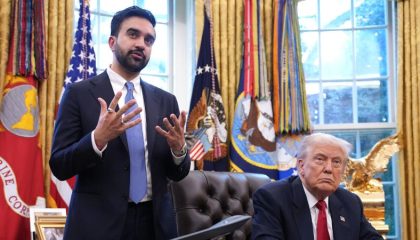
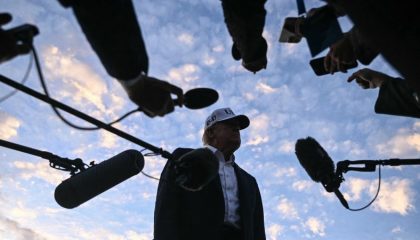
Trump, who has closely followed Vance’s progress, has semi-jokingly acknowledged the vice president’s precarious situation. During a press conference on Wednesday, the former president quipped, “If it works out, I’m going to take the credit. If it doesn’t work out, I’m blaming JD.” This remark underscores the political calculus at play, with Trump leveraging Vance’s role to deflect responsibility if the agreement fails to hold.
Vance, however, has framed the deal as a critical lifeline for the country. In a Thursday briefing, he stated, “People say the Iranians will never change their behavior. Well, maybe that’s true, and if so, they don’t get any of the benefits of the bargain. But isn’t it worth trying?” This argument reflects his broader philosophy of risk-taking in diplomacy, even as it has drawn criticism from those who view the agreement as too lenient on Iran’s demands.
The Cost of Ambition
As the agreement faces scrutiny, its implications for Vance’s political future are becoming clearer. The vice president has downplayed concerns about his personal ambitions, insisting that his involvement in the talks is purely to achieve a truce. Yet, the potential fallout from a failed deal could leave him vulnerable. Curt Mills, a Vance ally and executive director of The American Conservative, noted the risks but also defended the decision. “The default was a disaster,” he said. “JD is not going to be president if the administration is this unpopular.”
The Iran peace effort has also strained relationships with key allies. Marco Rubio, the former secretary of state and a potential 2028 rival, has expressed frustration with Vance’s shift from a war critic to a negotiator. This change has created a rift, as some in the administration question whether Vance’s approach aligns with their broader goals. Meanwhile, the public’s perception of the agreement remains divided, with critics arguing it could weaken U.S. leverage in the region.
Despite the challenges, Vance’s commitment to the deal has shown his willingness to embrace a new political identity. While he may have once been a vocal opponent of foreign wars, his recent actions suggest a pragmatic turn, prioritizing stability over idealism. This evolution has both energized and alienated different factions within the GOP, making his path to the presidency increasingly complex. As the administration continues to refine the agreement, the question remains: will Vance’s gamble pay off, or will he become the face of a costly miscalculation?
The situation also highlights the broader challenges of U.S. foreign policy in an era of political polarization. With the war’s duration stretching into its second year, the need for a resolution has grown more urgent. Vance’s involvement underscores the administration’s desire to find a middle ground, even as the risk of public backlash looms. Whether the peace agreement is seen as a triumph or a tragedy will ultimately depend on its ability to deliver tangible results, and the vice president is now positioned at the center of that debate.
In the end, Vance’s role in the Iran talks has become a defining moment in his political career. The decision to place him in the spotlight, despite the administration’s previous struggles to secure Iran’s cooperation, reflects both his ambition and the desperation of a war that has drained public support. As the final details of the deal take shape, the world watches to see if his risk-taking will lead to peace—or become a political misstep that reshapes his future.