
Stolen Renoir Paintings Recovered After Museum Break-In in Southern France
Sandego.net – Two paintings by Pierre-Auguste Renoir that disappeared during a rapid theft at a museum in southern France have been recovered, while six people have been taken into custody in connection with the case.
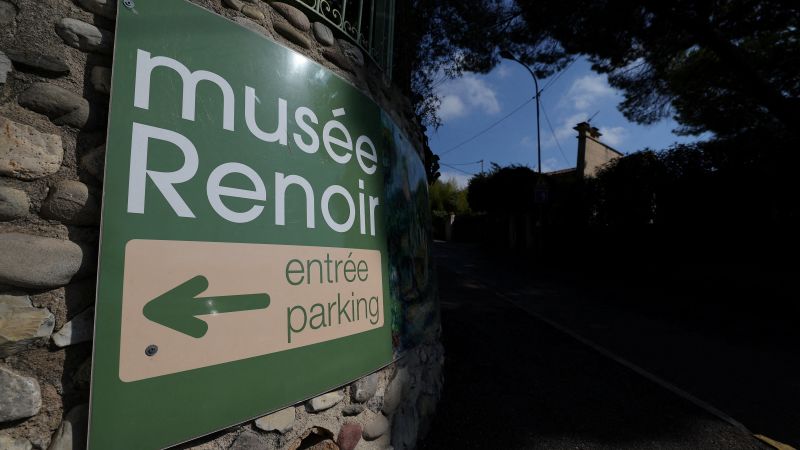
The artworks were stolen last month from the Renoir Museum in Cagnes-sur-Mer, a town on France’s Mediterranean coast closely linked to the artist’s final years. The recovered works are Portrait of Madame Colonna Romano and Young Woman at the Well, both among the museum’s most valuable paintings.
Bryan Masson, mayor of Cagnes-sur-Mer, announced the development Friday and praised the investigators who located the paintings and identified suspects. Authorities had not publicly detailed the steps that led to the recovery or the arrests. A news conference was planned later that day.
A Theft Completed in Minutes
The break-in was carried out with striking speed. The perpetrators cut through a fence, entered through a window and selected works from the museum collection in an operation that lasted under three minutes.
Four Renoir paintings were initially taken. Two were later left behind as the thieves fled, leaving investigators to search for the remaining pair. A nationwide hunt was launched after the theft, with the stolen artworks becoming the focus of an urgent effort to prevent their disappearance into private hands or illicit markets.
The recovery brings a major measure of relief for the museum and for the town, whose cultural identity is closely tied to Renoir. A painting’s value is not limited to its market price: works held by a public museum are part of a shared collection, available for visitors, students and researchers rather than hidden from view.
Why the Renoir Museum Matters
The Renoir Museum is located in Cagnes-sur-Mer, where the French Impressionist spent his later years. The setting preserves an important connection between the painter and the landscape of the French Riviera, helping visitors understand the environment that shaped part of his work.
Renoir remains one of the most widely recognized figures of Impressionism. His paintings are celebrated for their treatment of light, color and everyday life, as well as portraits and scenes that often emphasize warmth and movement. That artistic importance makes works associated with his legacy especially significant to the institutions responsible for preserving them.
The return of Portrait of Madame Colonna Romano and Young Woman at the Well also underscores a difficult reality for smaller cultural institutions. Major museums may attract the greatest attention, but collections across France are housed in sites of many different sizes, each responsible for protecting irreplaceable objects while maintaining public access.
Renewed Questions Over Cultural-Site Security
The Cagnes-sur-Mer theft revived concerns about security and funding at museums and heritage sites throughout France. The incident also brought back memories of last year’s highly publicized theft of crown jewels from the Louvre Museum in Paris.
Although the institutions are very different in scale, both cases highlight the vulnerability of cultural property when thieves are able to exploit gaps in physical protection. Fences, windows, alarms, surveillance systems and rapid police response can all be part of museum security, but maintaining those safeguards requires continuing investment and careful planning.
The speed of the Renoir Museum operation illustrates the challenge clearly. A theft lasting only minutes can create months or years of consequences, particularly when a work is moved across borders, concealed, damaged or separated from documentation that establishes its ownership and history.
For museum visitors, the return of the paintings matters because recovery preserves the possibility that the works will again be seen in their intended public setting. For investigators, the arrests may provide an opportunity to establish how the break-in was organized, whether others were involved and how the paintings were transported after they were taken.
An Investigation Still Developing
Authorities have not released further details about the suspects or the condition of the recovered paintings. It is also not yet clear whether the investigation will reveal a broader network connected to the theft.
What is known is that the break-in targeted high-value Renoir works and that the two paintings at the center of the search have now been found. Their recovery closes the most urgent chapter of the case, though legal proceedings and further investigative work may continue.
For Cagnes-sur-Mer, the news offers reassurance after a theft that struck directly at one of the town’s best-known cultural landmarks. The episode is likely to remain part of a larger discussion in France about how museums can protect treasured collections while keeping art accessible to the public.
Related Reading
Frequently Asked Questions
What is 2 Renoir paintings recovered from French?
2 Renoir paintings recovered from French is the main topic of this guide. The article explains the context, practical details, and next steps readers should understand.
Why does 2 Renoir paintings recovered from French matter?
2 Renoir paintings recovered from French matters because readers are looking for a useful answer, not just a short summary. Good content should match search intent and help them decide what to do next.