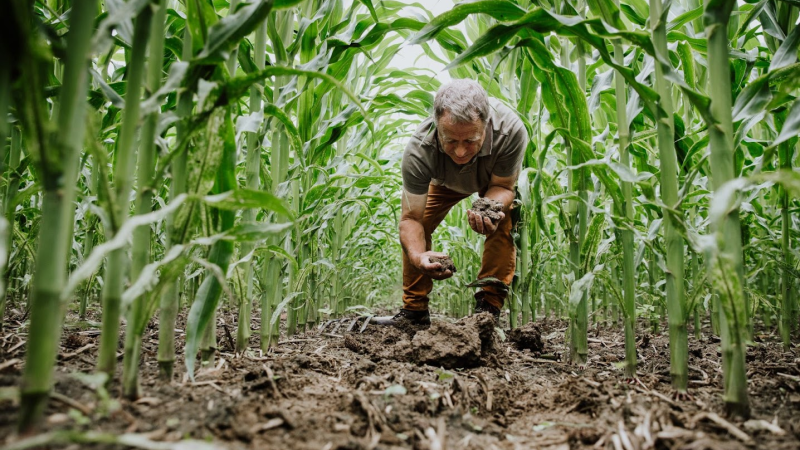
‘If there’s no fertility, there are no farms’: Why big food is exploring regenerative agriculture
The Climate Crisis and Agricultural Emissions
Sandego.net – The global food system stands at a crossroads, with agriculture and supply chains contributing roughly a third of total greenhouse gas emissions worldwide. Within this, farming operations alone account for nearly half of the sector’s output, highlighting the urgent need for sustainable practices. Rising temperatures and shifting weather patterns are already threatening crop yields, creating a paradox: as the climate changes, the very systems that produce our food are becoming more vulnerable. This dilemma has prompted industry leaders to rethink traditional methods, turning to regenerative agriculture as a potential solution.
“It’s never been so apparent that our food system needs fixing,” said Chuck de Liedekerke, CEO and co-founder of Soil Capital, a Belgian firm that incentivizes farmers to adopt regenerative techniques. “For centuries, we’ve been depleting the natural fertility of our soils, and that’s putting our entire agricultural model at risk.”
Regenerative agriculture focuses on restoring land by prioritizing soil health, which de Liedekerke describes as “the foundation of agricultural resilience.” By replenishing soil carbon, this approach not only combats emissions but also enhances water retention, offering crops greater drought resistance. However, conventional farming practices—such as heavy machinery use and reliance on chemical fertilizers—have accelerated the loss of carbon from soils, releasing it into the atmosphere. This cycle of degradation is now being challenged by companies seeking to reverse it.
Soil Capital’s Vision for Soil-Based Solutions
Soil Capital, based in Belgium, operates a unique model that rewards farmers for improving soil quality. Through a system of carbon credits, the company measures the carbon stored in farmland and issues certificates for each metric ton of CO2 equivalent emissions reduced or removed. These certificates are then sold to businesses aiming to offset their carbon footprint, with 70% of the revenue returned to the farmers who implement the changes. The company’s focus includes reducing land disturbance, diversifying plant species, and planting cover crops to protect soil during off-seasons.
“Regenerative practices create a win-win for both the environment and farmers,” de Liedekerke explained. “By investing in soil fertility, we’re building a more resilient food system that can withstand climate shocks.” The methods employed, such as integrating trees into farmland and minimizing tilling, are designed to mimic natural ecosystems. These strategies not only capture carbon but also improve biodiversity, reduce erosion, and maintain long-term productivity. For farmers, the financial incentive is critical, especially in a market where profit margins are slim and the risk of transitioning to new techniques is high.
Corporate Partnerships and Scaling Efforts
Big food companies are increasingly recognizing the value of regenerative agriculture, with Nestlé leading the charge. In April 2026, the multinational corporation announced a multi-year collaboration with Soil Capital, aiming to source 50% of its key ingredients from regenerative farms by 2030. According to Nestlé’s latest reports, ingredient sourcing is responsible for over 70% of its total emissions, making this initiative a pivotal step toward carbon neutrality.
“We’re investing in the long-term health of our supply base, strengthening resilience, and focusing on soil,” said Anita Wälz, head of sustainability at Nestlé Europe, at the time of the announcement. Similar efforts are underway across the industry, with drinks giants Carlsberg and Diageo joining 40 organizations in a 2026 declaration to expand regenerative practices. The Sustainable Agriculture Initiative platform is coordinating these efforts, providing a framework for scaling the transition. Unilever, for instance, targets regenerative agriculture across 1 million hectares by 2030, while PepsiCo plans to cover 10 million acres of land supporting its ingredients.
These partnerships underscore a growing trend: corporations are using market mechanisms to fund environmental restoration. By purchasing carbon credits, businesses can offset their emissions while supporting farmers in adopting sustainable methods. This model transforms agriculture from a carbon emitter into a carbon sink, with the potential to sequester significant amounts of greenhouse gases. However, the success of such initiatives depends on consistent participation and measurable outcomes.
Scientific Perspectives and Challenges
While the push for regenerative agriculture gains momentum, some experts remain cautious. Timothy Searchinger, technical director for agriculture, forestry, and ecosystems at the World Resources Institute, argues that the scale of soil carbon sequestration on working farmland may be overestimated. “The idea that you can sequester a lot of carbon through regenerative practices is optimistic,” he stated. “Cover crops, for example, might capture a small amount of carbon over time, but they currently occupy less than 4% of US cropland and face barriers like cost and limited time to establish before winter.”
Searchinger also points to ongoing scientific debates about the effectiveness of no-till farming. While some studies suggest that reducing soil disturbance increases carbon storage, others question the extent of its impact. “There’s no consensus yet on whether these methods can consistently offset emissions at the level needed,” he noted. These concerns highlight the need for more research and data-driven approaches to ensure regenerative agriculture delivers the promised benefits.
Despite these challenges, the potential of regenerative practices remains compelling. The Organisation for Economic Co-operation and Development (OECD) estimates that net soil carbon sequestration could offset up to 4% of annual human-induced greenhouse gas emissions by the end of the century. If achieved, this would represent a major contribution to global climate goals. Yet, the path to implementation is complex, requiring collaboration between farmers, corporations, and policymakers to create scalable solutions.
Toward a Resilient Future
The shift toward regenerative agriculture marks a turning point in how food systems address climate change. By focusing on soil health, companies are not only reducing their carbon footprints but also fostering a more sustainable supply chain. As de Liedekerke emphasizes, “If you can invest in the fertility of those soils, you can make your whole system more resilient.” This vision aligns with the broader goal of building a food system that adapts to climate pressures rather than succumbing to them.
While skepticism persists, the growing investment in soil-based solutions suggests a collective commitment to change. Whether through carbon credits, corporate partnerships, or policy advocacy, the industry is exploring innovative ways to heal the land and mitigate emissions. For farmers, the promise of financial incentives offers a pathway to modernize practices without compromising livelihoods. As these efforts expand, they may redefine the relationship between agriculture and the environment, ensuring that the earth remains fertile for generations to come.