What’s in the ‘SAVE America Act’ and Why It Matters to Donald Trump
Sandego.net – President Donald Trump’s federal elections reform initiative, the “SAVE America Act,” has become a focal point of his political strategy. Despite its contentious nature, the bill’s passage hinges on overcoming significant hurdles in the Senate, where Republican support is crucial. The House version, which cleared in February, introduced strict new rules for voting, but its chances of becoming law are dimmed by the Senate’s reliance on the filibuster. This procedural tool allows the Democratic minority to block legislation, creating a challenge for Trump’s agenda. However, the White House is pushing further, demanding that Republicans incorporate additional provisions that align with his broader ideological goals, even if they complicate the bill’s practicality.
Expanded Voting Rules and Political Motivations
The House-passed version of the “SAVE America Act” centers on implementing stringent voter ID and proof-of-citizenship requirements. Trump has amplified these provisions, urging Republicans to add measures that would eliminate no-excuse mail voting and target policies affecting transgender individuals. These additions are seen as strategic moves to mobilize conservative base voters and deepen partisan divides. While the original bill aimed to address federal elections, the revised version now includes provisions that critics argue are more aligned with cultural debates than electoral integrity.
“The SAVE America Act is not just about securing the ballot box—it’s about redefining the voting process to reflect our values and ensure fairness,” said Jason Snead, a leading advocate for the bill and director of the Honest Elections Project. His remarks underscore the bill’s dual role as an electoral reform and a platform for ideological priorities.
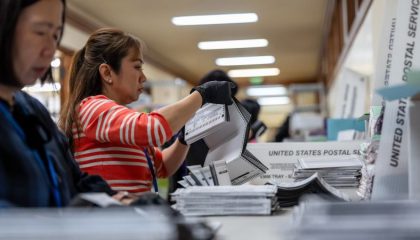
According to experts, the bill’s proposed changes could significantly impact the upcoming midterm elections. If enacted, these requirements would introduce barriers for certain demographics, particularly those without immediate access to required documentation. For instance, the legislation mandates in-person verification of citizenship for voter registration, a shift from the current system where voters can attest to their status without physical proof. This change is seen as a major disruption, especially for communities that rely on mail-in voting and online registration.
Proof of Citizenship: A Controversial Requirement
Under the SAVE America Act, individuals must present documents like birth certificates, U.S. passports, or naturalization papers to register to vote. This process applies to both federal and state elections, a departure from the current system where proof of citizenship is only required for federal races. Critics argue that this requirement disproportionately affects minority and elderly voters, who may struggle to obtain or present these documents. A survey by the Brennan Center, a left-leaning think tank, revealed that over 21 million eligible voters lack easy access to such documentation, raising concerns about the bill’s equity.
Supporters, however, contend that the measures are necessary to prevent voter fraud. The Heritage Foundation’s database, which tracks confirmed cases of fraud, notes fewer than 100 instances of non-citizens casting ballots between 2000 and 2025. While these numbers are small, proponents argue that the current system is too lenient and that stricter requirements would enhance election security. “The existing process allows for too much ambiguity,” said a Republican strategist. “We need clear standards to protect the integrity of our democratic institutions.”
Voter Registration: A Shift to In-Person Verification
The bill complicates the registration process by requiring voters to visit their local election offices in person to prove citizenship. This change would eliminate the convenience of online and mail-based registration, which are particularly popular in low-income and rural areas. While Trump’s allies claim this adjustment would streamline the process, opponents argue it would hinder voter turnout, especially among groups that rely on these methods. For example, young voters and those without stable access to government services may face additional challenges.
Jason Snead, a key proponent, defended the move, stating, “Most voters already register in person through the DMV, so this step is minimal for the majority. It’s about ensuring that only qualified individuals cast ballots.” Yet, critics highlight that the bill’s requirements could disrupt grassroots efforts, such as student-led voter drives or community outreach programs. The shift to in-person verification also adds logistical burdens, particularly for states with limited resources to process the increased paperwork.
Voter ID Mandates: A Nationwide Standard
The SAVE America Act would establish a uniform voter ID requirement across federal elections, mandating valid photo identification such as driver’s licenses, passports, or IDs issued to military and tribal members. However, the bill excludes student-issued ID cards, a decision that critics say unfairly targets younger voters. This exclusion has sparked debates about whether the law adequately addresses the needs of all demographics.
Voters using mail-in ballots would need to provide copies of their IDs at both the request and submission stages, a process that could lead to confusion or disenfranchisement. Exceptions exist for specific groups, such as those with disabilities or limited mobility, but the overall framework is seen as more restrictive than current practices. For instance, many states currently allow voters to sign an attestation confirming their citizenship, a method that is both simple and accessible.
Political Strategy and Electoral Impact
Trump’s insistence on advancing the SAVE America Act reflects a broader strategy to consolidate Republican control. By tying the bill to cultural issues, he aims to rally his base while framing it as a necessary step to safeguard elections. The abrupt cancellation of a bipartisan housing bill in March, where Trump demanded lawmakers prioritize the SAVE America Act, illustrates the urgency he places on this legislation.
Despite its support from the Trump administration, the bill faces skepticism from election experts. They warn that the immediate implementation of its requirements could create chaos in the midterms, where states are already preparing for large-scale voting. The original version of the bill had provisions that would take effect in 2026, but a last-minute amendment in the House accelerated these changes, adding pressure to pass the legislation quickly. “This is a race against time,” said one analyst. “The Senate’s filibuster rules and the urgency to enact the bill before the next election cycle are both significant challenges.”
The SAVE America Act’s passage would mark a major shift in U.S. voting laws, embedding stricter standards into federal elections. While its proponents emphasize security and accountability, opponents argue that the bill’s provisions could suppress votes without substantial evidence of fraud. As debates continue, the act’s fate remains uncertain, with its ability to pass hinging on Republican unity and the Senate’s willingness to eliminate the filibuster. For now, it stands as a symbol of Trump’s efforts to reshape the electoral landscape in his favor.