
Major US bridges could be vulnerable to ship collisions, including one just downstream from Key Bridge
Major US Bridges Could Face Ship Collision Risks, Including One Near Key Bridge
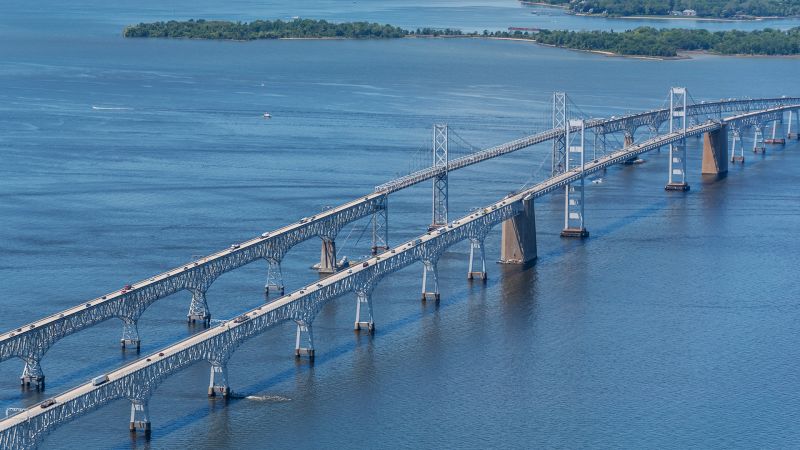
Major US bridges could be vulnerable – Just days before its catastrophic collapse, the Francis Scott Key Bridge functioned as a vital artery for commerce: thousands of container ships traversing the Atlantic Ocean into Baltimore’s bustling port passed beneath its aging structure. Now, the wreckage of this iconic span has raised concerns about the safety of other bridges along the same critical shipping route. Twenty miles downstream from the Key Bridge, massive container vessels bound for Baltimore also navigate under the Chesapeake Bay Bridge, near Annapolis. Experts who analyzed its design for CNN suggest this bridge may also be at risk if struck by a similarly sized ship.
A Growing Concern for Structural Integrity
The recent collapse of the Key Bridge has sparked a broader examination of infrastructure resilience across the nation. According to statements from local officials and interviews with structural engineering experts, several major bridges—such as the Chesapeake Bay Bridge—are equipped with less robust defenses against ship impacts compared to others. This vulnerability could lead to catastrophic failures if a collision were to occur, experts warn.
Adel ElSafty, an engineering professor at the University of North Florida, emphasized the lack of safety measures on the Chesapeake Bay Bridge. “It could very much be vulnerable to a ship impact,” he stated, calling for a reassessment of the bridge’s design in light of the Key Bridge tragedy. CNN reviewed protective design features of over a dozen key US bridges that span shipping channels leading to the country’s largest ports. While many have advanced systems like fender barriers or larger concrete structures, the Chesapeake Bay Bridge and a few others appear to have minimal safeguards, according to the analysis.
Fracture Critical Members: A Flawed Design?
Federal data reveals that most of these bridges, including the Key Bridge, incorporate “fracture critical members.” These structural components mean that if a single part fails, the entire bridge could collapse. Matthew Yarnold, an engineering professor at Auburn University, explained that the Key Bridge’s failure was caused by the ship Dali damaging one of its vertical piers. Even without fracture critical members, the bridge might have collapsed due to the sheer force of the collision, he noted.
Despite the risks, some officials remain confident in their bridges’ safety. A spokesperson for the Louisiana Department of Transportation claimed a major New Orleans bridge was “triple protected” by its design. However, this assertion was met with skepticism from structural engineers. One expert dismissed the claim as “nonsense,” highlighting the need for more rigorous evaluations of all bridges in the wake of the Baltimore disaster.
Economic and Social Impacts of a Bridge Collapse
The collapse of the Key Bridge has had far-reaching consequences. It has killed six people, shut down America’s 15th largest port indefinitely, and is projected to cost billions in economic losses. This incident has underscored how critical these bridges are to the nation’s infrastructure and how their failure could disrupt global supply chains and local communities alike.
Officials across the country are now racing to assess the risks to other bridges and determine their potential for withstanding a similar disaster. In Delaware and Pennsylvania, some agencies had already begun fortifying their bridges with new concrete structures and rock islands designed to buffer against ship impacts. These investments, totaling tens of millions of dollars, reflect growing awareness of the threat posed by larger container ships navigating increasingly congested waterways.
The Maryland Transportation Authority announced on Tuesday that it is considering additional protections for the Chesapeake Bay Bridge. This move comes as engineers debate whether any existing measures can realistically prevent a bridge from collapsing after a direct hit by a massive vessel. The Dali, which caused the Key Bridge disaster, was a 980-foot-long container ship, and experts say its size could challenge even the most advanced safety systems.
Reinforcing Defenses: A Call for Action
Abieyuwa Aghayere, a professor of structural engineering at Drexel University, stressed the importance of proactive measures. “I don’t think we should be sitting ducks,” he said. “If you cannot design a system to stop a ship from hitting a pier, then by all means, tear down the bridge.” His comments align with a broader consensus among experts that the collapse of the Key Bridge should serve as a wake-up call for improved safety standards.
Bridge engineers across the US have employed a variety of strategies to mitigate the risks of ship collisions. One common method is the use of “fenders”—structures attached to piers that absorb impact and reduce damage from strikes. Photos and documents suggest the Key Bridge had both concrete and timber fenders prior to its collapse. However, experts question whether timber fenders would be sufficient to protect against the immense force of a container ship like the Dali.
Other bridges have adopted “dolphins,” which are circular concrete structures placed near piers to redirect or slow down colliding vessels. These designs, though effective in some cases, may not be enough for the largest ships now navigating US waterways. As container ships continue to grow in size, the need for upgraded defenses becomes more urgent. The Key Bridge incident has highlighted a potential gap in safety protocols, prompting calls for standardized assessments of all bridges in key shipping routes.
While the collapse of the Key Bridge was a singular event, it has revealed a systemic issue. Many bridges, despite their importance, lack comprehensive protection against modern shipping traffic. The economic ramifications of such a failure could be severe, with disruptions to ports like Baltimore affecting global trade and supply chains. In response, some states have already begun investing in protective measures, but others are still catching up.
Looking Ahead: A Need for Preparedness
As officials work to evaluate the vulnerabilities of other bridges, the focus is shifting toward prevention. The challenge lies in balancing cost-effective solutions with the necessity of robust protection. For example, the Chesapeake Bay Bridge’s design includes concrete piers that are positioned in the heart of the shipping channel. These piers, experts say, could be compromised by a direct hit, making the bridge a potential target for future disasters.
Matthew Yarnold also pointed out that the Key Bridge’s collapse was not solely due to its fracture critical design. The impact of the Dali’s collision was the primary cause, with the bridge’s structural weaknesses exacerbating the damage. This suggests that while fracture critical members are a concern, the overall design of the bridge and its surrounding infrastructure must also be scrutinized. The incident has prompted a reevaluation of how bridges are built and maintained, especially in areas with high maritime traffic.
Experts agree that the collapse of the Key Bridge should lead to a renewed focus on safety. Even if no bridge is entirely immune to a ship collision, improving defense systems can significantly reduce the likelihood of a disaster. The debate over the adequacy of existing measures is ongoing, but the consensus is clear: the risk is real, and action is needed to prevent future tragedies.
In the aftermath of the collapse, a sense of urgency has spread across the country. From Delaware to Pennsylvania, officials are exploring new ways to strengthen bridges against ship impacts. The Maryland Transportation Authority’s consideration of additional protections for the Chesapeake Bay Bridge is a step in the right direction, but it may not be enough to fully address the growing threat. As container ships continue to increase in size, the safety of these critical structures must be prioritized.
Ultimately, the Key Bridge disaster serves as a stark reminder of the fragility of infrastructure in the face of modern maritime demands. While some officials remain optimistic, the reality is that a single collision could have devastating effects. The nation’s bridges, once seen as reliable, now require a deeper examination to ensure they can withstand the challenges of the future.
