Senior US General in Europe to Retire Amid NATO Leadership Shift
Donahue’s Transition and New Command Structure
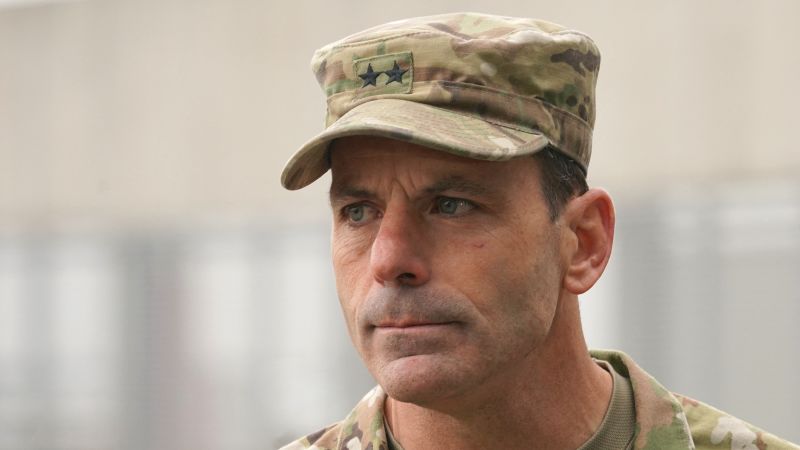
Sandego.net – Gen. Christopher Donahue, the Senior US General in Europe, is preparing to retire as the U.S. Army Europe and Africa command prepares for a leadership change. Defense Secretary Pete Hegseth has initiated a review of U.S. support for NATO allies, which has coincided with Donahue’s decision to step down. Multiple sources confirm that the transition will occur in early July, with Donahue’s retirement marked by a ceremony in Turkey on July 9. His deputy, Maj. Gen. Christopher Norrie, will temporarily assume the role of Allied Land Forces commander during this period. The Pentagon’s decision to lower the rank requirement for the NATO command position from four-star to three-star has contributed to the restructuring, reflecting a strategic shift in the military’s leadership framework.
Strategic Reorganization Under Hegseth
The retirement of the Senior US General in Europe aligns with Hegseth’s broader initiatives to streamline the U.S. military presence in the region. This includes reallocating resources and adjusting command hierarchies to enhance operational flexibility. While the exact reasons for Donahue’s departure remain undisclosed, insiders suggest his leadership style and decisions have faced internal evaluation. His command of the 82nd Airborne Division and the 18th Airborne Corps has been highlighted as part of his proven capabilities, yet his recent tenure as NATO’s top commander has drawn both praise and scrutiny. The Pentagon is now prioritizing candidates who align with Hegseth’s vision for a more adaptive force structure.
Friction and Public Perception
Internally, the transition has sparked some friction between Hegseth’s office and Donahue’s command, though the relationship is not entirely adversarial. One military insider noted that the Senior US General in Europe’s public relations approach, particularly during the Afghanistan withdrawal, has been a point of contention. His actions during the chaotic exit from Kabul, including a now-iconic moment of walking off the tarmac, have been cited in political debates. Critics argue that this incident symbolized a lack of commitment to NATO missions, while supporters defend his role as a necessary response to the situation. The debate underscores the evolving dynamics within the U.S. military’s European operations.
“The Senior US General in Europe’s public moments during the Afghanistan withdrawal were seen as both a reflection of his leadership and a source of debate within the defense community.”
Legacy and Strategic Impact
Donahue’s retirement marks the end of an era for the Senior US General in Europe, who has played a pivotal role in shaping U.S. military strategy in Europe. His tenure saw a focus on strengthening alliances and adapting to regional challenges, which has been recognized by some as a critical contribution. However, the shift to a three-star command position reflects a reevaluation of leadership priorities under Hegseth. The general’s experience in high-profile assignments, including the 82nd Airborne Division, has been cited as a strength, yet the decision to move him to a lower rank highlights a strategic realignment. His legacy will be assessed against the backdrop of this leadership change and its implications for NATO operations.
Competing Candidates and Future Roles
Despite retiring from the Senior US General in Europe role, Donahue remains a strong candidate for other high-ranking positions within the Army. Sources indicate he is still being considered for roles such as chief of staff or commander of the Transformation and Training Command. Meanwhile, the Pentagon is exploring other four-star opportunities, including a new unmanned systems command, to expand the military’s strategic reach. Hegseth’s recent choice of Gen. Chris LaNeve as acting chief of staff has raised questions about the selection process, with LaNeve’s close ties to the secretary seen as a strategic move to consolidate influence within the command structure.
Smooth Transition and International Collaboration
As the Senior US General in Europe steps down, the Army is ensuring a seamless transition to minimize disruption. Maj. Gen. Christopher Norrie, his deputy, will temporarily lead the U.S. Army Europe and Africa command, while British Lt. Gen. Jez Bennett will oversee Allied Land Forces during the interim. This handover highlights the collaborative nature of NATO operations and the importance of maintaining regional stability. The permanent replacement for the three-star position in Turkey is expected to be announced by the end of the month, with the military emphasizing the need for both experience and alignment with current strategic objectives. The shift underscores the ongoing adjustments in the U.S. military’s European footprint under Hegseth’s leadership.