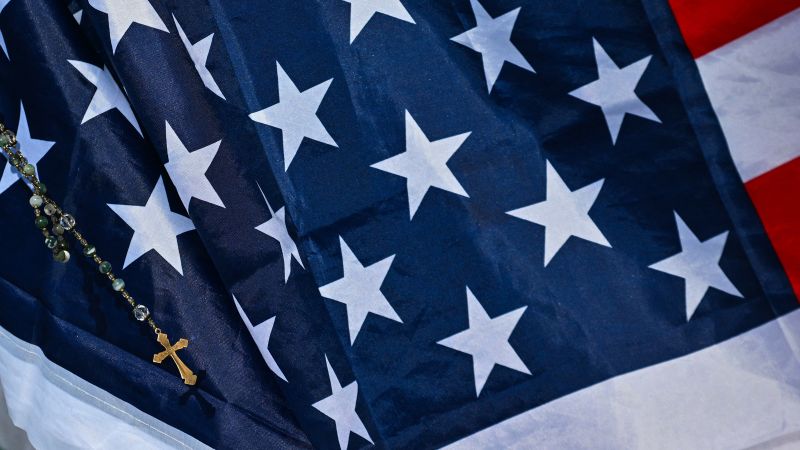
In Trump’s America, Two Very Divergent Views of Christianity in Politics Emerge
Sandego.net – The Trump era has seen a clear divide in how Christianity influences American politics. As the country’s religious landscape evolves, two contrasting ideologies have taken shape—one rooted in theocratic governance, the other in progressive inclusivity. This ideological split is not only a reflection of political trends but also a sign of deepening societal debates about faith’s role in public life. The Religious Liberty Commission, under Trump’s leadership, has amplified the push to embed religious principles into policy, while critics argue this approach risks marginalizing non-Christian perspectives in governance.
Theocratic Vision: Faith as the Foundation of Governance
Proponents of the religious right advocate for a more explicit integration of Christian values into national decision-making. They argue that policies should align with biblical teachings, emphasizing moral clarity and traditional family structures. This vision, often championed by Trump officials, frames the U.S. as a “Christian nation” shaped by divine principles. However, critics point out that this interpretation overlooks the nation’s secular roots and risks transforming religious freedom into a tool for ideological dominance. The administration’s tax reforms and immigration policies have sparked debate over whether faith is being used to legitimize specific political agendas.
A Faithful Evolution: From Atheism to Catholicism
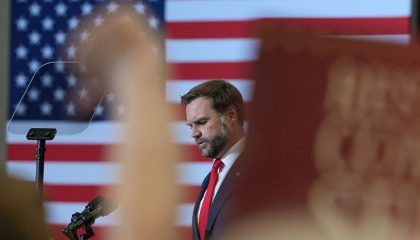
Vice President JD Vance’s personal journey from atheism to Catholicism highlights a nuanced approach to faith in politics. His memoir Communion illustrates how religious beliefs can reshape individual and collective values. Vance argues that Christianity should guide policy, but not through rigid dogma. He critiques the Trump administration’s immigration strategies as “heavy-handed,” yet supports the inclusion of religious voices in public discourse. This duality underscores the complexity of balancing faith with pragmatic governance, even within the same political framework.
“For decades, the left has labored to push Christianity out of national life,” Vance stated at a Phoenix event honoring Charlie Kirk. “They’ve kicked it out of the schools, out of the workplace, out of the fundamental parts of the public square. Freedom of religion transformed into freedom from religion.”
Reclaiming the Spiritual Narrative
Senator Raphael Warnock, a co-author of The Crooked Places Made Straight, represents an opposing view that questions the sincerity of the religious right’s political agenda. As both a senator and a pastor, he emphasizes the need for a more inclusive spiritual dialogue, one that acknowledges the evolving beliefs of Americans. Warnock challenges policies that prioritize conservative Christian narratives over diverse religious experiences, arguing that the administration’s actions contradict the compassionate values often associated with faith. His perspective resonates with those who see religion as a flexible guide rather than an unyielding doctrine.
“I have to ask whether the religion is more performative than substantive,” Warnock told The New York Times in a 2024 book tour interview. His concerns mirror broader frustrations on the political left, which views faith as a moral compass rather than a rigid framework. In a December 2024 conversation with CNN’s Laura Coates, he urged Democrats to reclaim the spiritual narrative, stating, “We ought not see the conversation around faith and values to people who are responsible for the largest transfer of wealth we saw with the One Big Beautiful Bill in American history.”
Demographic Shifts and the Decline of Christian Identity
While the religious right gains political traction, a growing segment of voters is moving away from identifying as Christian. Pew Research Center data shows a steady decline in the number of Americans who self-identify with traditional religious affiliations. This shift challenges the notion of a unified Christian political bloc, suggesting that faith’s influence may be waning in public life. Yet, the Trump administration’s policies continue to reinforce the idea that Christian values should dominate the national discourse, creating a tension between historical traditions and modern realities.
Legacy and Future of Faith in American Politics
The debate over Christianity’s role in politics is likely to persist as the country navigates its ideological divides. Whether faith is seen as a guiding force or a performative tool, its impact on public policy remains undeniable. The Trump era has accelerated this conversation, leaving a legacy of both cultural revival and religious polarization. As new leaders emerge, the question of how to balance religious influence with democratic pluralism will continue to shape the nation’s political identity. The answer may lie in redefining what it means to be a “Christian nation” in an increasingly diverse society.