House Democrats’ anxiety rises after wins by Mamdani-backed candidates: ‘Are we going to let them take over the party?’
Sandego.net – Despite the Democratic Party’s growing unease, top figures within the caucus have insisted they remain undeterred by the emergence of a faction aligned with New York City Mayor Zohran Mamdani. The mayor’s supporters achieved remarkable primary election results, securing victories that have sparked concerns about shifting party dynamics. Yet, as the race for the House continues, some lawmakers are questioning whether the rise of Mamdani’s influence could undermine the party’s unity, particularly in a pivotal election year.
Primary Election Outcomes Highlight Fractures
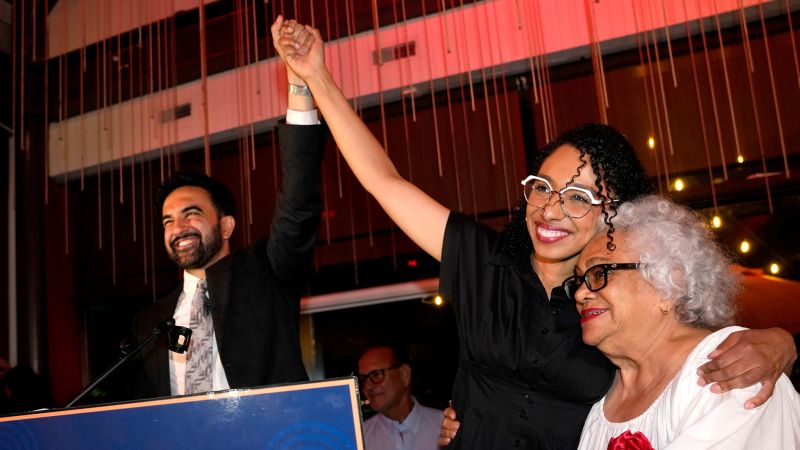
Three key congressional races saw strong performances by candidates backed by Mamdani, leading to the ousting of established Democrats like Adriano Espaillat and Dan Goldman. These results have fueled worries that progressive voices within the party might gain more traction, potentially reshaping the House Democratic caucus. The victories, however, are not just symbolic—they underscore broader tensions over the party’s approach to policy and its ability to maintain a cohesive front against Republicans.
“Obviously, the socialists had a big win last night. The question is, are we going to let them take over the party? Or are we going to stand up and fight back?” said Rep. Josh Gottheimer of New Jersey, a moderate Democrat known for his critique of Mamdani’s alignment with ultra-progressives and his stance on Israel.
Gottheimer’s remarks reflect a growing sentiment among some Democrats that the party’s traditional strategies might be at risk. While Mamdani’s allies campaigned on affordability, a central theme for the national Democratic platform, their success has also highlighted deeper ideological divides, particularly over the role of the US military in supporting Israel. These fractures, some argue, could make it harder for Democrats to present a united front in battleground districts.
Internal Party Concerns Over Vulnerability
Lawmakers in competitive districts are now debating whether the surge of socialist-backed candidates could weaken their chances of reclaiming the House in November. One Democratic representative, speaking with CNN, admitted that the party’s internal debates over policy direction might inadvertently provide Republicans with opportunities to target their most vulnerable members. “If you ask me, it was not a good night for New York,” said Rep. Greg Meeks, a key New York Democrat and close ally of House Minority Leader Hakeem Jeffries. “We’re using our resources to fight each other instead of focusing on the real threat: Trump.”
Meeks also pointed to the deleted posts from Darializa Avila Chevalier, who defeated Espaillat in her district. Chevalier’s support for abolishing police, prisons, and borders had drawn scrutiny, and Meeks suggested that such statements might be seen as a liability in national races. “The party needs to ensure that we’re not letting internal disagreements distract from the bigger picture,” he said, emphasizing the importance of maintaining a unified message to counter Republican attacks.
Democratic Socialists and the Party’s Identity
The rise of the Democratic Socialists of America (DSA) has intensified discussions about the party’s identity and priorities. While some lawmakers acknowledge the DSA’s appeal to younger voters and working-class communities, others fear it could alienate moderate Democrats and independents. A senior aide to the House Democratic leadership noted that the party must address the implications of the primary outcomes, stating, “Our national strategy needs to adapt to the fact that an anti-establishment message resonated with voters last night.”
Mamdani himself defended the results, framing them as a sign of renewed energy and grassroots support. Speaking in New York City on Wednesday, he argued that the victories reflect a demand for leaders who prioritize affordability and social equity. “What we saw last night was a hunger for leaders who will be there on the front lines looking to make it easier for working people to afford life in the greatest city in the world,” he said, tying the cost-of-living crisis to his long-standing criticisms of US military support for Israel. This connection has become a focal point in the primaries, with candidates often emphasizing their alignment with Mamdani’s vision.
Confidence in the National Strategy
Despite the anxiety, House Democrats have not abandoned their confidence in the November election. The party leadership gathered for a private briefing on Wednesday, where they shared internal polling indicating that Donald Trump trails in several critical battlegrounds. According to two sources familiar with the meeting, the data was presented as a reason to stay optimistic about flipping the House. However, the briefing did not explicitly address the Mamdani-backed wins, leaving some lawmakers to ponder their impact.
Jeffries, who backed Espaillat and Goldman, has sought to reassure his colleagues. When asked if Mamdani had created enemies on Capitol Hill, he responded, “The mayor and I agreed to strongly disagree about some of his endorsements, but he’s got work to do in terms of conversations with members of Congress moving forward.” Jeffries also emphasized that the 215 members of the House Democratic caucus should be viewed as a whole, stating, “I think we’ve got to look at the totality of all 215 members… and that answer speaks for itself.”
Strategic Reckoning and Future Challenges
As the party grapples with its new reality, questions remain about how to balance progressive energy with electoral pragmatism. Some lawmakers have already begun discussing the possibility of shifting allegiance to more centrist candidates, citing the need to appeal to a broader coalition. “We’re worried that the focus on internal debates could overshadow the broader fight against Trump,” said one Democratic source, who emphasized the importance of unity in districts where the margin of victory is slim.
Meanwhile, Mamdani’s allies continue to push for a more radical approach, arguing that the party must embrace bold policies to address systemic issues. This stance, however, has drawn criticism from those who believe it could fracture the caucus further. The challenge for Democrats now lies in integrating these progressive voices without jeopardizing their chances of winning the majority in November. Whether the party can navigate these tensions will be a key test in the months ahead.
With the primary results now a reality, the Democratic Party faces a critical juncture. The wins by Mamdani-backed candidates have exposed both the potential and the pitfalls of a more left-leaning strategy. As the campaign season progresses, the ability of Democrats to reconcile these differences will determine their success in November and the shape of the party for years to come.