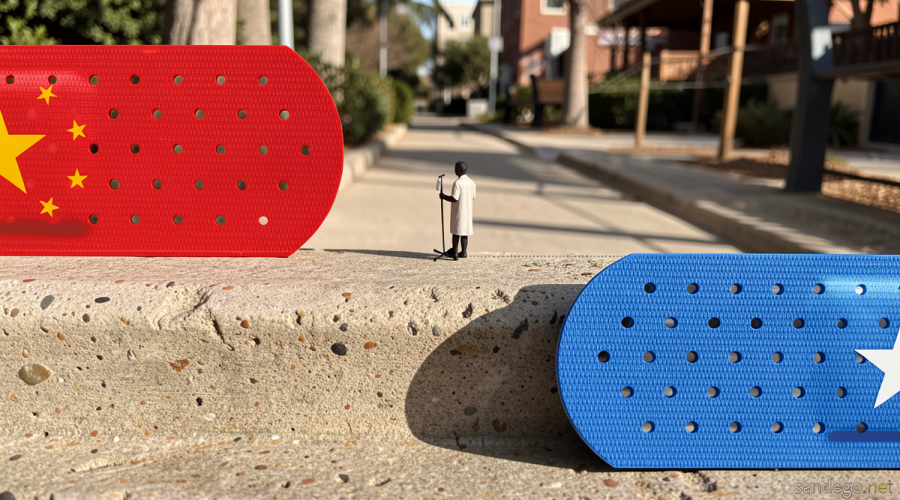
Americans Turn to Asia for Affordable Healthcare Solutions
Sandego.net – As domestic medical expenses reach unprecedented heights, an increasing wave of U.S. citizens are crossing oceans to access quality treatment at significantly reduced prices. This emerging trend spans numerous procedures, ranging from routine dental work to complex cancer therapies, transforming how Americans approach healthcare affordability.
A Personal Journey to Recovery
Isaias, a twenty-six-year-old creative professional residing in Atlanta, embarked on an ambitious journey to China that combined tourism with essential medical care. While the artist and designer anticipated exploring Shanghai’s bustling urban landscape and Chongqing’s distinctive cyberpunk-inspired architecture, financial considerations drove her decision more than wanderlust. Her gallbladder required surgical intervention following the discovery of a benign growth during a December examination.
“We were trying to stay local, just to avoid delays or anything. But [the cost] was just incredible,” Isaias explained regarding her family’s decision to pursue overseas treatment.
Domestic estimates placed the procedure’s out-of-pocket expense near ten thousand dollars. After comparing options across multiple countries, including the United Kingdom, Isaias’s family discovered a Shenzhen facility offering comparable care for under two thousand dollars. The medical tourism agency facilitated everything from visa applications to smartphone setup for navigating daily life in China.
The surgical intervention and subsequent recovery spanned approximately forty-eight hours. Following this brief medical stay, Isaias explored Chongqing’s Instagram-famous attractions before extending her journey with flexible plans to visit Shanghai and Hong Kong.
Global Market Expansion
Nations across Asia are actively positioning themselves as premier medical destinations, recognizing substantial economic benefits from attracting international patients. The Medical Tourism Association projects the worldwide sector exceeded one hundred billion dollars in value by 2024, with annual growth rates ranging between fifteen and twenty-five percent.
South Korea exemplifies this success story, welcoming over two million foreign patients during the previous year—marking the third consecutive year of record-breaking arrivals. According to the Korea Institute for Industrial Economics and Trade, these visitors and their accompanying family members contributed more than eight billion dollars in direct spending while generating over fifteen billion dollars in domestic production.
American patients represent the second-largest visitor segment following travelers from China, Japan, and Taiwan. The Ministry of Health and Welfare reported that U.S. patient numbers surged by seventy point four percent, reaching one hundred seventy-three thousand three hundred sixty-three individuals year-over-year.
Challenges and Opportunities
As regional medical capabilities advance alongside rising Western healthcare costs, countries including China, Vietnam, and the Philippines compete vigorously to establish themselves as trusted medical tourism centers. Industry leaders emphasize that sustained success depends heavily on strategic marketing initiatives and governmental support programs designed to attract international clientele.
“Redefining the image of the country as a safe destination, as a modern, progressive country, as an accessible country, is something that needs to be done,” stated Dennis Serrano, president of St. Luke’s Medical Center in the Philippines’ Quezon City.
Despite growing popularity, medical complications occurring abroad without adequate follow-up options remain the primary concern for travelers. Renée-Marie Stephano, chief executive of Global Healthcare Accreditation, identified additional challenges including inconsistent care quality, communication barriers, and unfamiliarity with international drug and device regulations.
Of approximately five percent of hospitals worldwide maintaining dedicated international patient departments, Stephano estimates fewer than one percent hold international accreditation. This gap creates significant trust-building requirements for patients navigating unfamiliar healthcare systems.
Zeeshan Zaman, who established the medical tourism platform Clinics on Call in 2014, noted that until recently, less than ten percent of his network operated facilities met comprehensive international standards. His observations highlight both the rapid expansion of the sector and the ongoing need for quality assurance mechanisms as more Americans seek affordable healthcare solutions overseas.