Lessons from Kyle Lowry’s Career for Today’s Basketball Generation
What a young generation of basketball – Before Jalen Brunson’s arrival at the New York Knicks revitalized the program, Villanova had already established an identity that would shape its basketball future for decades. This transformation began unexpectedly in the mid-2000s when head coach Jay Wright was beginning to leave his mark on college basketball. The catalyst was injury: forward Curtis Sumpter suffered an ACL tear while big man Jason Fraser dealt with persistent knee problems. These setbacks forced Wright to deploy a four-guard offensive system featuring Randy Foye, Allan Ray, Mike Nardi, and Kyle Lowry.
This four-out, one-in approach eventually became the signature of Wright’s coaching philosophy and the Wildcats’ playing style. The group established a level of excellence that would influence Villanova guards for years to come, creating a lineage that stretched from those original four players through Scottie Reynolds, Corey Fisher, Ryan Arcidiacono, and ultimately to Brunson. Among this distinguished group, Lowry emerged as the quintessential tough competitor—a player who posted up, played with physicality, and embodied a gritty mentality.
The Hard-Ass Mentality
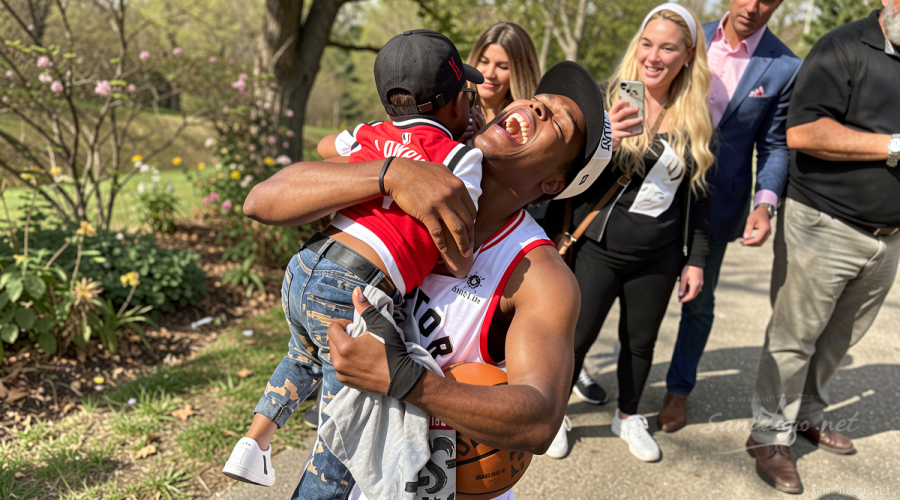
Wright recruited Lowry specifically because, in the coach’s own words, he needed “a hard ass.” During his two seasons at Villanova, Lowry fundamentally changed the direction of the program under Wright’s leadership. He then carried that same uncompromising attitude into the professional ranks. Over a remarkable twenty-year career, Lowry captured an Olympic gold medal and an NBA championship title. His success came through creative playmaking, physical drives to the basket, and an almost artistic ability to draw charging fouls.
As a new generation of athletes grows accustomed to transferring programs for better opportunities and expects compensation before fully committing to their roles, studying Lowry’s journey offers valuable perspective. Never the tallest player on the floor and occasionally not the most naturally gifted, Lowry still earned six All-Star selections and served as the flag bearer during the closing ceremony of the 2016 Summer Olympics in Rio de Janeiro. His iron determination helped him overcome obstacles, while his stubborn dedication to basketball ensured he earned his place through sheer effort.
Long after he left the Connie Mack playgrounds in North Philly, Lowry still played as if losing meant he wouldn’t get next.
Defiance and Character
Lowry’s path was not without complications. His strong will sometimes manifested as stubbornness, and his basketball obsession occasionally created tunnel vision. The author recalls seeing Lowry sitting on a table in Villanova’s old media room, legs hanging over the edge, giving a skeptical side-eye during interviews. Initially reluctant and quick to offer rebuttals rather than straightforward answers, Lowry would eventually transform into a talkative conversationalist. He enjoyed being in the spotlight but refused to admit it openly.
His rebellious streak showed up early. Lowry failed to appear at his first official Villanova event—freshman orientation—because he chose to play pickup basketball instead. This decision led to a torn ACL and a hospital stay. Rather than following medical advice, Lowry rehabilitated his injury defiantly, dancing around during practice sessions when he should have been resting and secretly participating in games with regular students before receiving clearance. Remarkably, he returned to the roster just three months after his injury.
Challenging Authority
This dichotomy defined Lowry: a player who missed orientation to play basketball, a patient who ignored doctors, yet somehow recovered ahead of schedule. He challenged Wright more than any teammate, doing the opposite of what the coach expected and questioning instructions rather than accepting them blindly. Where Wright sought structure, Lowry preferred improvisation. Where Wright demanded obedience, Lowry embraced productive discord. Despite this, he delivered exactly what the program needed—a relentless desire to win.
Lowry infused Villanova with his personality, confronting Nardi when finally permitted to practice and refusing to yield to the more senior Foye and Ray. He elevated his teammates by making them tougher, establishing a standard for what it meant to be a Villanova guard moving forward.
Everything culminated on a snowy December day in 2005. Villanova entered a matchup against No. 2 Kansas with a modest 10-4 record but departed following a devastating 34-6 second-half surge that secured the upset. The turning point came when Lowry, trapped deep in the paint, chose to work his way out by punching Keith Langford in the groin. The ejection sparked a transformation. Combined with a 36-4 run, Villanova won eleven of its next thirteen regular-season contests. Even without Sumpter in the NCAA tournament, the Wildcats pushed eventual national champion North Carolina to the limit in the Sweet 16. A year later, the program reached the Elite Eight, cementing a legacy built on toughness, defiance, and an unyielding commitment to excellence.