
Forty Tankers, Sixty Targets: A Record Day of Combined Arms in the Strait of Hormuz
Sandego.net – On Tuesday, American forces pulled off what two senior US officials described as the largest wartime convoy operation of the conflict: escorting 40 commercial tankers — collectively loaded with approximately 18 million barrels of crude oil — through the narrow waterway that links the Persian Gulf to the open ocean. The escort ran in parallel with a fresh salvo of precision strikes against roughly 60 Iranian military installations clustered around the strait, making the day one of the most layered kinetic operations since the war opened more than six months ago.
Before hostilities began, the corridor handled close to 20 million barrels of oil per day, a figure that underpins the energy supply chains of Asia, Europe, and beyond. The gap between that pre-war throughput and today’s escorted volumes underscores how much the conflict has disrupted one of the world’s most critical maritime chokepoints.
A Multi-Domain Strike Package
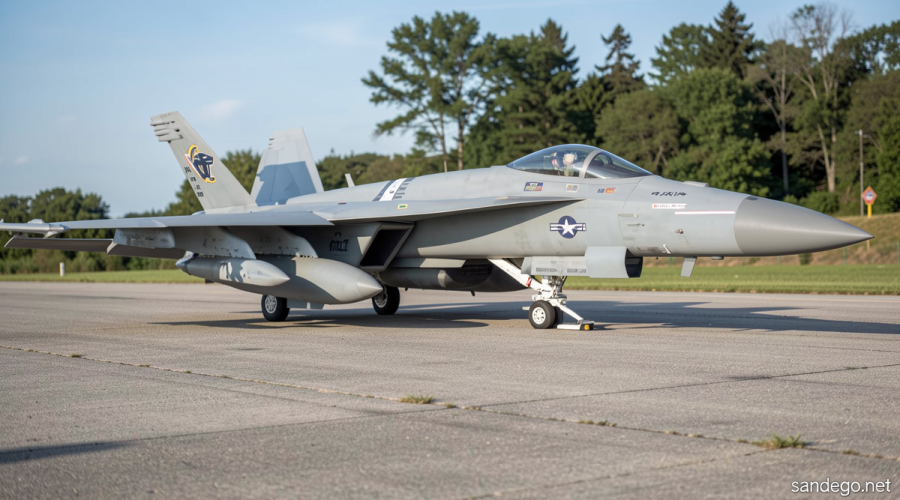
The Tuesday operation drew on air, naval, and space-based assets simultaneously. While carrier groups and littoral combat ships moved alongside the tanker convoy, fighter-bombers and cruise-missile platforms struck air-defense batteries, radar arrays, shore-based maritime units, mine-laying platforms, and communications nodes in the strait’s vicinity. Officials confirmed that anti-ship cruise missiles were also neutralized during the escort window, removing an immediate threat to the convoy’s flank.
The second official characterized the ongoing strike campaign as necessary because Tehran has shown it can rebuild degraded capabilities quickly enough to demand continuous pressure. In the language of the briefing, the pattern resembles “mowing the grass” or a game of “whack-a-mole” — each node destroyed must be replaced before it can again threaten a passing vessel. Yet the strikes also serve a longer strategic purpose: systematically eroding Iran’s leverage over the waterway itself.
The “Full Court Press” and What It Means for Tehran’s Economy
Washington’s current posture, as outlined by both officials, prioritizes three interlocking tasks: hitting targets that threaten shipping in the strait, running escort operations for commercial traffic, and sustaining a naval blockade on Iranian ports. The administration frames this combination as a “full court press” designed to intensify economic pressure on the regime’s leadership.
The blockade has, by the second official’s account, prevented Iran from exporting a single barrel of oil since July. That cutoff, layered on top of elevated global energy prices, has already produced turbulence in international bond markets as investors price in prolonged supply disruption.
Nuclear Goals Pushed to the Back Burner
For the time being, operations aimed at dismantling elements of Iran’s nuclear program have been effectively sidelined. The first official reiterated that US Central Command has received explicit direction to concentrate all available effort on the strait and on keeping oil out of — or into — Iranian ports.
President Donald Trump has recently signaled he is prepared to leave Iran’s remaining stockpile of highly enriched uranium, which survived last year’s strikes on three key nuclear facilities, buried in place and monitored through satellite imagery. That posture marks a notable departure from his earlier insistence that securing the material was a top priority of the current campaign.
Trump: “We Blew Up Much More Than Their Radar”
Speaking from the Oval Office on Wednesday, the president described the latest round of strikes as extending well beyond radar systems.
“They were trying to see the ships,” he said. “They can’t see it because they have no radar, because we blew it up, and we blew up much more than their radar last night.”
He did not itemize what else was targeted. What he did insist upon, however, was the claim that the United States maintains operational control of the strait and has demonstrated the ability to strike Iranian shore assets while simultaneously defending passing vessels from incoming threats.
Bessent: A Wartime Record in the Wrong Direction
Treasury Secretary Scott Bessent, speaking to CNBC earlier in the week, noted that oil flowing through the strait had reached a wartime record of more than 17 million barrels per day on Monday — a figure that, while impressive in isolation, still falls short of the pre-war baseline.
“That is not Iranian control of the strait,” Bessent said.
US officials have told reporters they view the waterway as a “depreciating asset” for Iran: every day the blockade holds and every strike that degrades Tehran’s coastal infrastructure reduces the regime’s ability to monetize its geographic position.
No Quick End in Sight
Even with Tuesday’s operation judged a success, neither official expressed confidence that a swift resolution to the conflict is near. Energy companies remain cautious about routing tankers through the corridor, even under military escort, and the premium embedded in global oil prices shows no sign of unwinding. Whether the multi-pronged military campaign will ultimately compel Tehran to capitulate — and, if so, on what timetable — remains an open question that markets, allies, and the American public are watching closely.
Related Reading
Frequently Asked Questions
What is 60 targets struck 18M barrels of oil?
60 targets struck 18M barrels of oil is the main topic of this guide. The article explains the context, practical details, and next steps readers should understand.
Why does 60 targets struck 18M barrels of oil matter?
60 targets struck 18M barrels of oil matters because readers are looking for a useful answer, not just a short summary. Good content should match search intent and help them decide what to do next.