Federal Judge Blocks Trump’s Newest Order
Sandego.net – A federal judge blocks Trump’s newest executive push on birthright citizenship. On Wednesday, US District Judge Deborah Boardman issued a preliminary injunction that freezes enforcement of the administration’s August directive while allowing agencies to continue drafting internal implementation guidance. The ruling means the government may prepare paperwork but cannot yet act on the policy as it applies to the certified class of plaintiffs before the court.
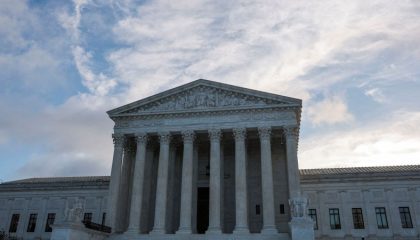
The decision lands squarely in the middle of a years-long constitutional fight over who qualifies as a citizen simply by being born on American soil. The 14th Amendment’s Citizenship Clause has long been understood to guarantee that status to every child born within the United States, regardless of whether a parent holds legal residency, a visa, or no recognized immigration status whatsoever. Making that interpretation obsolete has become a signature priority of Trump’s second term, and the August order marks his second attempt in roughly a year to reshape the rule through executive action alone.
What the August Directive Actually Targets
Rather than deny citizenship across the board, the August order instructs federal agencies to withhold recognition of birthright status for children whose parents are not US citizens when at least one parent falls into one of three narrow categories: classified as “an alien enemy,” employed by a foreign government, or engaged in what the order labels “birth tourism” — traveling to the United States specifically to give birth so the child acquires citizenship. The administration framed the measure as closing existing statutory gaps rather than overriding constitutional text, a characterization that did not survive judicial review.
Boardman’s Reasoning and the Limits of the Injunction
In her opinion, Boardman — a Biden-era appointee — concluded the new policy is likely unconstitutional in light of the Supreme Court’s summer ruling that struck down Trump’s earlier, broader executive order. She stressed that the certified class of challengers consists of children who would have been stripped of citizenship under the first directive. For those plaintiffs, the court found a sufficient likelihood of success on the merits to warrant halting enforcement.
“If not enjoined as to the class, the 2026 Executive Order could deny the right to citizenship by birth to children whom the Supreme Court declared were citizens,” Boardman wrote.
The judge stopped short of a full merits determination. Agencies retain the ability to continue developing operational guidance, meaning the administrative machinery behind the order can keep turning even while the order itself sits frozen for the affected class.
Administration Response and Next Steps
Attorney General Todd Blanche addressed the ruling during a Wednesday television appearance, signaling that the White House had anticipated a contested outcome. He characterized the executive order as having been drafted with full awareness of the Supreme Court’s prior decision.
“We didn’t expect this judge to say we were right and so this is not something that is a surprise to us,” Blanche said.
He then pointed toward the next procedural step:
“If we have to go back to the Supreme Court, we will.”
The White House had not issued a formal written statement as of the latest update. A second lawsuit challenging the new policy is already pending in New Hampshire, meaning the administration faces at least two active litigation fronts simultaneously.
The Road to This Moment
Trump’s first executive order on the subject took effect almost immediately after he returned to the White House last year. That directive sought to deny citizenship to infants born to parents who were in the country unlawfully or who held only temporary visitor status. The measure was challenged quickly, worked its way through the courts, and ultimately reached the Supreme Court, which this summer declared it unconstitutional. The justices held that the executive could not unilaterally carve out categories of newborns from the Citizenship Clause. Within weeks of that decision, the administration issued the August order, recalibrating its language to target a narrower set of circumstances. Critics argued the reworked language was functionally indistinguishable from the invalidated policy in practice, while defenders maintained it addressed genuine statutory ambiguities the Court had left unresolved.
Frequently Asked Questions
Does this injunction end the birthright-citizenship debate? No. It is a preliminary injunction limited to the certified class of plaintiffs in Judge Boardman’s case. A parallel suit in New Hampshire remains active, and the administration has signaled it will seek Supreme Court review if necessary.
Can agencies still prepare paperwork under the August order? Yes. The ruling freezes enforcement against the affected class but expressly permits federal agencies to continue drafting internal guidance on how the order would operate.
What happened to the first executive order? The Supreme Court struck it down this summer, holding that the president cannot unilaterally exclude categories of newborns from the 14th Amendment’s Citizenship Clause. The August order was issued within weeks of that decision as a narrower alternative.
Who is Judge Deborah Boardman? She is a US District Court judge appointed during the Biden administration. Her opinion in this case relies heavily on the Supreme Court’s summer ruling invalidating the earlier, broader directive.