Sports Franchises Are Becoming the Ultimate Wealth Shelter — and the Window Is Closing Fast
Sandego.net – The ownership landscape of American professional sports is being reshaped at a speed that would have seemed implausible even five years ago. Within a single month, the Los Angeles Lakers changed hands at a record valuation, the Seattle Seahawks edged closer to a landmark sale, and the New York Yankees accepted a multi-billion-dollar minority investment. The velocity of these transactions is pushing franchise valuations into territory that dwarfs every previous benchmark in the industry.
One obvious driver is straightforward arithmetic: the global billionaire population keeps expanding, and the number of purchasable sports franchises stays fixed. More wallets chasing fewer assets inflates prices. But industry insiders point to a less intuitive factor that has quietly reshaped how ultra-wealthy buyers think about sports ownership — the rise of artificial intelligence.
The AI Hedge
In an era where software can automate accounting, disrupt logistics, and upend entire service sectors, sports franchises are increasingly viewed as a technology-resistant asset class. The logic is simple: a baseball game or an NFL contest will not be rendered obsolete by a new algorithm the way a traditional software company might be.
“I’m willing to bet odds are greater that in 100 years that the Yankees will be here compared to IBM being here,” said Sal Galatioto, a leading investment banker in the field of selling sports teams.
Galatioto, who has spent three decades brokering purchases of full or partial team stakes, described his current workload as unprecedented. He framed the shift in buyer psychology sharply: previously, wealthy individuals acquired franchises for long-term appreciation, personal prestige, and the intrinsic scarcity of the asset — essentially treating them like fine art. Now, he argued, ownership also functions as a portfolio hedge against technological disruption.
Victor Matheson, an economics professor at the College of the Holy Cross and a specialist in sports business economics, acknowledged that other sectors — electric utilities, for instance — also carry some degree of AI resistance. Yet he drew a distinction in desirability.
“No one has ever dreamed of being CEO of (electric company) National Grid,” Matheson said. “But everyone dreamed of being the owner or manager of the Yankees.”
A Cascade of Record Transactions
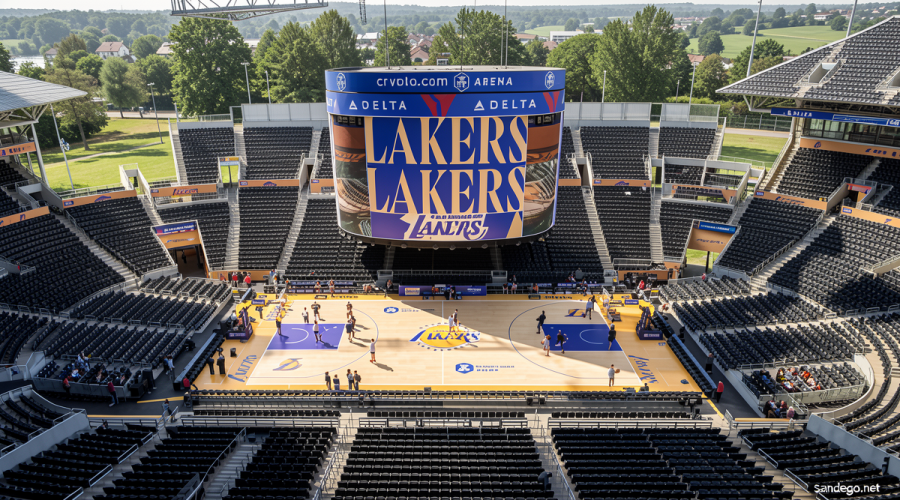
The numbers behind this month’s deals underscore the scale of the frenzy. Former Disney chief executive Bob Iger and venture capitalist Josh Kushner struck a deal to acquire a controlling interest in the Lakers, valuing the franchise at $12.5 billion — a figure that eclipses every prior NBA sale. Fenway Sports Group, parent company of the Boston Red Sox, reportedly divested a 40 percent stake in English Premier League side Liverpool to a buyer group that includes Amazon founder Jeff Bezos.
In baseball, Major League Baseball cleared a $3.9 billion sale of the San Diego Padres to a private-equity billionaire and his spouse, a sum well above the $2.4 billion that hedge-fund manager Steve Cohen paid for the New York Mets in 2020. The Yankees, the sport’s most valuable franchise, accepted a $2.6 billion capital injection from Apollo Global Management in exchange for a minority stake. Meanwhile, the NFL moved closer to approving a $9.6 billion transaction for the Super Bowl–champion Seattle Seahawks, and the NBA’s Minnesota Timberwolves together with the WNBA’s Minnesota Lynx were sold in a combined package valued at $4.5 billion.
Broadcasting, Betting, and the Revenue Engine
Underpinning these valuations is a structural shift in how fans consume live sport. In an on-demand media environment, live sporting events remain among the few programming categories audiences still watch with embedded advertising. The entry of streaming platforms — Amazon, Apple, Netflix — into rights negotiations has driven broadcast-fee revenue to levels that were unimaginable a decade ago.
“Who knows what new technology will come out to distribute the games,” Galatioto observed. “If you own the content, it doesn’t matter how it’s distributed.”
Legalized sports betting, enabled by a 2018 U.S. Supreme Court ruling that struck down the federal ban, has added another accelerant. When wagering money is attached to an event, viewership expands well beyond the traditional fan base. Matheson estimated that as much as one billion dollars per year in total gambling revenue now flows to teams and leagues, accompanied by a new tier of sponsors.
“And there’s the thought that people who are gambling more are more likely to tune in, which means more butts in the seats, as well as more eyeballs on the TVs,” Matheson said.
Scarcity and the Widening Buyer Pool
Supply constraints amplify every other factor. Franchises enter the market only when an owner decides to sell, passes away, or seeks liquidity through a partial divestiture. Some clubs, like the Padres, surfaced only after a succession event. Others, such as the NFL’s New York Giants — controlled by the Mara family for more than a century — have opted to sell minority stakes while retaining operational control.
Irwin Kirshner, head of the sports law practice at Herrick Feinstein, noted that private-equity firms have begun treating franchise acquisitions as a recurring opportunity rather than a one-off event.
“Every year (valuations) seems to go up more, and so I think private equity started to recognize the value of this opportunity,” Kirshner said.
The buyer demographic is also broadening geographically. American capital is flowing into European soccer clubs at an accelerating rate, while North American franchises attract international private-equity interest. The result is a two-way market in which scarcity on both sides of the Atlantic keeps pushing prices upward.
For prospective buyers, the practical implication is clear: the pool of available franchises is finite, the competition among ultra-high-net-worth purchasers is intensifying, and the convergence of AI-driven portfolio logic, surging broadcast revenue, and legalized wagering has created a demand environment with no historical precedent. Those who intend to acquire a stake in professional sport face a market where hesitation carries a measurable financial cost.
Related Reading
Frequently Asked Questions
What is Want to buy a sports team?
Want to buy a sports team is the main topic of this guide. The article explains the context, practical details, and next steps readers should understand.
Why does Want to buy a sports team matter?
Want to buy a sports team matters because readers are looking for a useful answer, not just a short summary. Good content should match search intent and help them decide what to do next.