This Democratic Socialist Has Upset the Party
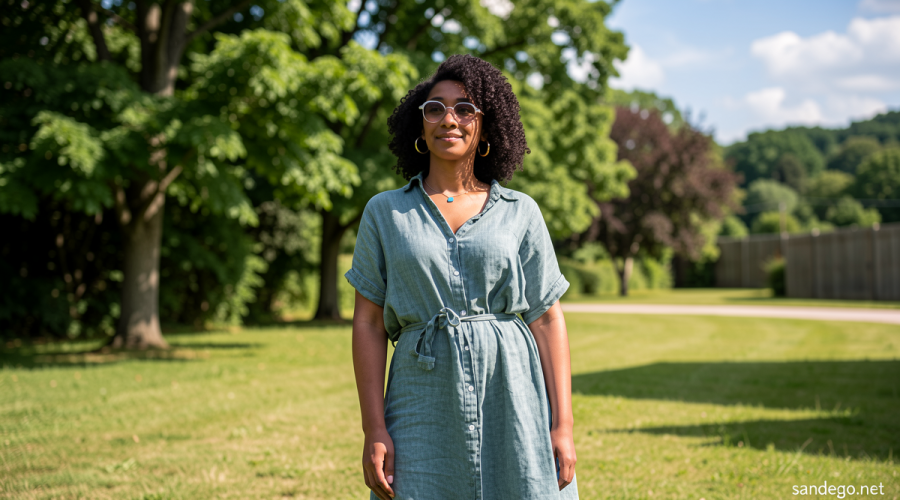
Sandego.net – This democratic socialist has upset the party establishment in ways that have rattled institutional Democrats from Gracie Mansion to the House floor. At the August Dominican Heritage Reception in New York, the atmosphere broke from years of predictable protocol. Activists who would ordinarily be found on picket lines mingled with elected officials over cheese empanadas and sancocho, while Mayor Zohran Mamdani — wearing a butter-yellow guayabera — called out community figures from the stage. The longest sustained ovation of the evening went to a 32-year-old organizer who, weeks earlier, had unseated the chair of the Congressional Hispanic Caucus in a primary that sent tremors through the party’s institutional core.
Darializa Avila Chevalier’s June victory over Rep. Adriano Espaillat was not simply a seat change. It represented the latest chapter in an insurgent wave that has toppled multiple congressional incumbents and forced the Democratic leadership to confront a question it has long preferred to defer: what happens when the left’s most uncompromising voices hold actual legislative power?
The Midterm Calculus
With November approaching, the arithmetic has sharpened. House Democratic Leader Hakeem Jeffries faces a scenario in which a single-digit majority, should Democrats reclaim the chamber, would place Avila Chevalier alongside at least four other progressive nominees in positions of outsized influence. Their collective leverage over his potential speakership could shape the party’s agenda on immigration enforcement, foreign policy, and domestic priorities. Informal conversations among the incoming cohort and allied progressives have already turned to governance structure — specifically, how to build what they describe as a model of shared authority that returns decision-making power to working communities.
“Our movement has worked too hard for me to allow myself to be distracted,” Avila Chevalier told CNN. “We’ve been talking about how do we come in strong on day one, and really, meaningfully build a model of co-governance that gives power back to working people.”
Scrutiny and Internal Friction
The media spotlight has been relentless since the primary campaign. A community organizer and doctoral student, Avila Chevalier built her run around two non-negotiable positions: unwavering solidarity with Palestinians and the abolition of Immigration and Customs Enforcement. In the final weeks of the Espaillat contest, opponents zeroed in on archived tweets from a since-deleted account in which she had criticized Democratic leadership and endorsed far-left policy positions. They also highlighted her attendance at a contentious pro-Palestinian rally held the day after Hamas’s October 7, 2023, attack on Israel — a detail that became a recurring talking point at Republican rallies and on cable news.
The result has been a kind of permanent media presence: a regular fixture on Fox News, a named target at President Donald Trump’s campaign events, and a source of quiet anxiety among House Democrats who fear being lumped together with socialists or communists by the GOP’s messaging apparatus. This democratic socialist has upset enough internal dynamics that progressive members of Congress have pushed back against what they characterize as a predictable establishment reflex: isolate the insurgent, make her the problem, and protect the institutional center.
Rep. Summer Lee, a progressive Democrat from Pennsylvania, framed the dynamic explicitly.
“Republicans are always encouraging us to divide ourselves,” Lee said. “I also see a lot of people who are trying to make her a boogeyman, who are trying to make her a pariah, and I am trying, and I really want to fight back against that instinct.”
The parallel to 2018 is difficult to ignore. After that midterm cycle, a cohort of first-term progressive members — later dubbed the “Squad” — defeated entrenched incumbents and immediately embedded themselves in Capitol Hill protest movements. The outcomes diverged sharply. New York’s Alexandria Ocasio-Cortez, who notably did not endorse Avila Chevalier’s candidacy, demonstrated an ability to operate within the caucus and negotiate across the aisle on substantive legislation. By contrast, former Reps. Cori Bush of Missouri and Jamaal Bowman of New York became more identified with extralegislative activism than with delivered policy, a distinction that ultimately left them exposed to successful primary challenges.
Antjuan Seawright, a Democratic strategist and longtime advisor to South Carolina Rep. Jim Clyburn, distilled the difference in a single observation: the question is not whether the insurgent can legislate, but whether the party will let her try before writing the obituary.
Frequently Asked Questions
Who is Darializa Avila Chevalier? She is a 32-year-old community organizer, doctoral student, and newly elected U.S. Representative from New York who defeated Rep. Adriano Espaillat in the June 2026 Democratic primary, ending his tenure as chair of the Congressional Hispanic Caucus.
What happened at the Dominican Heritage Reception? The August 2026 event at Gracie Mansion drew a notably activist-heavy crowd compared with prior years. Mayor Zohran Mamdani hosted the gathering, and Avila Chevalier received the evening’s longest ovation.
How might her election affect House leadership? If Democrats win a narrow majority in November, Avila Chevalier and at least four other progressive nominees would hold disproportionate influence over Speaker Hakeem Jeffries’s agenda-setting, particularly on immigration and foreign-policy votes.
What are her two signature policy positions? Unwavering solidarity with Palestinians and the abolition of ICE. Both were central to her primary campaign messaging.