
Locals sue to block prime Miami land from becoming Trump presidential library
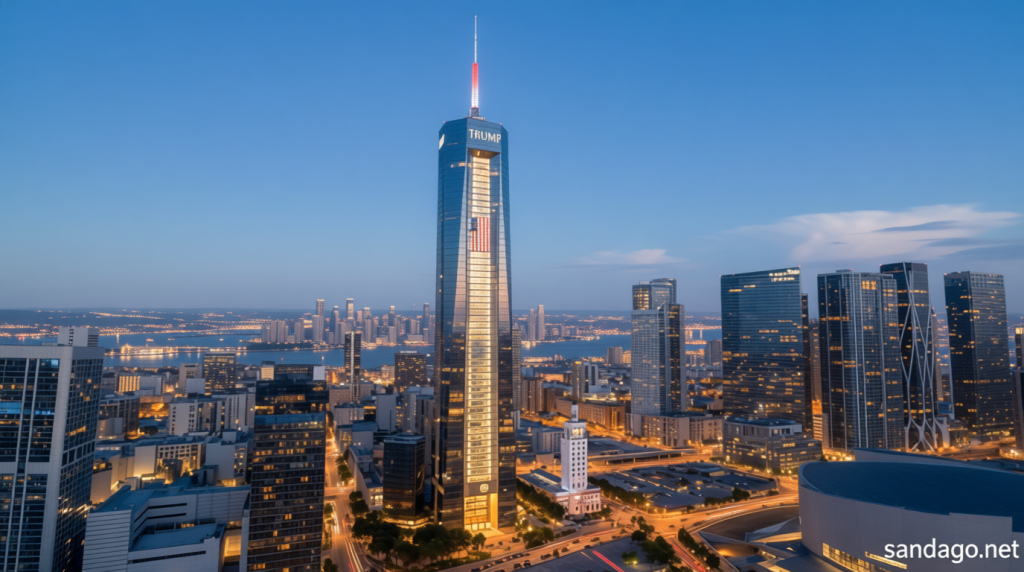
Residents Sue to Prevent Trump Presidential Library from Claiming Miami’s Valuable Waterfront Land
Locals sue to block prime Miami – On Wednesday, a group of South Florida residents launched a legal challenge aimed at halting the state’s transfer of a strategically located waterfront parcel in Miami to the Donald J. Trump Presidential Library Foundation. The lawsuit alleges that the move violates the Domestic Emoluments Clause of the U.S. Constitution, which forbids states from granting a financial advantage to a currently serving president. The targeted land, assessed at approximately $63 million by the local property appraiser, was previously owned by Miami Dade College before being donated to the state last year.
State Officials’ Decision Sparks Controversy
Florida Governor Ron DeSantis and other state leaders finalized the donation in September of last year, passing a resolution to transfer the property to the foundation. The land, situated in downtown Miami, is part of a larger initiative to establish a presidential library that would serve as a legacy project for former President Donald Trump. The foundation, established by Eric Trump, Michael Boulos, and James Kiley—a Trump Organization attorney—has outlined ambitious plans for the site, including a towering structure bearing the Trump name and a lobby adorned with a 747 Air Force One.
President Trump himself has expressed his vision for the library, emphasizing that it would blend real estate development with presidential history. In a statement from last year, he said, “I don’t believe in building libraries or museums,” suggesting the project would mirror his other ventures, such as hotels and office spaces. He further praised the location, calling it the “best block in Miami.” However, critics argue that these remarks indicate a clear intent to monetize the site, potentially generating substantial profits for Trump and his family.
“I don’t believe in building libraries or museums,” Trump told reporters last year.
According to the lawsuit, the land’s value could exceed hundreds of millions of dollars when considering recent property sales in the area. The plaintiffs claim that if the state had sold it on the open market, the proceeds could have significantly boosted Miami Dade College’s endowment, enabling investments in research, expanded degree programs, and improved facilities. The legal action also highlights concerns that the Trump family might prioritize financial gain over public benefit, undermining the purpose of the presidential library as a cultural institution.
Plaintiffs and Legal Strategy
The lawsuit was filed jointly by the Constitutional Accountability Center, a liberal Washington, D.C.-based think tank, and the Florida law firm Gelber Schachter & Greenberg. The plaintiffs include a Miami Dade College student, a nonprofit associated with local activist Marvin Dunn, and two residents whose views of the waterfront would be obstructed by the proposed Trump skyscraper. Their arguments center on the potential conflict of interest and the state’s failure to follow proper procedures during the land transfer.
Earlier this year, Marvin Dunn had already initiated a separate lawsuit against Miami Dade College, alleging that the institution violated the state’s opening meeting laws. In November, a judge granted a temporary injunction to pause the transfer of the land. However, the injunction was lifted a month later after the college board conducted a second vote that included additional details about the land’s intended use and allowed public input. The state officially transferred the property to the library foundation in January, according to local records.
The legal battle has intensified as Florida officials sought to expedite the project. A bill passed by the Republican-led legislature and signed by DeSantis in the previous year aimed to limit local governments’ ability to regulate presidential libraries, anticipating the construction of one in Miami. This law, combined with the recent land donation, has fueled claims of a coordinated effort to fast-track the Trump library without full public scrutiny.
Political and Legal Context
The controversy underscores broader debates about the role of presidential libraries in shaping local economies. Critics argue that the library’s development could transform a public asset into a private enterprise, benefiting Trump’s family rather than the community. In contrast, supporters contend that the project represents a lasting legacy for the former president, adding cultural and economic value to the city.
The Trump family’s influence in Florida has been a key factor in the decision-making process. Eric Trump, who spearheaded the foundation’s formation, has framed the library as an extension of his father’s real estate empire. The project’s design, which includes a hotel and office spaces, aligns with the Trump Organization’s business model, raising questions about its dual purpose as both a historical site and a profit-generating entity.
CNN has sought comments from the library foundation, Miami Dade College, and the Florida state government to clarify their positions. In a statement to the network, White House spokesman Davis Ingle affirmed the project’s significance, stating it would “stand as one of the most magnificent buildings in the world and a living testament to the indelible impact” of Trump. However, the foundation has yet to address concerns about the financial benefits to the president.
The legal challenge has also highlighted the procedural aspects of the land transfer. While the Miami Dade College board initially approved the donation without detailed explanations, the subsequent second vote provided more transparency. Nevertheless, plaintiffs argue that the process still lacked adequate public debate and failed to account for the broader implications of the gift.
As the case unfolds, it remains a focal point for discussions on executive power, public resources, and the intersection of politics and real estate. With the Trump library now under construction, the lawsuit serves as a reminder of the ongoing scrutiny surrounding the use of state assets for presidential initiatives. The outcome may set a precedent for future projects, determining whether such donations are permissible under the Domestic Emoluments Clause or if they represent an undue advantage for the sitting president.
This article has been updated with additional developments, reflecting the evolving legal and political landscape surrounding the Miami Trump library. The case continues to draw attention from both supporters and opponents, as they weigh the legacy of the former president against the potential economic and cultural impact on the city.
