
Exclusive: The FAA is evaluating risks to flights from Trump’s ‘triumphal arch’
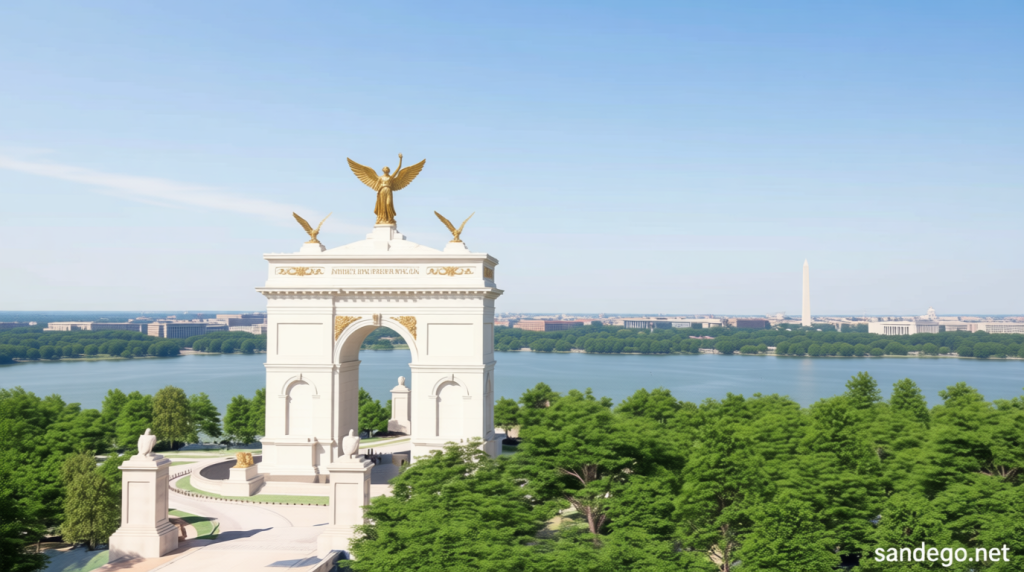
Exclusive: FAA Evaluates Flight Risks from Trump’s Triumphal Arch
Exclusive — The Federal Aviation Administration is currently assessing the potential impact of President Donald Trump’s proposed ‘triumphal arch’ on aviation safety in Washington, D.C. This 250-foot structure, intended as a symbolic tribute to the nation’s 250th anniversary, is planned for construction near Ronald Reagan Washington National Airport. According to internal documents obtained by CNN, the Department of the Interior has requested a detailed aeronautical analysis, highlighting concerns over how the arch might disrupt air traffic in a region already prone to navigational challenges. The study aims to determine if the project meets safety standards before it proceeds.
Arch Specifications and FAA Standards
The National Park Service has confirmed that the arch’s height, when combined with the elevation of the surrounding terrain, will reach 279 feet. FAA guidelines require that any structure exceeding 200 feet in height within designated airspace corridors undergo an obstruction evaluation. While the agency typically completes such assessments within 45 to 90 days, the process can take significantly longer due to the intricate nature of analyzing flight paths, weather patterns, and proximity to critical landmarks. The arch’s location on Memorial Bridge’s grassy end adds complexity to the analysis.
FAA officials have acknowledged initiating the review but have not yet released a firm timeline. This delay has prompted discussions among aviation experts, who stress the importance of meticulous evaluation before finalizing the project. The agency’s Obstruction Evaluation Group will examine factors like runway distances, airport elevation, and the arch’s exact coordinates to gauge its effect on air traffic operations. Temporary cranes used during construction may also be scrutinized for their potential to create temporary hazards.
Historical Aviation Challenges in the Area
The arch’s planned site has a history of aviation incidents, including a midair collision between an American Airlines jet and a Black Hawk helicopter in 2025. The ‘north approach’ flight path, which the arch will intersect, is a high-traffic corridor requiring pilots to navigate around the Pentagon, Washington Monument, and other landmarks. These challenges underscore the need for careful consideration of the arch’s design and placement to prevent further disruptions.
Reagan National Airport, a major hub with over 900 daily commercial flights, relies on precise air traffic management. The FAA’s evaluation will determine whether the arch’s construction could interfere with these operations, particularly during critical phases like takeoff and landing. Experts warn that even minor obstructions in this area can have significant consequences, given the volume and speed of air traffic.
Approval Timelines and Political Pressures
The project’s approval depends on two federal panels: the Commission of Fine Arts and the National Capital Planning Commission. These bodies are responsible for reviewing design and location proposals. However, insiders suggest the Trump administration may seek to expedite the process, echoing previous goals such as completing the arch within two months of its announcement. This accelerated timeline could affect the thoroughness of the FAA’s analysis and the final decision.
FAA officials have not yet specified a deadline for the review, raising concerns among aviation safety advocates. While the agency typically coordinates with multiple departments, the speed of this evaluation might prioritize political momentum over technical rigor. The Commission of Fine Arts, which has already given preliminary approval to the design, is now reviewing a revised concept, leaving uncertainty about the project’s final fate.
Industry Concerns and Regulatory Scrutiny
Exclusive — Aviation industry leaders are urging the FAA to conduct a comprehensive assessment of the arch’s risks, emphasizing the need for transparency. They argue that even a single incident could have a ripple effect on regional air travel, given the arch’s proximity to a key airport. The study’s findings will be crucial in determining whether the structure meets safety benchmarks for future air traffic.
Experts also warn that the arch’s placement may influence how the FAA approaches similar projects in the future. The administration’s push for rapid approval has been a recurring theme, with past initiatives like the Kennedy Center renaming and the White House ballroom expansion showing a pattern of prioritizing speed over detailed analysis. This could set a precedent for evaluating other structures in high-traffic airspace areas.
