New polls show Americans’ complicated feelings about the country, 250 years on
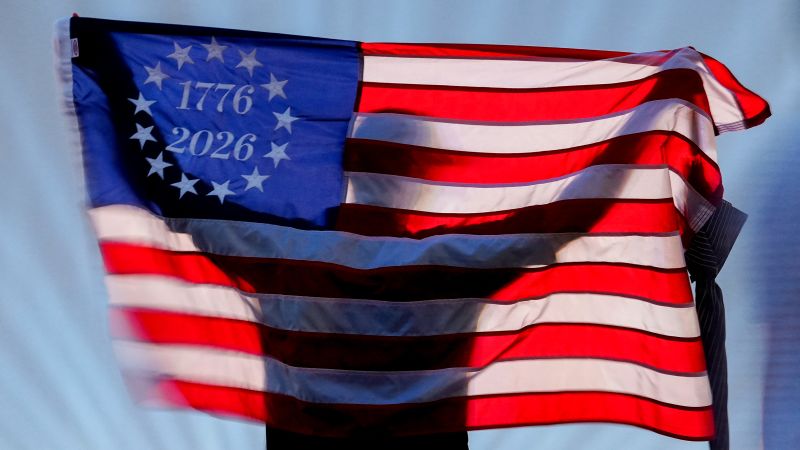
Sandego.net – As the United States prepares to mark its 250th anniversary, a wave of recent surveys has revealed a nuanced public perception of the nation’s founding ideals. One such poll, conducted by Gallup, indicates that over 75% of Americans believe the country’s early leaders would be disheartened by its current state. This sentiment is echoed across multiple studies, highlighting the tension between historical aspirations and contemporary realities. While the figures may seem stark, they reflect a broader pattern of ambivalence that has taken root in the American psyche over the past two and a half centuries.
The latest Gallup survey, released this week, found that only 19% of respondents think the signers of the Declaration of Independence would approve of the nation’s trajectory today. The remaining majority, 77%, express the belief that the founders would be disappointed. This pessimism appears to transcend political lines, though Republicans remain slightly more optimistic than Democrats. Across party lines, no more than a quarter of Americans hold a positive view of the founders’ approval, suggesting a collective sense of distance from the nation’s early days.
Historically, Gallup has periodically asked about public sentiment toward the country’s founding era. The current data marks a new low in optimism, with the most recent reading being the most pessimistic since the surveys began in 1999. “It’s challenging to imagine what the founders would make of America today,” remarked Tim Naftali, a presidential historian. “Yet, the poll aligns with a general mood of dissatisfaction that has long characterized the American public.”
“Our language is the same, our principles are the same, but this country is far more powerful, far more diverse, far richer in many respects than I think they could have ever imagined,” Naftali said. “We have surpassed the outer reaches of the most imaginative of them … I’m sure they would just find us rather fascinating.”
Despite the prevailing pessimism, the public acknowledges the nation’s achievements. Nearly 70% of Americans say the country has made significant strides in realizing its founding ideals over the past 250 years. This perspective, however, coexists with concerns about the future. For instance, a Marquette Law School poll highlighted that while 66% of respondents express pride in their national identity, only slightly more than half remain optimistic about the nation’s democratic prospects. This dichotomy underscores a complex relationship with the country’s legacy.
Another survey by Fox News further illustrates this divide. Respondents are more inclined to label themselves as patriotic than to express pride in the country’s current condition. This trend suggests a shift in how Americans define their national identity, with patriotism often tied to emotional attachment rather than tangible success. The AP-NORC poll reinforces this by showing that the right to vote and freedom of speech are universally recognized as cornerstones of the US’s identity. Yet, just under half of Americans, including a majority of Democrats, perceive these freedoms as under threat.
The sentiment of disillusionment is not new, but its intensity may be growing. A recent NBC survey found that only 38% of US adults are confident the country’s best years lie ahead, a decline from 45% in a 1990 poll. This data aligns with a Roper poll from over three decades ago, which also reported 72% of Americans felt the American Dream was harder to attain than before. While the nation’s trajectory has changed, the perception of challenges persists, revealing a pattern of cyclical optimism and skepticism.
Historical nostalgia is also evident in the data. A 1947 Gallup poll showed that 13% of Americans would most want to witness the signing of the Declaration of Independence, the highest share compared to those who preferred other events like the Gettysburg address or the Japanese surrender in World War II. This highlights a enduring fascination with the country’s origins, even as its modern complexities challenge traditional notions of success.
Being an American means different things to different generations. Ipsos polling earlier this year revealed that half of all US adults, including most of those aged 45 and older, consider their national identity an essential part of self-perception. Younger adults, by contrast, are less likely to emphasize this connection. However, both age groups agree that it is vital to discuss the nation’s achievements and shortcomings. The data underscores a balanced approach to national reflection, with 58% of respondents affirming the importance of highlighting successes alongside its flaws.
The upcoming Independence Day celebrations are shaping up to be more contentious than previous years. President Donald Trump has infused the 250th anniversary with his own vision, sparking debates about how the nation should commemorate its history. According to Marquette Law School’s findings, 57% of Americans express at least some interest in the commemorations, a figure comparable to the 50 years prior when the 200th anniversary of the Declaration was celebrated. Yet, the partisan gap has widened significantly, with Republicans now 33 points more likely than Democrats to express enthusiasm for the events.
These polls collectively paint a picture of a society grappling with its past while navigating an uncertain future. The blend of pride and concern reflects the dual nature of American identity—celebrating progress while questioning its direction. As the 250th anniversary approaches, the public’s mixed emotions may influence how the nation collectively reflects on its journey. Whether these feelings will shape a renewed sense of unity or deepen divisions remains to be seen.
The historical context of these surveys adds depth to the current discourse. From the 1947 Gallup poll’s emphasis on the Declaration to today’s focus on modern challenges, the American public continues to balance reverence for its founding with critical assessments of its evolution. This ongoing dialogue suggests that the country’s identity is not static but dynamic, shaped by both its heritage and the realities of its present.
As the polls indicate, the American Dream remains a central theme, yet its attainability is increasingly questioned. While the nation has grown in power and diversity, the sense of progress is tempered by concerns over social and political fractures. The data from the Roper poll and the recent NBC survey shows that Americans are not only aware of these challenges but are actively reflecting on them. This self-awareness may drive efforts to address issues, even as the country’s direction remains a topic of heated debate.