DOJ Watchdog Nominee Refuses to Label January 6 Violence as an ‘Attack’ on the Capitol
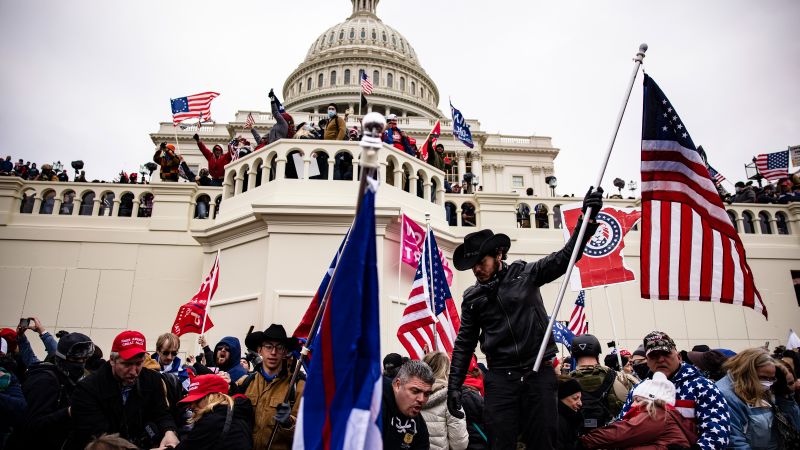
Sandego.net – In a pivotal moment during his confirmation hearing, Don Berthiaume, the nominee for the Justice Department’s inspector general, consistently avoided using the term “attack” to describe the chaotic events of January 6, 2021, which saw widespread protests and violent confrontations at the U.S. Capitol. The hearing, held on Wednesday, became a focal point for Democratic senators, particularly Connecticut’s Richard Blumenthal, who pressed Berthiaume to define the day’s incidents as an “attack.” Berthiaume’s reluctance to adopt the label sparked intense debate, highlighting the broader ideological divide over how to characterize the Capitol breach.
A Test of Independence
Blumenthal, known for his sharp questioning style, grilled Berthiaume on the matter, emphasizing the gravity of the situation. “There was protest activity, people went to the Capitol grounds. People entered the Capitol building, which is contrary – as far as I know – to law,” Berthiaume said, while cautiously distancing himself from the term “attack.” He argued that the word implies a coordinated effort to target specific entities, a claim that has been central to the controversy surrounding the January 6 events.
“I don’t know if I would use the term ‘attack,’” Berthiaume stated, his tone measured but firm. “We had activity outside the Capitol — protests and such — and there was violence on the Capitol grounds.”
The senator’s inquiry was not merely academic; it served as a litmus test for Berthiaume’s independence. Earlier in the hearing, Blumenthal had asked the nominee about the outcome of the 2020 presidential election, a question that has been a recurring point of contention for Trump-appointed officials. Berthiaume, echoing the responses of previous nominees, asserted that President Joe Biden had been “certified” by the Senate as the rightful winner. He insisted that the White House had not influenced his answer, though the implication of his alignment with the administration lingered.
Historical Context of the Inspector General Role
The position of inspector general, which Berthiaume is set to assume, was established by Congress in the 1970s as part of sweeping post-Watergate reforms. These reforms aimed to strengthen accountability within federal agencies, creating an independent body to investigate waste, fraud, and abuse. The inspector general’s authority is designed to act as a check on executive power, ensuring transparency and integrity in government operations.
Berthiaume’s background in the Justice Department’s inspector general office adds weight to his qualifications. His experience spans oversight roles at various agencies, where he has demonstrated a commitment to uncovering misconduct. However, his stance on the January 6 events has raised questions about his objectivity, particularly in light of Trump’s efforts to undermine the inspector general institution itself.
Trump’s Tactics to Weaken the Office
President Donald Trump has long been critical of the inspector general role, viewing it as a tool for political accountability. His administration took several steps to erode the office’s independence, most notably through mass firings of appointed inspectors general. These removals were done without following the procedures outlined in congressional legislation, a move that has drawn legal scrutiny.
A federal court recently ruled that Trump’s removals likely violated the law, affirming the procedural requirements that must be met to terminate an inspector general’s tenure. Despite this legal conclusion, Berthiaume acknowledged the court’s decision and expressed support for it. However, his own refusal to label the January 6 violence as an “attack” has left some questioning whether he remains fully aligned with the institution’s purpose.
Berthiaume’s testimony underscores a recurring theme in Trump’s judicial and executive appointments: the emphasis on political loyalty over impartiality. The January 6 events, which saw a mob storming the Capitol to disrupt the certification of the 2020 election, have been a lightning rod for debate. While some argue the violence was an organized assault, others frame it as a spontaneous display of frustration. Berthiaume’s wording appears to reflect the latter perspective, though his exact phrasing has been scrutinized for its implications.
Debanking Probe and Anti-Weaponization Fund
During the hearing, Berthiaume’s testimony also touched on a separate investigation into the debanking of certain individuals during the January 6 events. This probe was once considered a potential means to fund an anti-weaponization initiative, a strategy aimed at curbing the spread of firearms used in the attacks. However, the focus of the discussion shifted to the broader classification of the violence, leaving the debanking issue less central.
Blumenthal’s questioning of Berthiaume was strategic, designed to probe his willingness to act as an impartial arbiter. By intertwining the 2020 election results with the events of January 6, the senator sought to assess whether the nominee would prioritize partisan narratives or maintain an objective stance. Berthiaume’s response, while deft, highlighted the tension between his role as a watchdog and his alignment with the Trump administration’s viewpoint.
Implications for the DOJ’s Oversight
As the inspector general, Berthiaume’s responsibilities will include investigating allegations of misconduct within the Justice Department. His reluctance to use the term “attack” suggests a nuanced approach to the events of January 6, one that balances the severity of the violence with its context. This position, however, has sparked concerns about the potential for political bias in the investigation.
Some analysts argue that Berthiaume’s language could be interpreted as a deliberate attempt to downplay the significance of the January 6 violence, aligning it more closely with Trump’s narrative. Others see his statements as a reflection of the complexity of the situation, acknowledging the chaos without assigning it a specific label. The debate over terminology is not just semantic; it carries weight in shaping the public’s understanding of the events.
Berthiaume’s confirmation hearing revealed the broader stakes of the inspector general role in maintaining government integrity. The office’s history as a watchdog against executive overreach means that its current leader’s approach to the January 6 events could influence the direction of future investigations. His testimony, while consistent with past nominees, has added new layers to the discussion about the balance between political loyalty and independent oversight.
With the confirmation process complete, Berthiaume is now poised to take on the challenge of ensuring accountability within the Justice Department. His responses to the January 6 events will be closely watched, not only for their accuracy but also for their potential impact on the narrative surrounding the attack. As the inspector general, he will need to navigate the delicate task of maintaining objectivity while addressing the political ramifications of his decisions.
A Delicate Balance
The debate over terminology highlights the broader challenge of defining events in a politically charged environment. While Berthiaume’s refusal to label the January 6 violence as an “attack” may reflect a pragmatic assessment of the situation, it also raises questions about the role of the inspector general in shaping the historical record. His position could be seen as a compromise between the administration’s view and the more traditional understanding of the term.
Ultimately, Berthiaume’s confirmation signals a new chapter for the Justice Department’s oversight mechanisms. His ability to act independently, even as he navigates the political landscape, will be critical in determining the office’s effectiveness. The January 6 events, which remain a flashpoint in American political discourse, will continue to serve as a test of his commitment to impartiality.