Border Construction Halts at Big Bend National Park as State-Level Fight Intensifies
Sandego.net – The federal government has temporarily suspended construction activity inside Texas’ Big Bend National Park, but the pause has done little to quiet the growing opposition to border-security projects sweeping the broader Big Bend region. On Wednesday, a packed state commission hearing in Austin will give landowners, business owners, and local law-enforcement leaders a direct channel to press the Texas Parks and Wildlife Department to halt planned work on state land, including at Big Bend Ranch State Park, which sits just west of the national park.
A Two-Week Breather, Not a Cancellation
The decision to pause came from Rodney Scott, head of US Customs and Border Protection, who faced mounting bipartisan criticism over the project’s scope and speed. Scott traveled to the area and met with local sheriffs and border-county judges on Tuesday. According to two sheriffs present at that meeting, Scott told the group that construction would be suspended for a minimum of two weeks and reaffirmed that his agency had no intention of erecting a traditional wall within the national park. He also indicated he would weigh abandoning plans for brand-new patrol roads in favor of upgrading routes that already exist.
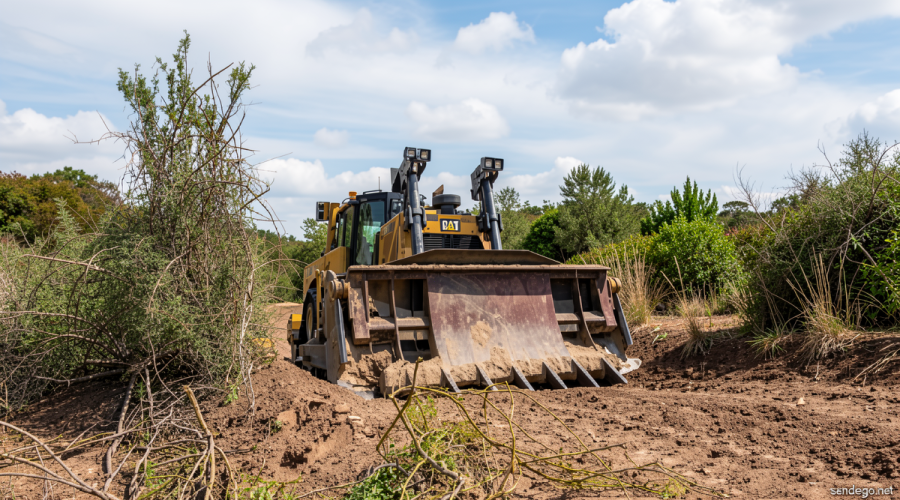
The pause follows weeks of heavy machinery operating inside the park. Bulldozers and excavators cut through portions of the landscape earlier this month before Scott’s announcement. The current federal blueprint for the national park calls for vehicle barriers, new patrol roads, and improvements to existing roadways rather than a continuous wall.
Opposition Mobilizes at the State Level
Hours before the Wednesday hearing, opponents gathered in a rally outside the commission’s headquarters in Austin. Many West Texas ranchers, outfitters, and county officials are expected to fill the public-comment portion of the Texas Parks and Wildlife Department’s annual meeting, arguing that the border measures will degrade the environment, undercut recreational economies, and obliterate archaeological sites strung along the US-Mexico boundary.
“We’re grateful for the pause (at the national park). However, it’s cautiously optimistic,” said Billy Bartko, owner of Far Flung Outdoor Center in Terlingua, Texas. “We’re still continuing to see large, heavy equipment be moved into the area. So it looks like the plan is to still build and to still do something.”
Bartko’s outfitter is named as a plaintiff in a lawsuit filed last week seeking to enjoin the construction outright.
“I love that area, and it’s pristine, and the carelessness that they just come in and start bulldozing,” said BJ Goins, a Round Rock resident who traveled to the rally. “I thought they were going to survey. I thought they were going to talk about it, but they unloaded and started mowing, and it’s unnecessary.”
Understanding the Geography at Stake
Big Bend is not a single town or trailhead; it is a vast, rugged expanse in far-western Texas shaped by the Rio Grande’s sharp northeastward bend before the river swings back southeast. On a state map it reads as the elbow-shaped corner of the westernmost counties. The terrain is mountainous, sparsely settled, and can take roughly four hours to cross by car. It also shelters some of the darkest night skies anywhere on Earth, fueling a thriving astrotourism economy.
At the southernmost tip of this region sits Big Bend National Park, a 801,163-acre preserve that shares 118 miles of international boundary with Mexico. It ranks among the most remote national parks in the contiguous United States, yet it drew more than half a million visitors in 2025. Hikers, birdwatchers, rafters, canoeists, and stargazers all converge on its trails and waterways. The park is the only one in the system that contains its own mountain range, the Chisos Mountains.
Immediately to the west lies Big Bend Ranch State Park, the largest state park in Texas at more than 300,000 acres. It, too, follows the Rio Grande and features towering cliffs, desert flats, and high-country terrain. Texas Parks and Wildlife has noted that the area has long been known locally as El Despoblado, Spanish for “The Uninhabited,” a nod to its isolation and ruggedness.
The Big Bend Sector and the Broader Federal Push
US Customs and Border Protection designates a law-enforcement zone called the Big Bend Sector, stretching 517 miles along the Rio Grande through the region. That sector reaches well inland, encompassing more than 100 counties across Texas and Oklahoma. In immigration terms, the sector accounts for roughly one quarter of the total US-Mexico border.
The planned work in the Big Bend area is one component of a wider federal initiative to complete border-wall segments and other security infrastructure before President Donald Trump departs office. Critics argue the pace and scale of construction in a landscape of this ecological and cultural sensitivity warrant far greater consultation before any ground is broken again.
For now, the two-week pause gives stakeholders a narrow window to press their case at the state commission, in federal court, and in public forums. Whether that window translates into lasting protections for the parks, the archaeological record, and the recreational economy that depends on them remains the central question as the hearing proceeds.
Related Reading
Frequently Asked Questions
What is What we know about the controversial?
What we know about the controversial is the main topic of this guide. The article explains the context, practical details, and next steps readers should understand.
Why does What we know about the controversial matter?
What we know about the controversial matters because readers are looking for a useful answer, not just a short summary. Good content should match search intent and help them decide what to do next.