Trump Administration Reverses Dismantling of Ocean Monitoring System Amid Bipartisan Outcry
Sandego.net – The Trump administration has reversed its earlier decision to dismantle a key ocean monitoring network following significant bipartisan opposition in Congress. The Ocean Observatories Initiative (OOI), a deep-sea research system funded by the National Science Foundation (NSF), had been targeted for cuts, but lawmakers from both major parties pressured the agency to reconsider. The initiative, which has been operational since 2016, is critical for tracking environmental changes in the world’s oceans, providing data essential to understanding climate patterns and marine ecosystems.
The Role of the Ocean Observatories Initiative
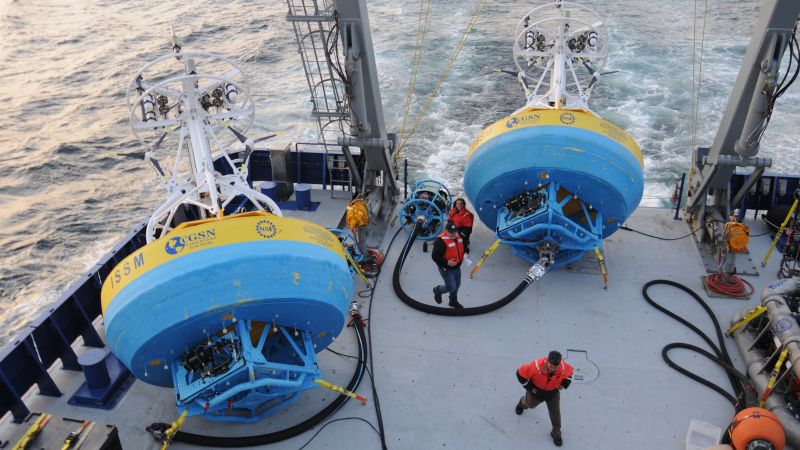
Established in 2016, the OOI consists of approximately 900 advanced instruments spread across the Pacific and Atlantic Oceans. These devices are engineered to endure extreme underwater conditions, including high pressure and corrosive saltwater, allowing scientists to gather real-time information on ocean temperatures, currents, and biodiversity. The system’s scope includes remote areas like Alaska, Washington, Oregon, North Carolina, and Greenland, where monitoring is vital for detecting shifts in ecological balance and climate dynamics.
Previously, the NSF announced plans to reduce the network’s scale, a move it termed “descoping.” This involved withdrawing buoys and other equipment from key locations, effectively scaling back the initiative’s capacity. The decision was met with immediate criticism, as experts warned that the oceans were undergoing unprecedented changes, with rising temperatures intensifying storms and disrupting fisheries. A critical concern was the potential collapse of the Atlantic Meridional Overturning Circulation (AMOC), a system that regulates global climate patterns.
Bipartisan Backlash and Legislative Action
Lawmakers on both sides of the aisle voiced strong objections to the NSF’s plan. Senator Jeff Merkley, a Democrat from Oregon, called the move “supreme stupidity,” emphasizing the financial and scientific costs. He argued that the decision would “cost taxpayers millions of dollars” and “destroy a vital source of climate data.” Similarly, Senator Lisa Murkowski, a Republican from Alaska, joined Merkley in opposing the cuts, highlighting their impact on coastal communities and fishermen.
On Wednesday, Merkley and Murkowski successfully passed bipartisan legislation in the Senate. The bill aims to block the use of federal funds for dismantling the OOI until the NSF completes a comprehensive review of the network. This review would include input from scientists and coastal communities, ensuring that the decision reflects broader expertise and stakeholder concerns. Murkowski praised the reversal as a “massive win for coastal communities and fishermen,” underscoring the importance of the system to regional economies.
While the NSF’s decision to halt further removals is a positive step, some lawmakers remain cautious. Zoe Lofgren, a Democrat and Ranking Member of the House Science Committee, welcomed the change but noted that “how much damage they have already done” is still unclear. She criticized the initial plan as an “illegal scheme” and accused the NSF of operating through “chaos and reactionary nonsense.” Lofgren stressed that the agency must now “replace any instruments removed and cease all descaling activities until legitimate expert advice has been sought,” to prevent irreversible harm.
The NSF’s About-Face and Commitment to Sustainability
The National Science Foundation’s reversal came just days after its original announcement, signaling a shift in priorities. In a statement, the NSF affirmed its dedication to ocean sciences, responsible stewardship of research infrastructure, and supporting stakeholders who rely on the data. The agency now plans to “convene an expert panel to identify a sustainable path forward,” a move that could involve restoring some of the equipment and refining the program’s scope.
One array in Oregon and Washington has already been dismantled, but the NSF confirmed it would “not proceed with further removal or descoping of equipment from the remaining arrays.” This pause allows for a reassessment of the system’s role in climate research and its ability to adapt to new challenges. Scientists had previously criticized the decision, calling it “foolish” and “counterintuitive” for neglecting the oceans during a time of extreme environmental stress. They argued that the OOI’s data is indispensable for predicting climate impacts and guiding policy decisions.
Experts highlighted the system’s importance in monitoring phenomena such as coral bleaching, sea-level rise, and ocean acidification. The OOI’s instruments also track the movement of currents, which are crucial for distributing heat and nutrients across the globe. Without this network, the ability to predict weather patterns and assess the health of marine ecosystems would be significantly weakened. The NSF’s about-face has been seen as a recognition of these risks, though the long-term implications of the initial cuts are still under scrutiny.
Environmental and Economic Implications
The potential consequences of the OOI’s disruption extend beyond scientific research. Coastal economies, particularly those dependent on fishing and tourism, could suffer if the data from the system is no longer available. The collapse of the AMOC, for instance, could lead to drastic changes in ocean circulation, affecting weather systems and marine life in regions as far-reaching as the Gulf Stream and the Arctic. Such disruptions might exacerbate extreme weather events, threatening food security and economic stability.
Additionally, the decision to de-scoped the network raised questions about the long-term funding and management of oceanic research. Scientists and environmental advocates warned that scaling back the system could create gaps in data collection, making it harder to track trends and respond to crises. The bipartisan legislation now serves as a safeguard, requiring the NSF to justify its actions and demonstrate a commitment to the program’s sustainability.
The correction in the original article clarified a misattribution of a quote from Senator Jeff Merkley. This adjustment underscores the importance of accuracy in reporting, especially when the stakes involve critical scientific infrastructure. As the NSF moves forward, its actions will be closely watched by researchers, policymakers, and communities reliant on ocean data. The reversal highlights the power of collective action, as bipartisan support helped preserve a system that plays a pivotal role in understanding and mitigating global climate challenges.
While the administration’s U-turn is a victory for ocean monitoring efforts, the situation remains complex. The NSF must now navigate the balance between fiscal responsibility and scientific necessity, ensuring that the OOI continues to function as a reliable resource. For now, the system’s survival is secured, but the debate over its future funding and scope is far from over. As climate change accelerates, the need for robust ocean observation has never been more urgent, and the OOI stands as a symbol of the collaborative efforts required to address it.
Amid the political maneuvering, the scientific community has expressed relief but also caution. Researchers emphasized that while halting the dismantling is a positive development, the full restoration of the OOI may take time. The next steps will involve not only re-deploying equipment but also evaluating the long-term impact of the initial cuts. This process will determine whether the system can be salvaged or if its functionality will be permanently diminished.
The ongoing dialogue between scientists and policymakers reflects a growing consensus that ocean monitoring is essential for informed decision-making. As the NSF works to address concerns, the OOI’s survival serves as a reminder of the interconnectedness of environmental and economic systems. The reversal of the dismantling plan marks a pivotal moment in the fight to protect our oceans, but the challenge of securing adequate funding and support for such vital projects persists.