
The Future of Oil Prices May Depend on China
Sandego.net – Amid ongoing negotiations between the United States and Iran to restore normal operations at the Strait of Hormuz and revive Middle Eastern oil exports, a key player has emerged outside the talks: China. As the conflict in Iran disrupted the flow of over 11 million barrels of oil per day, the world’s second-largest crude oil consumer has taken decisive steps to stabilize its supply chain. By reducing imports, leveraging extensive reserves, and shifting toward renewable energy sources, China has managed to soften the blow of rising global prices. These actions have not only protected its domestic market but also influenced international energy markets in unexpected ways.
China’s Strategic Measures to Stabilize Prices
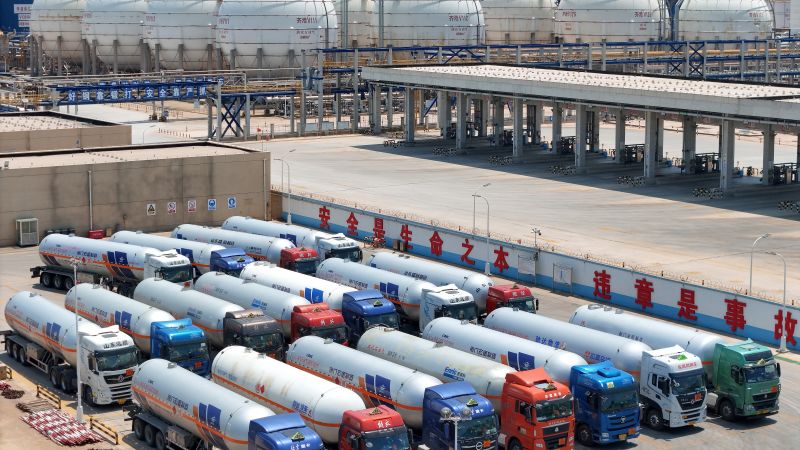
For months, China has implemented aggressive measures to safeguard its oil supply. Analysts note that the country’s reliance on stockpiles, combined with a reduction in imports, has acted as a buffer against price volatility. The government also accelerated the buildup of commercial and strategic reserves, which have now reached a level exceeding 1 billion barrels. This strategic stockpiling, partly supported by discounted oil shipments from Russia and Iran, has helped China maintain stability even as global tensions escalated.
“China has played a critical role here to buffer this for the rest of Asia… thereby buffering the global economy,” said Daan Walter, principal at Ember, an energy think tank.
Global Market Reactions to Supply Disruptions
Despite the unprecedented disruption caused by the Iran war, global crude prices have not surged as dramatically as some feared. Initially, projections suggested prices could climb to $200 per barrel, but they have instead remained relatively stable. This moderation has sparked debate among economists, with many attributing the trend to China’s proactive management of its energy needs. The country’s ability to curb consumption by about 3 million barrels per day—roughly equivalent to Japan’s total crude demand—has provided a stabilizing force in an otherwise volatile market.
Brent Crude’s Volatility Amid Geopolitical Shifts
The recent decline in Brent crude prices underscores the shifting dynamics in global energy markets. After months of tension, Brent fell below $78 per barrel on Monday, fueled by expectations that the Strait of Hormuz, a vital artery for one-fifth of the world’s oil, would soon resume normal trade. Prior to the conflict, Brent had reached a four-year high of $114 per barrel in early May. However, the market has since adjusted, reflecting the interplay between geopolitical events and China’s strategic influence.
China’s Energy Transition as a Market Buffer
China’s growing reliance on electric vehicles has further softened the demand for fossil fuels. Over half of all new passenger cars sold in the country are now powered by alternative energy, according to recent data. This transition, which saw China’s EV fleet reduce oil consumption by approximately 1 million barrels per day last year, has played a significant role in offsetting the impact of supply disruptions. “It has been a wonderful release valve for the global crude market,” remarked David Fishman, a China energy specialist at the Lantau Group.
Meanwhile, the government’s decision to limit exports of refined products like diesel and gasoline has also contributed to price stability. By prioritizing domestic supply, Beijing has incentivized oil refiners to reduce purchases from international markets, thereby curbing price increases. This policy, however, has created challenges for refiners, who now face narrower profit margins and a reliance on local production to meet demand.
Analysts Weigh In on China’s Role
Experts emphasize that China’s energy consumption patterns are now a central factor in global market dynamics. “China’s policy and consumption choices will be pivotal for the market, regardless of how swiftly the Strait of Hormuz reopens,” said one analyst. The country’s ability to balance supply and demand has prevented a more severe price spike, even as supply losses from the conflict surpassed 1 billion barrels. This resilience has raised questions about the sustainability of China’s current approach.
While China’s measures have mitigated the worst effects of the crisis, analysts warn that this stability may not last indefinitely. “The thing that can’t be sustained forever is the stockpiles of crude,” noted David Fishman. If global prices begin to decline, the first response from China is likely to be an increase in stockpiling, as the nation seeks to secure its energy independence. This cycle of accumulation and release could shape future market trends, particularly as the Middle East works to restore its production levels.
IEA’s Outlook on Future Supply Dynamics
With the situation evolving, the International Energy Agency (IEA) has issued a cautionary warning. In its latest monthly report, the organization predicted that supply growth will outpace demand by 4.7 million barrels per day next year as Middle Eastern production normalizes. This surplus could provide a much-needed reprieve for markets, allowing countries to replenish depleted inventories and rebuild strategic reserves. The IEA highlighted this as an opportunity for global energy strategies to adapt in response to the crisis.
Historical comparisons further illustrate China’s growing impact. During the 1973 Arab embargo, a 7% reduction in global crude supply led to a 134% price surge. Yet, despite a similar 14% loss from the Iran conflict, prices have remained more restrained. This discrepancy is largely attributed to China’s ability to adjust its consumption, creating a counterbalance to global shortages. However, the IEA’s forecast suggests that the country’s capacity to maintain this buffer may be tested as the market enters a new phase.
As the world watches the Strait of Hormuz’s reopening, the focus remains on China’s role in shaping the future of oil prices. Its strategic reserves, combined with a shift toward electric vehicles, have provided a critical lifeline during the crisis. But the nation’s energy policies will continue to dictate whether global markets experience further stability or face new challenges. With the IEA’s warning of potential oversupply next year, the question is whether China can sustain its current influence or if the market will eventually adjust to a new equilibrium.