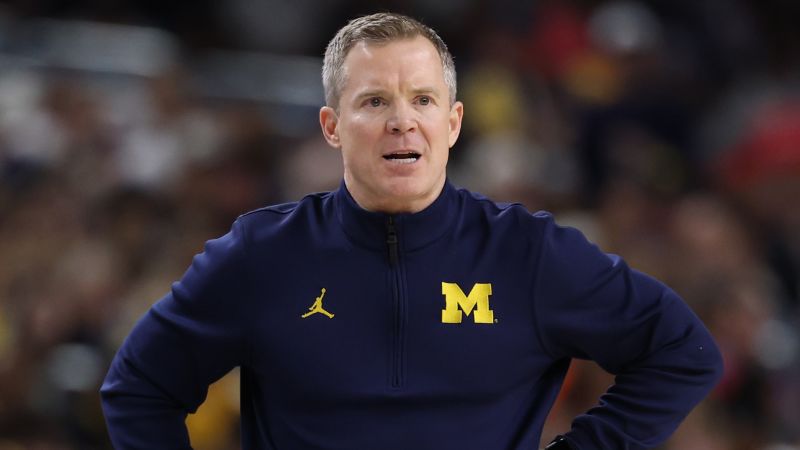
Dusty May Leaves Michigan for Dallas Mavericks
Sandego.net – Dusty May is leaving Michigan to join the Dallas Mavericks, marking a significant shift in his career and raising questions about the evolving dynamics of college basketball coaching. The decision, announced just three weeks into the summer practice window, challenges the core principles of the Protect College Sports Act, which aims to stabilize collegiate athletics by limiting mid-season coach changes. While the law originally sought to prevent coaches from moving teams during the season, May’s departure highlights how the timing of the sports calendar can create unique challenges for programs like the Wolverines.
A Season Already in Motion
As Dusty May leaves Michigan, the Wolverines are forced to navigate a season that feels both active and incomplete. The summer practice window, which officially begins on June 1, is typically a period of refinement and preparation. By this point, Michigan had already secured three key transfers—J.P. Estrella from Tennessee, Moustapha Thiam from Cincinnati, and Jalen Reed from LSU—to bolster its roster. The coach described Estrella as a perfect fit for the program’s vision, while Thiam and Reed were seen as essential additions to the team’s strength and experience.
The transfer portal’s closure adds pressure to the situation, as the Wolverines are now preparing for the upcoming season with a coach who is no longer on board. May’s move to the Mavericks, a professional team, underscores the growing intersection between college and professional basketball, where opportunities for coaches can span multiple leagues. This transition has sparked a debate about the balance between collegiate loyalty and the allure of higher-profile roles.
Coach Turnover and the Search for Stability
The ripple effects of Dusty May is leaving Michigan are already being felt. With the summer practice window in full swing, the Wolverines must now scramble to find a replacement. The most likely candidate is Justin Joyner, who has been part of the program since its inception. However, Joyner’s own departure earlier this year, when he accepted a lesser role at Oregon State, leaves Michigan without a clear successor. Other names in the mix include Mike Boynton, a former Oklahoma State head coach, though his NCAA tournament record remains a point of discussion.
Warde Manuel, Michigan’s athletic director, faces the challenge of securing a new coach quickly, as the team’s preparation for the season moves forward. The transfer portal’s closure means players are largely locked into their current rosters, creating a scenario where the coaching change could disrupt the team’s cohesion. This uncertainty highlights the growing unpredictability in college basketball, where even well-established programs can be thrown into flux by a single coach’s decision to leave.
Loyalty in Question: Dusty May’s Legacy
May’s departure has reignited conversations about loyalty in college sports. In April, during the aftermath of Michigan’s championship win, the coach spoke about his staff’s commitment to the players. “We have an incredibly talented group of coaches that never make it about themselves,” he said. “Look, this is an ego-driven business. There are a lot of alpha males with great egos and that’s why they’re successful doing what they do. These guys have made our players the No. 1, 2, and 3 priority over their own careers, their own individual attention, and accolades. It’s hard for our players not to follow the team, which is the staff, when they’re modeling that behavior every day.”
“We have an incredibly talented group of coaches that never make it about themselves,” May said. “Look, this is an ego-driven business. There are a lot of alpha males with great egos and that’s why they’re successful doing what they do. These guys have made our players the No. 1, 2, and 3 priority over their own careers, their own individual attention, and accolades. It’s hard for our players not to follow the team, which is the staff, when they’re modeling that behavior every day.”
The phrase “modeling that behavior” has become a point of contention, especially as Dusty May is leaving Michigan. His exit challenges the ideal of unwavering loyalty, even as it leaves the Wolverines to grapple with the implications of a coach’s decision to pursue a new opportunity. While the Protect College Sports Act was designed to curb instability, May’s case demonstrates how the rules can be tested by the realities of the sports industry’s shifting landscape.