Putin Signals Nuclear Option in Warning Over Kaliningrad
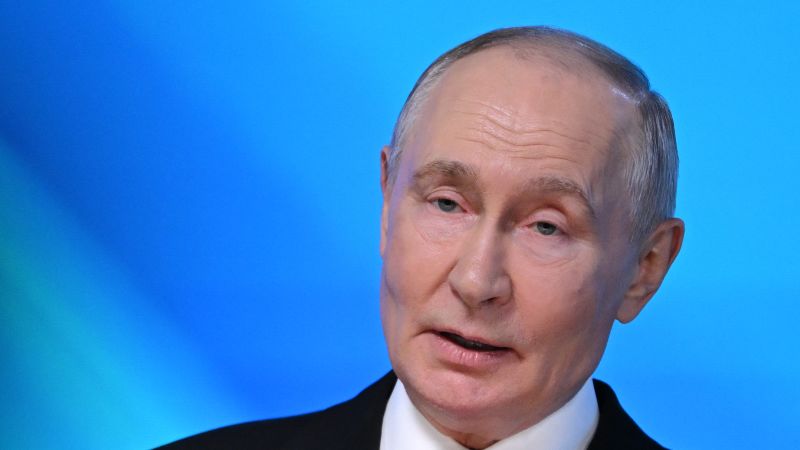
Sandego.net – Russian President Vladimir Putin has issued a fresh warning to Western governments, saying Moscow could consider deploying every weapon at its disposal, including nuclear arms, if Russia’s Kaliningrad region were directly attacked.
Speaking Thursday at the Valdai Discussion Club in Moscow, Putin framed the Russian Baltic exclave as a potential flashpoint in the wider confrontation between Russia and NATO. Kaliningrad is separated from the rest of Russia and lies between Poland and Lithuania, both members of the military alliance.
Putin said Russia was not preparing to attack European countries, while insisting that Moscow would respond if it believed Western actions crossed into direct aggression against Russian territory.
“If it comes to direct attack against the Russian Federation, in this case on Kaliningrad and possibly some other territories, of course the issue of using all weapons in our country’s arsenal will inevitably and unavoidably emerge on the agenda. This is unavoidable,” Putin said.
NATO Exercises Add to Baltic Tensions
The comments came after NATO military activity near Kaliningrad. The alliance has characterized the exercises as defensive measures intended to reinforce deterrence, but Moscow has portrayed them as part of a growing threat around its borders.
Russia warned in late September that it would retaliate if NATO sought to impose an air or maritime blockade on Kaliningrad. Putin cited naval drills, incidents involving Russian vessels and public discussion of the territory as examples of what he called a worsening escalation.
“The drills in the Baltic Sea, following one another … Then the attempts to arrest our ships and vessels. All this is an escalation. And then we began to hear statements regarding the Kaliningrad region,” Putin said.
Kaliningrad has long held strategic importance for Moscow because of its location on the Baltic Sea and its proximity to NATO territory. Any confrontation involving the enclave could create acute risks for both Russia and the alliance, since an attack on Poland or Lithuania would engage NATO’s collective-defense commitments.
The warning also comes as NATO, Britain and several European governments accuse Russia of hybrid operations that include cyberattacks, sabotage and alleged espionage. Those governments say such activity is intended to weaken continued Western support for Ukraine.
War in Ukraine Continues Into Fifth Year
Russia’s war against Ukraine, which Moscow continues to describe as a “special military operation,” is now in its fifth year. Putin has shown no indication that he intends to halt the offensive, and Russian attacks have intensified against Ukrainian energy facilities and Kyiv as the country faces another harsh winter.
At the same time, the impact of the conflict is becoming more visible inside Russia. Ukrainian drone strikes on oil refineries have contributed to fuel shortages in several areas, with long lines of vehicles appearing at filling stations in major cities. Attacks affecting major Russian online retailers have added pressure to an economy already operating under wartime strain.
Ukrainian President Volodymyr Zelensky has described long-distance drone attacks within Russia as “long-range sanctions.” Kyiv says the purpose is to reduce Russian military capacity and revenue while increasing pressure on the Kremlin to negotiate.
Putin acknowledged during his Valdai remarks that Ukraine’s operations had caused economic damage. He said the impact amounted to roughly 1% of Russia’s gross domestic product, while also claiming Ukrainian actions in the Black Sea had put more than 100 Russian ships out of service.
“In the Black Sea — that’s a combat zone; we struck military vessels and ships transporting military cargo, and we hardly ever made a mistake. Throughout this whole saga, they [Ukraine] have knocked out over 100 of our ships. Well, we started hitting back, and now we’re being bombarded from every direction with appeals: ‘Oh, please stop doing that,’” Putin said.
His remarks presented Russia’s strikes as a response, despite Moscow having launched its full-scale invasion of Ukraine in February 2022. The war has since widened far beyond the front line, affecting Black Sea shipping, energy systems, commercial infrastructure and daily life in both countries.
Economic Message Conflicts With Earlier Claims
Putin’s admission that refinery strikes have taken a measurable toll appeared to contrast with his message one day earlier to newly elected members of the State Duma, Russia’s lower house of parliament. The pro-Putin United Russia party retained its majority in the tightly controlled wartime election, and Putin told lawmakers the country’s economy remained stable.
He also criticized Ukraine’s dependence on financial support from Western partners, using the parliamentary address to argue that Russia should not rely on outside assistance.
“Mistakes, especially now, are absolutely unacceptable,” he told parliamentarians.
“Unlike some, and we won’t point fingers, Russia can’t run around the world humiliating (itself) by begging for handouts with an outstretched hand,” Putin said. “Firstly, because, as I have already said, it is humiliating. Secondly, no one is going to give us anything.”
The juxtaposition highlights the conflicting pressures facing the Kremlin: Putin continues to project confidence in Russia’s military and economic resilience while conceding that Ukrainian strikes have imposed costs. His Kaliningrad warning, meanwhile, underscores how the war in Ukraine is increasingly tied to security fears along NATO’s eastern border.
For European governments, the message reinforces the need to distinguish between deterrence measures and actions that Moscow may present as a direct threat. For Ukraine, continued strikes deep inside Russia remain part of a strategy to demonstrate that the costs of war are not confined to Ukrainian territory.
Related Reading
Frequently Asked Questions
What is Putin warns West that Russia is prepared?
Putin warns West that Russia is prepared is the main topic of this guide. The article explains the context, practical details, and next steps readers should understand.
Why does Putin warns West that Russia is prepared matter?
Putin warns West that Russia is prepared matters because readers are looking for a useful answer, not just a short summary. Good content should match search intent and help them decide what to do next.