Federal Judge Stops Removal of Seattle’s Court-Appointed US Attorney
Sandego.net – A federal judge in Washington state has ruled that President Donald Trump cannot remove a US attorney chosen by a federal court, delivering a decision that could shape a growing dispute over who controls these powerful prosecutorial posts when Senate confirmation has not occurred.
The ruling protects Roger Rogoff, the court-appointed US attorney for the Western District of Washington, from being ousted while his lawsuit proceeds. Rogoff was selected by a federal court in July and then dismissed only minutes after taking office, prompting what became the first known legal challenge by a court-appointed US attorney contesting a presidential firing.
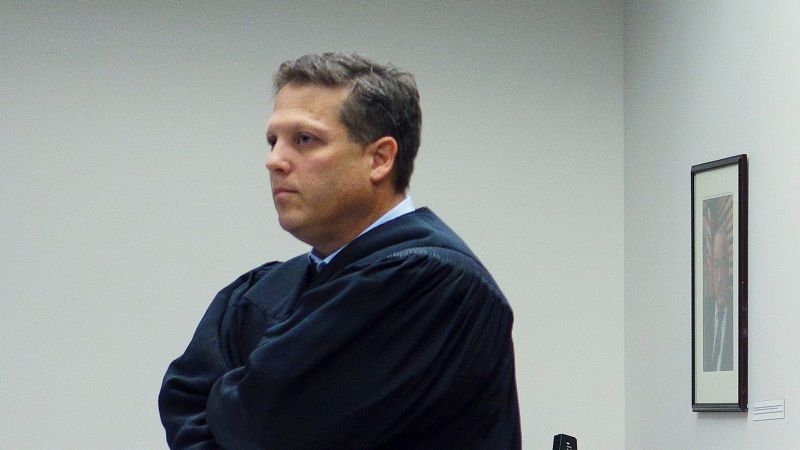
Judge Stanley Bastian, chief judge of the US District Court for the Eastern District of Washington, issued a preliminary injunction after an hourlong hearing Thursday. He concluded that Rogoff has held the office lawfully since he was sworn in on July 15, 2026.
“Mr. Roger Rogoff is the United States Attorney for the Western District of Washington and has been the rightful holder of that office since July 15, 2026, when he took the oath of office,”
The order means the administration may not act to remove Rogoff or interfere with his work as the Seattle area’s top federal prosecutor while the injunction remains in place. The Justice Department has said it will appeal.
A new question over presidential authority
Bastian said he was addressing an issue no federal judge had previously decided: whether a president may dismiss a US attorney installed by a court under the federal vacancy process. The decision does not dispute the president’s broad role in choosing US attorneys, but it draws a line around a temporary appointment mechanism created by Congress.
Federal law generally allows an interim US attorney selected by the president to serve for 120 days. If the post remains vacant after that window, the local federal court may appoint someone to lead the office until the Senate confirms a presidential nominee. The system is intended to keep federal law-enforcement offices functioning while preserving the Senate’s confirmation role.
Disputes have emerged as the administration has sought to maintain interim prosecutors beyond the period contemplated by the statute. In multiple situations, courts appointed replacement US attorneys after the temporary term expired, only for Trump to remove those court-selected officials.
The Justice Department accepts that courts can make such appointments once the statutory conditions are met. Its position is that the president nevertheless retains authority to fire the person the court chooses. Bastian rejected that argument at this stage of Rogoff’s case.
“Allowing the president to fire a United States attorney appointed by the court also eliminates the incentive to nominate a candidate that can be confirmed by the Senate,” Bastian said. “In other words, the executive and legislative branches are supposed to and encouraged to work together.”
The judge’s reasoning focuses on the balance embedded in the appointment process. A president ordinarily nominates US attorneys, and the Senate ordinarily decides whether to confirm them. Court appointments become available only after the limited interim period has passed. If a president could immediately replace a court-appointed prosecutor without obtaining Senate approval, Bastian indicated, that sequence could lose much of its practical force.
Why the Seattle case matters
Rogoff’s lawsuit brings a fresh constitutional and statutory question into a wider series of cases involving US attorney appointments. US attorneys supervise federal criminal prosecutions and civil litigation for the Justice Department within their districts, making continuity in those offices important for ongoing cases and federal investigations.
The Western District of Washington includes Seattle and surrounding areas, and Rogoff’s appointment was made under the court’s authority after the vacancy process reached the point contemplated by federal law. His unusually short first day in office became central to the case: he was fired shortly after the appointment took effect.
Because Bastian granted preliminary relief rather than issuing a final ruling after a complete trial, the litigation is not over. Still, the injunction immediately establishes that the administration cannot treat Rogoff as removed while the court’s order stands. An appeal by the Justice Department will test whether higher courts agree with Bastian’s reading of the law.
The case may also influence other districts confronting similar conflicts. Federal courts around the country have been asked to assess efforts to preserve administration-selected prosecutors after their interim authority expired. Those fights have produced different procedural paths, but they share the same underlying tension: how to fill a vacancy without bypassing the Senate-confirmation process.
Related appointment fights in New Jersey and Nevada
New Jersey has been one prominent example. Trump attempted to restore Alina Habba, his former personal criminal lawyer, as interim US attorney after a federal court selected another person for the job. Habba later resigned after a federal appeals court concluded that her appointment was unlawful.
Following that development, the Justice Department worked with federal judges in New Jersey to identify a prosecutor whom the court could appoint. The episode underscored the practical consequences of the vacancy statute when a presidential nominee has not received Senate confirmation.
A separate dispute from Nevada remains pending at the Supreme Court. The Justice Department has asked the justices to review its efforts to keep Sigal Chattah, Trump’s preferred lawyer for the leadership post in the Nevada US attorney’s office, in place after lower courts found her appointment unlawful. The Supreme Court has not yet announced whether it will hear that case.
For now, Rogoff remains in charge of the Western District of Washington under Bastian’s order. The appeal will determine whether that protection remains and could provide broader guidance on the limits of presidential removal power when a federal court, rather than the president, has filled a US attorney vacancy.
Related Reading
Frequently Asked Questions
What is Judge blocks Trump from firing Seattle?
Judge blocks Trump from firing Seattle is the main topic of this guide. The article explains the context, practical details, and next steps readers should understand.
Why does Judge blocks Trump from firing Seattle matter?
Judge blocks Trump from firing Seattle matters because readers are looking for a useful answer, not just a short summary. Good content should match search intent and help them decide what to do next.