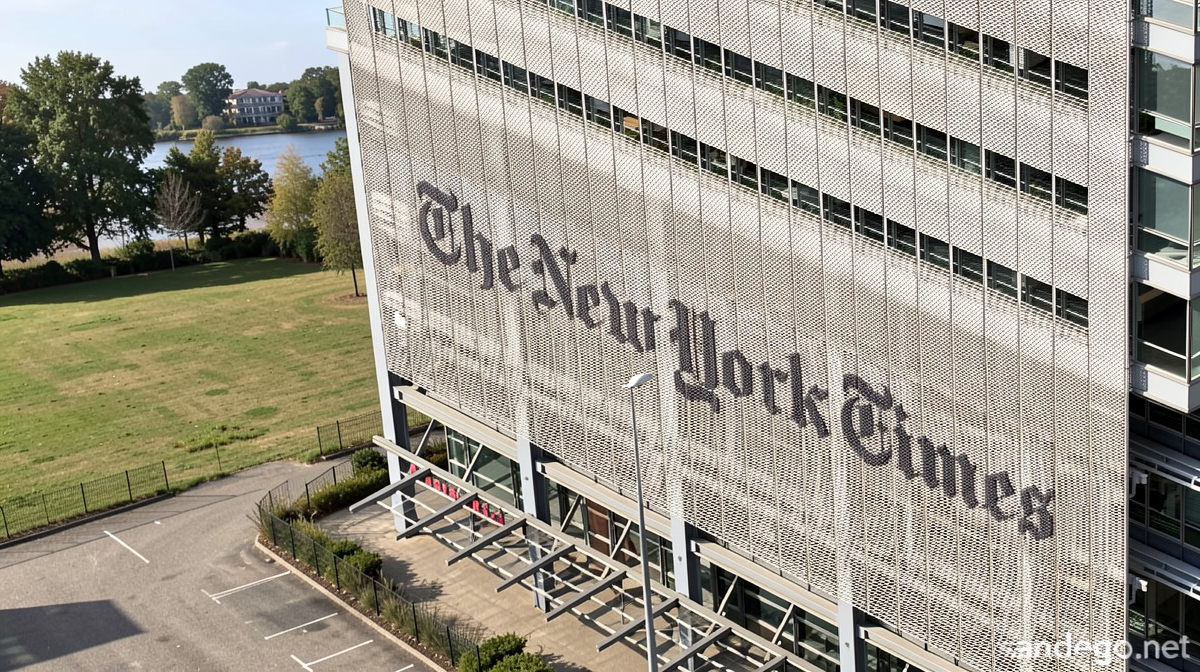
New York Times Fights Trump Over Reporter Subpoenas
Sandego.net – The New York Times fights Trump administration subpoenas in a significant legal challenge that could reshape press freedom protections. The newspaper has filed formal proceedings to contest extraordinary grand jury subpoenas served to multiple journalists last week. These legal documents demand reporters appear and provide testimony about confidential sources. David McCraw, the publication’s senior newsroom attorney, called the demands fundamentally flawed in a Wednesday evening statement, arguing courts should overturn them.
“As we set out in our motion, these subpoenas are brought in bad faith to punish The Times for its coverage,” McCraw stated. “They violate the constitutional rights of The Times and its journalists.”
Dispute Sparks After Air Force One Coverage
The timing proved particularly provocative, arriving just forty-eight hours after a Times article directly contradicted President Donald Trump’s claims about the newly acquired Air Force One aircraft, presented as a gift from Qatar. The newspaper’s reporting highlighted significant security vulnerabilities within the presidential plane, revelations that visibly irritated the commander-in-chief and sparked an extensive leak investigation.
According to CNN’s earlier Wednesday coverage, federal authorities pursued leads related to this leak investigation with considerable vigor. When the Times disclosed that several staff members received subpoenas, the Justice Department quickly clarified its position. Government officials maintained that journalists were not the primary subjects of scrutiny; rather, the investigation focused on individuals responsible for leaking classified materials.
Legal Arguments Take Shape
Todd Blanche, President Trump’s nominee for attorney general, provided robust support for the investigative methodology during a Senate confirmation hearing. Blanche verified that he personally authorized the subpoenas and drew an analogy comparing the reporters to material witnesses—similar to how someone might testify about witnessing a traffic collision. He emphasized that these journalists serve as witnesses to events surrounding the leak investigation.
“They are witnesses,” Blanche affirmed during his testimony.
Conservative organizations have echoed this justification for the subpoenas, while progressive voices contend that the administration is attempting to disproportionately penalize both the leakers who challenged Trump’s assertions and the journalists who reported on those revelations. The legal documents themselves remain largely confidential, with McCraw noting that his motion was submitted under seal according to court directive, effectively concealing the proceedings from public view.
First Amendment Protections at Stake
The New York Times fights Trump’s approach by maintaining that American law provides substantial protection for journalists against retaliatory actions. The newspaper believes this situation exemplifies such retaliation. A broad coalition of First Amendment organizations and media advocacy groups has rallied behind the publication’s position. The subpoenas, which were originally issued on the preceding Friday, had called for reporters to testify before the grand jury on Wednesday. However, that scheduled appearance did not materialize as the Times mounted its comprehensive legal challenge.
“The Times believes that the public has a right to information about this case and is also seeking to have the papers unsealed,” McCraw explained.
Editorial Leadership Stands Firm
Joe Kahn, the Times’ executive editor, articulated the publication’s perspective on Wednesday, characterizing the subpoenas as an intimidation tactic directed at both individual journalists and the institution itself. He pledged that the newspaper would persist in its reporting, covering both the Air Force One story and the broader implications of governmental prosecutorial power being wielded against independent media organizations.
“I’ve been a foreign correspondent in China,” Kahn remarked in an online video message. “And I’ve seen the way an authoritarian government can keep journalists from reporting on a huge amount of news and information that’s very clearly in the public interest. It’s really essential to American democracy that that kind of erosion of press freedoms not happen here.”
On Wednesday morning, Jay Clayton, the United States Attorney for the Southern District of New York, who signed the subpoenas, also addressed the controversy, though without providing extensive detail. Clayton faced questions about whether the subpoenas represented overreach or legitimate investigative procedure.