Lululemon Yoga Event on Great Wall of China Causes Japanese Drum Furore
Sandego.net – When Lululemon, the global activewear brand, hosted a yoga festival on the iconic Great Wall of China, it inadvertently sparked a cultural debate that quickly escalated into a social media storm. The event, which drew over 2,000 participants, was initially celebrated as a tribute to Chinese heritage and wellness. However, the inclusion of a drum during the performance, later identified as a Japanese Taiko drum, ignited widespread criticism among Chinese consumers and cultural commentators. This incident underscores the sensitivity of cultural symbols in a nation where nationalism has surged under President Xi Jinping’s leadership, leaving Western brands vulnerable to swift backlash.
The Great Wall Event and the Drum Controversy
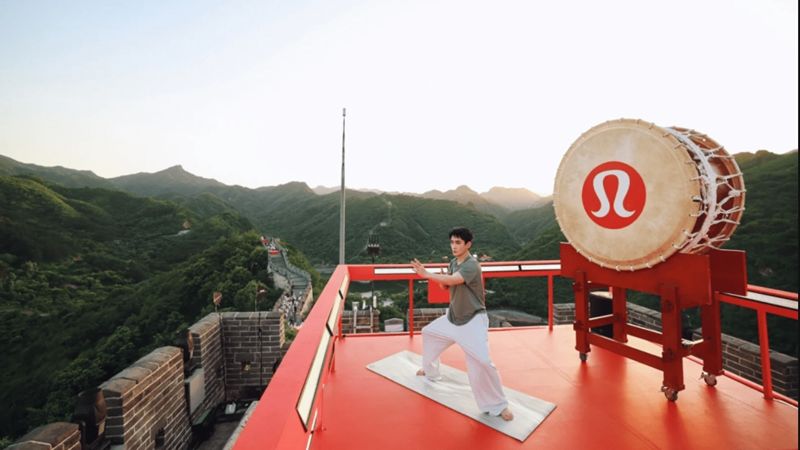
The controversy began on May 30, when the brand’s promotional campaign on the Great Wall was featured in a now-deleted press release. The event, described as a cultural celebration, showcased yoga practices on the ancient stone structure, with Chinese actor Zhu Yilong participating in a performance with a drum troupe. While the drum was initially labeled as traditional Chinese, its resemblance to the Japanese Taiko drum raised eyebrows. Social media users and musicians swiftly pointed out the discrepancy, arguing that the choice of instrument could be seen as a misrepresentation of Chinese culture.
Chinese percussionist Xu Yang, who shared his critique on Weibo, emphasized the distinctiveness of the drum’s form and style. “They should never be confused,” he stated in a video, highlighting the visual and cultural differences between the two instruments. The debate intensified as users linked the incident to historical tensions, recalling Japan’s imperialist past and its wartime activities in China. The Great Wall, a powerful national symbol, became the backdrop for these sentiments, with some accusing the brand of exploiting the landmark for commercial gain while overlooking its deeper cultural significance.
A Common Heritage, Divergent Identities
Despite their shared origins, the traditional Chinese drum and the Japanese Taiko drum have evolved into culturally distinct instruments. Both are large, wooden drums covered with cowhide skins, often reinforced with metal studs or rings. However, the Taiko drum is traditionally associated with Japanese festivals and performances, while the Chinese drum carries a legacy tied to ancient rituals and national pride. This distinction is not merely aesthetic but deeply symbolic, as the drums represent the historical and cultural identities of their respective nations.
Some analysts note that the confusion between the two drums is not entirely unfounded. Many early Japanese drums were introduced to the country through trade or cultural exchanges with China and Korea, suggesting a shared heritage. Yet, over time, each drum has developed its own unique role in society. The Chinese drum, for instance, is often used in ceremonial contexts, whereas the Taiko drum is more closely linked to martial traditions and artistic expression. This evolution has led to a clear cultural divide, making the choice of instrument a point of contention in the current climate of heightened nationalistic sentiment in China.
Lululemon’s Response and the Ripple Effect
Following the backlash, Lululemon issued an apology, acknowledging its oversight in the drum selection. The brand stated that its intention was to honor Chinese culture, but it admitted limitations in its understanding of the cultural nuances involved. “Due to limitations in our professional knowledge, we were unable to fully identify potential controversies initially,” the statement read, expressing regret for the misstep. The company also promised to adopt a “more rigorous attitude” in future events, ensuring greater cultural accuracy.
Meanwhile, the HIIKO Drum Troupe, which performed alongside Zhu Yilong, suspended all external promotions involving the controversial drums. Zhu’s studio also criticized the brand, urging it to “verify the entire process and to review, analyze, and follow up on the matter.” The studio emphasized its commitment to promoting traditional Chinese culture, adding weight to the criticism. Despite these efforts, many users on Weibo remain dissatisfied, with one post accusing the brand of “not meeting the standards of a national symbol.” The incident has since become a talking point in discussions about cultural sensitivity and brand accountability.
Geopolitical Faux Pas and Consumer Sentiment
This is not the first time a Western brand has faced controversy in China over cultural or geopolitical missteps. In 2021, H&M, Nike, and other apparel companies were boycotted for their alleged stance against the use of forced labor in Xinjiang, a region central to China’s narrative of economic and social progress. Similarly, PVH, the parent company of Calvin Klein and Tommy Hilfiger, was blacklisted during the trade war with the United States for its sourcing practices from Xinjiang.
The 2019 incident involving luxury brands Coach, Givenchy, and Versace further illustrates the delicate balance brands must maintain. These companies issued formal apologies after their T-shirts failed to explicitly label Hong Kong as part of China, inadvertently suggesting the region’s independence. The same year, Japanese Prime Minister’s comments on Taiwan triggered a ban on certain exports to Japan, highlighting how even minor actions can have significant geopolitical implications.
The drum controversy, while seemingly small, fits into a broader pattern of Western brands navigating the complex cultural landscape of China. With the nation’s consumers increasingly aware of their national identity and historical narratives, brands must tread carefully. A single misstep, such as using an instrument that evokes a different cultural tradition, can lead to a cascade of criticism, as seen in Lululemon’s case. The event’s removal from the brand’s website and social media platforms underscores the urgency with which companies must address such issues to maintain their reputation in the Chinese market.
The incident also reflects the growing influence of social media in shaping public opinion. Chinese platforms like Weibo have become powerful arenas for cultural discourse, where users can rapidly amplify their voices. The drum drama, which garnered over 50 million views by Monday, demonstrates how quickly a brand can lose credibility if its campaign is perceived as disrespectful to local traditions. As the debate continues, Lululemon’s actions serve as a cautionary tale for foreign companies entering the Chinese market, emphasizing the need for deeper cultural research and sensitivity in their promotional efforts.
While the brand has taken steps to rectify the situation, the incident has already left a lasting impression. The Great Wall, a symbol of resilience and historical continuity, now carries the weight of this cultural misrepresentation. As China’s nationalist fervor grows, brands like Lululemon must ensure their campaigns not only showcase the country’s beauty but also respect its rich cultural tapestry. Failure to do so could result in more than just a temporary dip in sales—it could spark a national conversation that reverberates far beyond the brand’s immediate reach.