Utah Judge Postpones Contempt Ruling in Charlie Kirk Case Until Friday
Sandego.net – The trial of Tyler Robinson, accused of fatally shooting conservative activist Charlie Kirk on a Utah university campus in September 2025, has seen a key development as district court Judge Tony Graf delayed a decision on potential contempt charges against prosecutors. The ruling, announced during a Monday hearing, moves the determination to a Friday morning session, raising questions about whether the death penalty remains a viable option for Robinson if the court finds the prosecutors in violation of a pretrial publicity order.
The pretrial publicity order, initially issued in September 2025 and later revised in December, restricts the parties involved in the case from making public comments about it unless specific conditions are met. Robinson’s defense argued that Christopher Ballard, a prosecutor and spokesperson for the Utah County Attorney’s Office, had breached this order by commenting on a ballistics report in March and April 2026. These statements, according to the defense, could prejudice the jury against Robinson before the trial begins.
Heads-Up on Hearsay Evidence
During Monday’s hearing, Judge Graf ruled that prosecutors will be permitted to present hearsay evidence during Robinson’s preliminary hearing, set for July 6. This decision follows the defense’s request to exclude such evidence, which they claimed could undermine the fairness of the trial. The ruling underscores the court’s balance between allowing prosecutors to share relevant information and maintaining control over pretrial publicity.
Ballard’s media interviews, which were the focus of the defense’s argument, centered on a ballistics report that the Bureau of Alcohol, Tobacco, Firearms and Explosives (ATF) could not conclusively link the bullet found at Kirk’s autopsy to the rifle Robinson is accused of using. The defense’s March 27 motion to continue the preliminary hearing highlighted this uncertainty, but prosecutors contended the report’s conclusion was incomplete. Ballard testified that his remarks aimed to clarify the report’s findings, emphasizing that the ATF had not ruled out the bullet’s origin from the rifle.
“The goal of these interviews was to respond to the specific media inquiries that were being generated by the misinformation,” Ballard stated during the hearing. He also noted that he included comments in each interview affirming Robinson’s presumption of innocence, which the defense had requested as a safeguard against biased coverage.
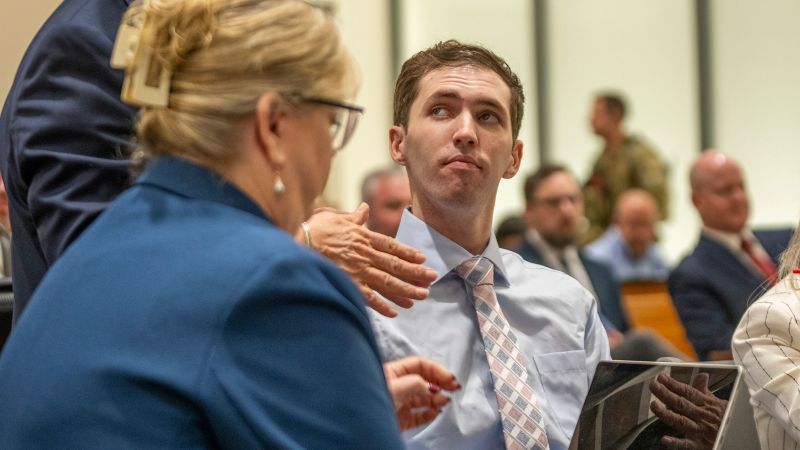
Robinson’s attorneys, however, argued that Ballard’s statements were “extremely reckless” and could have tipped the scales of public opinion. “I find no credibility in Mr. Ballard’s sworn testimony that he only intended to communicate with the media generally about bullet fragment analysis,” said Richard Novak, one of Robinson’s defense lawyers, during the June 12 hearing. The defense’s motion to hold prosecutors in contempt was based on the belief that Ballard’s remarks exceeded the scope of the pretrial publicity order.
The prosecutors’ objection to the contempt motion labeled it as “grossly disproportionate to the alleged misconduct.” In a written response, they asserted that Ballard’s comments did not warrant removing the death penalty from consideration, noting that the court’s order allows attorneys to comment on public information when they think it might lead to prejudicial media attention. “To the extent the Court finds that the prosecution could have made a better statement, it certainly is not a misstep that warrants the drastic and never-before-imposed remedy of reducing the aggravated murder charge to a first-degree felony,” the objection document stated.
Contempt Penalties and Legal Strategy
Robinson’s defense outlined possible consequences for contempt, including the removal of the death penalty as a potential sentence, or alternative measures like attending a continuing education program or being referred to the state bar association. These options reflect the defense’s strategy to mitigate the impact of potentially biased media coverage on the trial’s outcome. The preliminary hearing, which is expected to set the stage for Robinson’s trial, remains a critical point of contention, with the defense seeking to limit the prosecutors’ ability to shape public perception.
The case has drawn widespread attention since Kirk’s shooting sparked a wave of misinformation across media outlets. Robinson’s attorneys have consistently raised concerns about the high-profile nature of the trial, arguing that unchecked news coverage could jeopardize their client’s right to a fair trial. Ballard’s interviews, which occurred in March and April, were part of this broader effort to counter narratives that might cast doubt on the evidence against Robinson. Yet, the defense claims the timing and content of these comments violated the court’s order, potentially influencing jurors before they even see the evidence.
Ballard and Utah County Attorney Jeffrey Gray both testified about the necessity of their public statements, citing the professional rule that permits attorneys to comment on public information when they believe it might lead to prejudicial publicity. This rule, they argued, justifies their actions, as the ballistics report’s ambiguity invited speculation and media scrutiny. However, the defense maintains that the prosecutors could have adhered to the order by refraining from making specific claims about the case’s evidence, even if they discussed broader context.
The postponement of the contempt ruling adds a layer of uncertainty to the trial. If the court ultimately finds the prosecutors in contempt, it could signal a shift in the case’s trajectory, with the death penalty potentially off the table. Conversely, if the court upholds the prosecutors’ actions, the case may proceed with the death penalty remaining a possible outcome. This decision highlights the tension between transparency in legal proceedings and the risk of prejudicing the jury.
As the Friday hearing approaches, all eyes are on Judge Graf to determine whether the pretrial publicity order has been violated. The ruling could have far-reaching implications for the trial, affecting both the charges against Robinson and the potential penalties he faces. For now, the case remains in limbo, with the defense and prosecutors locked in a battle over the extent of their public communication rights.