‘I need to be the lion’: Inside a boot camp teaching men how to talk to women
The Rise of Men’s Boot Camps
Sandego.net – In the heart of Nashville, a unique phenomenon is taking shape: intensive programs designed to refine men’s social skills. These workshops, often dubbed “men’s boot camps,” have become a growing trend across major American cities, from New York to Los Angeles, and even in international locations like Europe and Asia. Their premise is simple yet bold—helping men reclaim the art of face-to-face interaction in an era dominated by screens and digital communication.
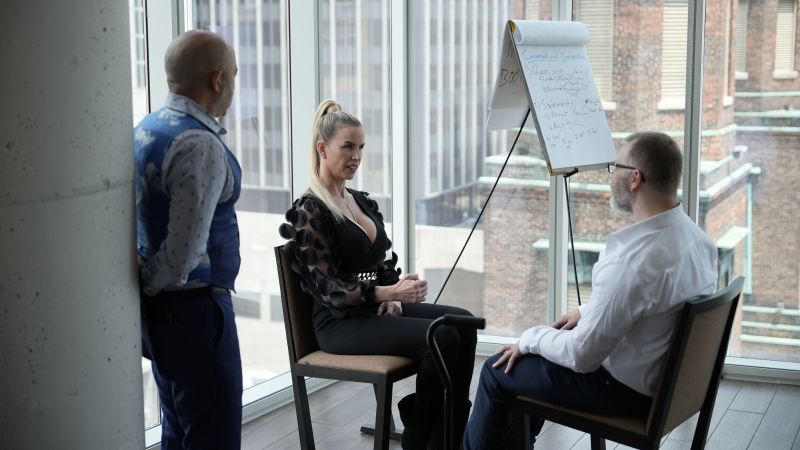
At the center of this movement is Matt Artisan, a charismatic instructor whose company, The Attractive Man, has expanded its reach to multiple North American cities. During a recent session, Artisan guided a group of men through a three-day immersion in pickup techniques, blending strategy with self-improvement. Participants included a diverse range of individuals, from those grappling with post-divorce confidence issues to young men seeking to navigate modern dating culture. The goal? To transform their approach to social engagement and rekindle a sense of connection that feels increasingly elusive.
Steve Crook’s Journey
Steve Crook, a 55-year-old man recently separated from his spouse, stood at the intersection of a bustling street, his gaze fixed on a young woman laughing with friends. “I’m very picky,” he admitted, scanning the crowd with an almost tactical intensity. His criteria were clear: “They have to be physically attractive,” he stated, before identifying a target—someone with “long legs and big boobs and slim.” The woman’s presence sparked a mix of anticipation and anxiety in Crook, who was determined to channel his “alpha” energy.
“I need to be the lion,” he said, emphasizing his desire to embody strength and charisma. “I’m a bit of a Barbie guy, really—long legs and big boobs and slim.”
Crook’s first attempt was a whirlwind of action. He broke into a jog, darting between cars to reach her. The mid-afternoon crowd was lively, but nothing deterred him. “Let’s get out of the head and just do it,” he declared later, offering a play-by-play account of his efforts. Yet, the moment he approached, the conversation faltered. “She started to turn away,” he recalled, describing the brief interaction as a “disaster.”
Artisan, observing from the sidelines, provided immediate feedback. “You were kind of behind them,” he noted, urging Crook to take a more assertive stance. The instructor’s critiques were frequent, covering everything from vocal tone to body language. “I heard the voice go up a few times,” Artisan added, highlighting the need for control and confidence. Crook, often self-critical, confessed to feeling “like a p*ssy” during the session.
Methodology and Challenges
Over the course of the three days, Crook and his peers practiced various approaches. They stopped strangers in the street, yelled into ears in rowdy nightclubs, and stared into eyes in silent encounters, sometimes leading to emotional breakdowns. The techniques ranged from aggressive confidence to calculated charm, with Artisan emphasizing the importance of “timing” and “stance.”
These boot camps blend elements of traditional masculinity with contemporary social dynamics. Participants often cite the influence of dating apps and the isolation of the pandemic as catalysts for their enrollment. “We’re suffering from an epidemic of loneliness,” said Brandon Viall, a 2024 Pew Research Center study participant. “We’re connected by all these screens, but is that real connection?”
Artisan’s students argue that their struggle is rooted in multiple factors. The proliferation of dating apps, which prioritize quick swipes over meaningful dialogue, has altered expectations. Political polarization and the #MeToo movement are also cited as contributors, with one attendee noting that the latter “scared the s**t out of a lot of guys.” Despite these challenges, the participants remain committed to their mission: restoring the lost art of human connection.
Broader Context and Implications
While the camps may seem like a throwback to the bro culture of the early 2000s, they reflect a modern struggle. Many men feel pressure to conform to outdated ideals of masculinity, where emotional vulnerability is seen as weakness. The boot camps aim to counter this by teaching techniques that blend assertiveness with respect, though the line between confidence and objectification can be thin.
For Crook, the experience was both exhilarating and humbling. He admitted to feeling “a bit of a Barbie guy,” yet his desire to be more “alpha” in interactions was palpable. “I just feel like a p*ssy, basically,” he said, illustrating the internal conflict that drives many to these programs. The pressure to perform in social settings often leads to self-deprecation, as participants compare their progress to an idealized version of masculinity.
Artisan’s methodology is part of a larger trend in men’s social development. By the end of 2026, his company had established camps in cities like Seattle, Dallas, and Miami, alongside international locations. The program’s success is measured not just by the number of participants, but by their ability to navigate conversations with newfound assurance. Yet, critics argue that these camps risk reducing complex human relationships to a series of calculated moves, potentially reinforcing stereotypes rather than challenging them.
A Culture of Connection and Competition
The camps create a microcosm of social interaction, where men are both students and competitors. In one session, Crook’s awkward attempt to engage a woman was met with Artisan’s critique, while another participant, Matt Artisan, struggled with his own approach. “You’ve got to get in front of all of them,” Artisan told Crook, encapsulating the core philosophy of the program: mastery through practice.
For many attendees, the experience is transformative. They describe it as a relearning process, where social skills are honed through repetition and feedback. “It’s like a crash course in charisma,” said one participant, highlighting the blend of strategy and spontaneity required. Yet, the focus on “winning” a conversation can sometimes overshadow the natural flow of human connection, turning interactions into performance art.
Despite these nuances, the boot camps have found a receptive audience. With one in six Americans reporting chronic loneliness, the demand for social guidance is evident. These programs offer a structured way to rebuild confidence, though their effectiveness depends on the balance between technique and authenticity. As Artisan’s camp in Nashville continues, the question remains: are these men reclaiming connection, or merely mastering the art of persuasion?
Such scenes are likely unfolding in neighborhoods across the country, a testament to the enduring appeal of these workshops. Whether through the lens of a pandemic-driven isolation or the desire to escape the constraints of modern dating culture, men are flocking to these spaces in search of a renewed sense of self. The result is a dynamic that mixes personal growth with a competitive edge, as participants strive to embody the qualities of a “lion” in a world that often feels like a jungle of missed opportunities.