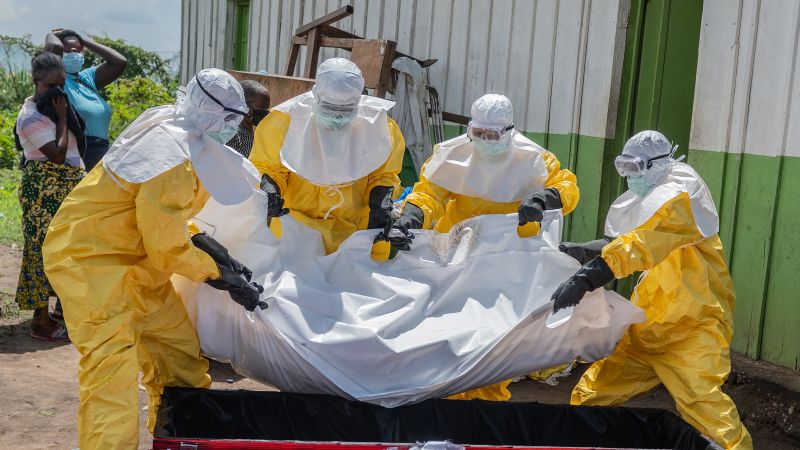
DRC’s Ebola outbreak may be worst ever, Africa CDC says
Sandego.net – The ongoing Ebola crisis in the Democratic Republic of Congo (DRC) has raised alarms across the African continent, with officials at the Africa Centers for Disease Control and Prevention (Africa CDC) warning that the situation could surpass historical records. Africa CDC Director-General Jean Kaseya issued a stark assessment during a virtual summit of African leaders held in Burundi, emphasizing the urgent need for intervention to prevent the outbreak from becoming the most devastating in the region’s history.
Kaseya highlighted that the virus’s spread has outpaced containment efforts, with a significant portion of the population still at risk. “If we don’t act swiftly, this outbreak will exceed the scale of our previous challenges,” he stated. The DRC has been grappling with the disease for over a year, and the latest developments suggest the strain could be more intense than ever before. Health workers report that thousands of people remain in the vulnerable category, unable to trace their connections to infected individuals. This delay in identifying and isolating cases has fueled concerns about the outbreak’s potential to spiral out of control.
“If we don’t stop the outbreak very soon, it will be worse than what we had in West Africa and eastern DRC,” said Africa CDC Director-General Jean Kaseya.
The current outbreak in the DRC is being compared to two major epidemics that left deep scars on the continent. The first, which erupted in 2014 in Guinea and spread to Liberia and Sierra Leone, was one of the deadliest in modern history. It claimed over 11,000 lives and overwhelmed healthcare systems across West Africa. The second, a less severe outbreak in 2018 in the eastern part of the DRC, served as a reminder of the virus’s ability to re-emerge with alarming frequency. Despite containment efforts in that instance, the recurrence of the disease in 2026 has highlighted the persistent challenges of eradicating Ebola in the region.
Analysts point to several factors that could exacerbate the current situation. The DRC’s vast and often remote regions make it difficult to conduct rapid contact tracing, a critical tool in curbing the spread of infectious diseases. Additionally, political instability and resource shortages in some areas have hampered response operations. Kaseya noted that the virus has infected communities where health infrastructure is weak, and without coordinated efforts, the outbreak could grow exponentially.
International partners have also expressed concern. The World Health Organization (WHO) and various global health agencies have pledged support, but the scale of the response remains a topic of debate. While some experts argue that the DRC’s experience with past outbreaks has equipped it with better preparedness, others warn that the current strain of the virus may be more aggressive. “We’ve learned a lot from previous crises, but this one is testing our limits,” said Dr. Amina Ndiaye, a virologist at the University of Dakar, in a recent interview.
The impact of the outbreak extends beyond health metrics. Local economies have suffered as healthcare workers are deployed to battle the virus, leaving agricultural and industrial sectors understaffed. In addition, the psychological toll on communities has been profound, with fear of infection leading to social isolation and distrust in public health measures. “People are living in uncertainty,” said a nurse from Kinshasa, who has been on the frontlines for months. “We’ve lost so many lives, and now we’re trying to protect the rest.”
Efforts to contain the outbreak have included mass vaccination drives and enhanced surveillance systems. However, logistical hurdles such as poor road networks and limited access to rural areas have slowed the distribution of vaccines. In some regions, health workers are struggling to reach communities, while others have reported shortages of personal protective equipment (PPE) and testing kits. “Every day is a race against time,” said Kaseya during the virtual meeting, urging African nations to prioritize funding and collaboration.
The Africa CDC has called for a unified regional response, emphasizing the need for shared resources and information. “No single country can tackle this alone,” he stressed. The organization has been coordinating with local health authorities and international partners to establish quarantine zones and track the virus’s movement. However, the pace of progress has been uneven, with some areas showing signs of improvement while others remain hotspots.
Experts warn that the situation could worsen if the current trajectory continues. The virus’s ability to mutate and its high transmission rate in densely populated urban centers have raised new challenges. In addition, the prolonged nature of the outbreak has increased the risk of fatigue among both healthcare workers and the public. “We’re seeing a decline in compliance with safety protocols, which is concerning,” said Dr. Yusuf Kabore, an epidemiologist at the University of Ouagadougou. “This could lead to a second wave of infections.”
Despite these challenges, there is hope that the outbreak can be brought under control. The Africa CDC has been working closely with the DRC government to implement stricter containment measures, including enhanced community outreach and improved data collection. “We’re not just fighting the virus—we’re fighting misinformation and fear,” Kaseya added. The organization has also launched a public awareness campaign to educate people about the importance of hygiene and early reporting of symptoms.
As the situation evolves, the focus remains on preventing the outbreak from reaching unprecedented levels. The DRC’s health officials have stressed that the success of their efforts will depend on sustained international support and the willingness of local communities to cooperate. “We need everyone’s help, from governments to individuals,” said a spokesperson for the DRC’s Ministry of Health. “Every action we take now will determine the future of this outbreak.”
With the number of cases rising and the number of untraced contacts growing, the stakes have never been higher. The Africa CDC’s warning serves as a clarion call for action, reminding the continent of the lessons learned from past epidemics. If the current outbreak proves to be the worst ever, it could reshape public health strategies for years to come, reinforcing the need for investment in disease surveillance and rapid response mechanisms.