Breakaway Catholic Group Excommunicated Following Defiant Ordinations
Sandego.net – The Vatican issued a sweeping declaration on Thursday, officially placing the Society of Saint Pius X (SSPX) in schism and excommunicating its members for their refusal to comply with Pope Leo XIV’s directives. The group’s recent act of ordaining four new bishops without papal approval has triggered the latest disciplinary measures, marking a significant escalation in the conflict between the SSPX and the central authority of the Catholic Church.
Defiance and the Vatican’s Response
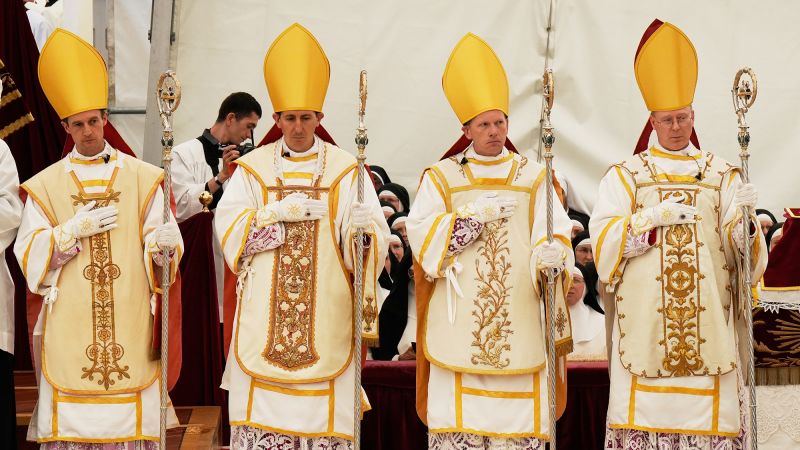
The SSPX, an ultra-traditionalist faction known for its adherence to pre-Vatican II practices, carried out the ordinations on Wednesday despite repeated appeals from Pope Leo XIV to reverse the decision. This act of defiance, which ignored the Pope’s wishes, has led to the issuance of a decree by the Vatican’s doctrinal office, stating that the four newly ordained bishops, as well as the two who presided over the ceremony, are now excommunicated. Excommunication, a formal exclusion from the Church’s sacraments, underscores the gravity of the group’s actions in the eyes of the Vatican.
The decree also extends the penalty to priests affiliated with the SSPX and lay members who “formally adhere” to the group. This means that anyone aligning with the SSPX’s teachings and practices is now considered to be in schism, effectively severing their ties to the Church’s central authority. The Vatican has issued a stern warning to all clerics and lay faithful, emphasizing that formal association with the group will result in automatic excommunication. This ruling aims to reinforce the Church’s unity and discipline, as outlined in the Pope’s long-standing emphasis on maintaining the hierarchical structure of Catholic doctrine.
Historical Context of the SSPX
Founded in 1970 by Archbishop Marcel Lefebvre, a French prelate known for his opposition to modernist changes in the Church, the SSPX has been a focal point of doctrinal disputes since its inception. Despite its founding, the group faced immediate challenges, as it was officially suppressed by the Bishop of Fribourg in 1975. However, Lefebvre and his followers persisted, eventually regrouping and establishing a more structured presence within Catholic communities.
The SSPX’s most notable rebellion occurred in 1988 when it ordained four bishops without papal consent, an act that led to their excommunication. This past action set the stage for the current decree, which is broader in scope. While the 1988 sanctions were limited to the bishops themselves, the latest Vatican ruling extends the penalties to all members of the group, including priests and lay adherents. This expansion reflects a more comprehensive approach to addressing the SSPX’s deviation from Church teachings.
Under Pope Francis, the SSPX was granted limited leniency, allowing it to administer sacraments such as marriage and confession. This exception was seen as a gesture of reconciliation, but the recent decree reverses that policy, declaring any marriages or confessions conducted by the SSPX as “invalid.” The decision highlights the Vatican’s resolve to enforce doctrinal purity, even as it acknowledges the group’s historical significance and continued influence.
Pope’s Stance on Unity and Reform
Pope Leo XIV has consistently prioritized the unity of the Church, viewing the SSPX as a challenge to this cohesion. During an interview on June 16, the Pope explicitly criticized the group for rejecting “fundamental elements” of the Catholic faith, particularly the teachings of the Second Vatican Council. The Council, held in the 1960s, introduced sweeping reforms, including a shift toward greater religious freedom, increased ecumenical dialogue with other Christian denominations, and the use of vernacular languages in Mass. The SSPX, however, has steadfastly opposed these changes, maintaining a rigid adherence to traditional practices.
“If that is the choice they make, I am sorry, but we must move forward,” the Pope said regarding the group’s ordinations. This statement underscores his determination to uphold the Church’s authority while also acknowledging the emotional weight of the decision. Cardinal Pietro Parolin, the Vatican’s secretary of state, echoed this sentiment on Wednesday, expressing “deep sorrow” over the ordinations. He noted that the act “breaks the unity of the Church” and incurs “very specific sanctions,” with excommunication being the most severe.
“The ‘modernist church’ is a desert that kills everything that it touches,” said Father Michael Goldade, one of the newly ordained bishops, during a service following the ceremonies. Goldade, who leads the seminary in Dillwyn, Virginia, where SSPX priests are trained, has long been a vocal critic of Vatican II reforms. His words reflect the group’s broader perspective, which views modernization as a threat to Catholic tradition.
SSPX’s Global and U.S. Influence
Despite the Vatican’s recent actions, the SSPX remains an active force within the global Catholic community, particularly in the United States. The group maintains its headquarters in Missouri and operates a seminary in Virginia, where it trains priests to follow its traditionalist approach. This infrastructure allows the SSPX to sustain its activities, even as it faces sanctions from the Vatican.
The ordinations on Wednesday, which included Goldade, are a testament to the group’s persistence. Goldade’s role as both a leader and a newly ordained bishop symbolizes the SSPX’s continued commitment to its vision of the Church. His quote, “The ‘modernist church’ is a desert that kills everything that it touches,” encapsulates the group’s belief that the Vatican’s reforms have diluted the purity of Catholic doctrine.
While the Vatican’s decree is a clear rebuke of the SSPX’s actions, it also includes a note of compassion. The Church, described as a “caring mother,” is said to welcome those who wish to return to full communion. This dual approach—punishment for current defiance and openness to reconciliation—highlights the Vatican’s desire to maintain its authority while offering a path back for dissenters. However, the extent of the sanctions suggests that the Church is prepared to take decisive action to preserve its unity.
Legacy of Lefebvre and the Split
At the core of the SSPX’s separation from the mainstream Church is the legacy of Archbishop Marcel Lefebvre and his followers’ resistance to Vatican II’s reforms. The group rejects the Council’s teachings on ecumenism, religious freedom, and the adaptation of Catholic worship, such as the use of languages other than Latin in Mass. This ideological divide has persisted for decades, leading to the group’s status as a splinter faction.
One of the Council’s key decisions was the condemnation of antisemitism, a stance that the SSPX has often criticized. While the Vatican maintains that this reform was essential for fostering inclusivity, the SSPX sees it as a departure from the Church’s traditional identity. The group’s leaders argue that modernization has eroded the sacredness of Catholic practices, further justifying their breakaway status.
The latest excommunication decree is a culmination of years of tension, with the Vatican aiming to assert its dominance over the SSPX’s leadership. By extending the penalties to all members, the Church signals its intent to fully isolate the group. This move not only reinforces the authority of the Pope but also serves as a warning to other factions that might challenge the Church’s central teachings. The SSPX’s continued presence in the United States, however, suggests that its influence remains strong, even as it faces formal exclusion from the sacraments.
As the Vatican’s actions take effect, the future of the SSPX remains uncertain. While the group may face internal challenges, its members continue to practice their faith according to their traditionalist beliefs. The Pope’s emphasis on unity and the hierarchical structure of the Church ensures that this conflict will likely persist, with the SSPX serving as a reminder of the enduring debates over the Church’s direction in the modern era.