Monaco’s Notorious Bombing Challenges Its Reputation as a Safe Haven
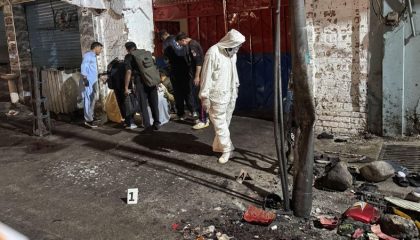
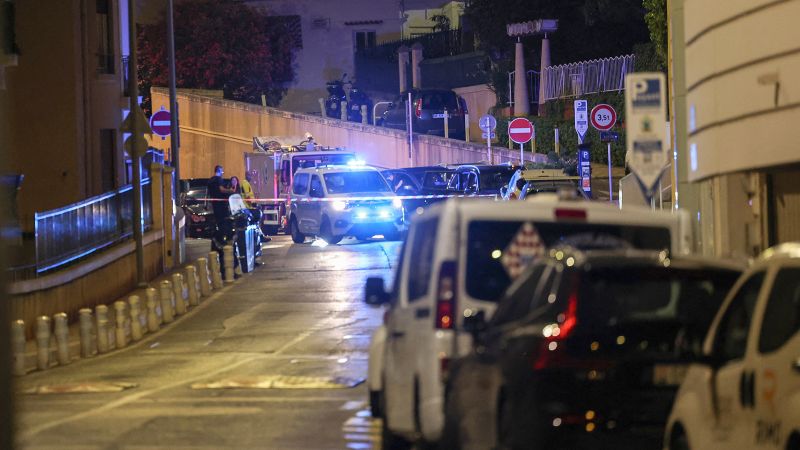
Sandego.net – Just before 9 p.m. on a Monday evening, the tranquil image of Monaco as one of the world’s safest nations was abruptly disrupted when a bomb detonated near the entrance of a prestigious apartment complex. The attack targeted Vadym Yermolaiev, a 58-year-old Ukrainian-born billionaire who resided in the building, leaving him with serious injuries. Two others—another woman and a 13-year-old child—were also hospitalized, marking the first recorded instance of an assassination attempt in the principality’s meticulously monitored streets.
A Prince’s Response to a Growing Threat
Prince Albert II, who has led Monaco since 2005 and is the son of Prince Rainier III and Princess Grace (Kelly), swiftly condemned the incident as “an odious act.” He mobilized the country’s law enforcement and security agencies to intensify their search for the perpetrator while doubling down on routine patrols to restore public confidence among Monaco’s affluent population. The prince’s declaration underscored the gravity of the event, which had shaken the principality’s long-standing reputation for safety.
“An odious act,” Prince Albert II said, as he directed efforts to locate the suspect and bolster security measures. “This is a clear message to our people that no one is entirely immune from danger.”
Monaco’s police department has since launched an investigation into the bombing, charging the attacker with attempted premeditated murder and the placement of an explosive device in a public area. Christophe Mirmand, the country’s minister of state, emphasized the historical significance of the event, stating it was “the first time in history that such an act has taken place in the principality.” CCTV footage revealed the suspect had lingered near the scene for hours, walking back and forth before the explosion, suggesting a level of planning and patience.
The Principality’s Unmatched Security Infrastructure
Monaco’s status as a secure microstate is rooted in its extreme police density. With 556 officers patrolling a territory covering just 485 acres—roughly half the size of New York’s Central Park—there is one law enforcement official for every 70 residents, according to the Monegasque Institute of Statistics and Economic Studies. This ratio far exceeds that of the United States, where there is one officer per 400 people, and even surpasses densely populated cities like Washington, D.C., which maintains a ratio of one per 185 residents. The principality’s high level of surveillance is further amplified by its 1,387 CCTV and facial recognition cameras, all monitored around the clock from an operational command center.
In addition to the civilian police force, Monaco boasts 125 elite military officers from the Compagnie des Carabiniers du Prince, tasked with protecting the royal family and key infrastructure. The country’s strict enforcement policies also include frequent random identity checks, with over 134,000 conducted last year alone. These measures have long made Monaco a magnet for wealthy individuals and celebrities seeking a secure environment. Yet, the bombing has introduced a new layer of complexity to its safety narrative.
Monaco’s Vulnerability at the Border
Despite its formidable security, Monaco’s geographical position leaves it exposed at its northernmost border with the French town of Beausoleil. The lack of physical barriers means the principality is effectively a corridor between France and the Mediterranean, with residents and visitors often crossing unnoticed. The suspect in the bombing was captured on camera strolling toward the border just moments after the attack, raising questions about how such a threat could reach the heart of the city state.
The incident has prompted the government to allocate millions toward strengthening security along this critical frontier. While the bomb’s location was in the center of a residential area, its suspect had already slipped past Monaco’s defenses, highlighting the challenges of maintaining safety in a place where borders are invisible and movement is seamless. The Monegasque authorities now face the task of ensuring their vigilance is matched by the vigilance of their neighbors.
A Safe Haven Under Scrutiny
Monaco’s crime statistics have long been a source of pride for its leaders. Last year, there were no homicides or attempted murders reported, though 1,055 overall offenses were recorded. These include minor incidents such as unintentional injuries, defamation, vandalism, petty theft, and fraud, with only 38% classified as serious crimes. The low crime rate has made Monaco a preferred location for the wealthy, including Formula One drivers Lewis Hamilton, Jenson Button, and Max Verstappen; tennis legends Novak Djokovic and Björn Borg; and icons like Ringo Starr and Shirley Bassey.
Nick Edmiston, founder of superyacht builder Edmiston & Co, who has called Monaco home since 1989, highlighted the unique appeal of the country. “You can walk around wearing expensive jewelry and feel safe,” he remarked. “Many wealthy people are used to bodyguards, but here, security is woven into the fabric of daily life.” Yet, the recent bombing has tested this perception, forcing residents to reconsider the balance between comfort and risk.
Monaco’s Safety Legacy in Question
The attack has sparked a broader conversation about Monaco’s safety model. While its police force and surveillance systems have historically kept crime at bay, the bombing demonstrates that even the most secure environments can be breached. The principality’s tiny size—just 485 acres—makes it a high-density area, but its safety also depends on the vigilance of its people and the effectiveness of its border controls. As the Monegasque government fortifies its defenses, the incident serves as a reminder that safety, though rare, is not guaranteed.
Monaco’s residents, accustomed to a life of luxury and tranquility, now grapple with the reality of a potential threat. The bombing’s impact extends beyond its immediate victims, casting a shadow over the country’s reputation as a sanctuary for the elite. For the first time in its history, Monaco faces a challenge to its identity as a place where danger is a distant memory. The journey to restore that image will require more than just increased patrols—it will demand a reevaluation of the systems that have long defined its security.