A Day of Consequences: Insider Trading Bans, Civil Rights Reckonings, and the Long Shadow of Prediction Markets
Sandego.net – The final hours of August 31, 2026, delivered a dense collision of stories spanning financial regulation, racial justice, sports medicine, conservation biology, and the architecture of American political blame. What follows is a consolidated look at the threads that dominated the news cycle, each carrying implications well beyond a single headline.
George Santos and the Lifetime Ban That Redefines Prediction Markets
Former U.S. Representative George Santos has become the first individual ever to receive a permanent ban from Kalshi, the rapidly growing prediction-market platform. The sanction stems from an insider-trading investigation that has kept Santos in regulatory crosshairs since his congressional tenure ended under cloud. The lifetime prohibition means Santos can no longer place trades on Kalshi’s event contracts — a penalty that, while narrow in scope, signals that prediction-market operators are treating market-integrity violations with the same severity once reserved for traditional securities exchanges. For a platform that has attracted millions of retail participants betting on elections, sports outcomes, and economic data, the move sets a precedent: participation is conditional on clean hands.
Ben Crump, Nolan Wells, and the Question of Method
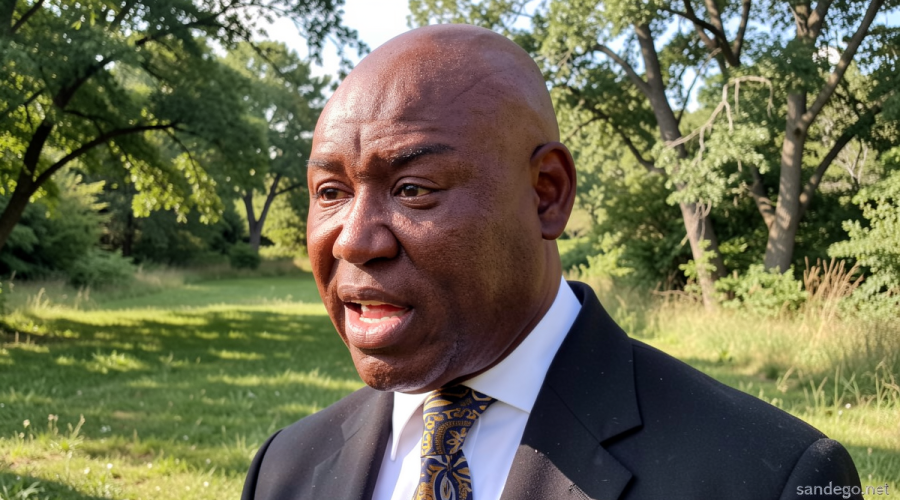
Civil rights attorney Ben Crump spent decades building a practice centered on one demand: accountability. The July Fourth death of Nolan Wells during an outing in Mississippi has thrust Crump’s mission — and the tactics he employs — back under intense public scrutiny. Wells’ family and supporters see a pattern of institutional failure that only sustained legal pressure can disrupt. Critics, meanwhile, argue that the visibility of high-profile cases can eclipse quieter, equally urgent claims. The tension between spectacle and substance has defined Crump’s career since he took on landmark cases in the early 2000s, and the Wells matter has sharpened that debate to a razor’s edge.
Juries Weigh Two Very Different Cases
In two separate courtrooms, juries moved into deliberation on stories that span generations. In the Lindsay Clancy trial, jurors are weighing evidence that will determine whether charges stick or dissolve — a case that has drawn sustained public attention for its procedural complexity. Simultaneously, jurors in the long-delayed retrial connected to the 1996 murder of rapper Tupac Shakur began their deliberations, a proceeding that has carried the weight of two decades of fan speculation, investigative journalism, and unresolved questions about who pulled the trigger in Las Vegas. Both trials underscore how American courts continue to serve as the final arbiter of narratives that the public has already tried to settle in its own mind.
Trump’s Preemptive Blame Game and the Ballroom Question
President Donald Trump has made a sustained effort to assign responsibility for potential Republican losses in the 2026 midterms before those elections have even been held. Political analysts describe the strategy as structurally incoherent: blaming congressional colleagues for a hypothetical future defeat inverts the usual sequence of accountability and risks alienating the very legislators whose cooperation the White House will need. The messaging has intensified as polling suggests a narrowing margin in several swing districts.
On the executive-branch front, the Supreme Court permitted Trump to continue construction on a proposed White House ballroom, clearing a legal obstacle that had paused the project. The ruling narrows the scope of judicial review over presidential building decisions on federal property, a point that will shape future infrastructure disputes at the executive level.
One in Four: The NFL’s CTE Problem Grows
New research indicates that as many as one in four National Football League players may ultimately develop chronic traumatic encephalopathy, the degenerative brain disease linked to repeated head impacts. The finding, if it holds across longitudinal cohorts, would represent a significant upward revision from earlier estimates and would intensify pressure on the league’s concussion protocols, retirement benefits, and long-term medical surveillance programs. For families living with a loved one’s diagnosis, the numbers translate into daily reality: progressive memory loss, mood instability, and a slow erosion of the person they knew. Understanding what it means to lose someone to CTE requires sitting with that reality, not merely parsing a statistic.
The Monkey That Nearly Vanished
Deep within a swampy forest, a species of monkey remained unknown to science until 1993. Fewer than twenty years after its formal description, roughly ninety percent of the population had disappeared — a collapse driven by habitat loss and hunting pressure. Today, a conservationist working on the ground is helping to pull the species back from the brink of extinction through targeted habitat restoration and community-based protection programs. The story is a microcosm of a broader pattern: species described late in the Anthropocene often face their steepest decline within a single generation of discovery.
Epstein’s Afterlife in Storytelling, and a Pigeon’s Second Chance
From Furious to Industry to Scoop, a wave of Jeffrey Epstein–inspired narratives about billionaire predators is dominating cultural conversation. The stories share a common architecture: wealth as armor, silence as currency, and a single act of rescue that cracks the facade. Their timing reflects a public appetite for examining how power insulates its holders from consequence.
In a lighter register, a Philadelphia couple who rescued a sick pigeon discovered an unexpected passion for the bird. That passion has since grown into a weekly guided pigeon tour, offering residents a close-up look at the species that most city dwellers only notice when it lands on a windowsill. Meanwhile, Istanbul’s historic public baths continue to draw visitors seeking a blend of Ottoman architectural heritage, communal ritual, and simple relaxation — a tradition stretching back centuries and embedded in the city’s social fabric.
A Note on Galliano and the Met Gala Exhibit
The Metropolitan Museum of Art has canceled plans to honor British designer John Galliano in connection with a Met Gala–linked exhibit, following a growing public outcry over his past antisemitic remarks. The decision underscores how institutional cultural programming now operates under sustained scrutiny of curatorial choices and the reputations of the figures they celebrate.
The question of who gets honored, and under what conditions, has become inseparable from the question of who gets to speak about that honor.
Each of these stories, taken individually, occupies a single column. Taken together, they sketch the contours of a day in which accountability, memory, and the slow work of restoration — whether of a species, a brain, or a public trust — all advanced by small, contested increments.
Related Reading
Frequently Asked Questions
What is Ben Crump s mission bogus narrative?
Ben Crump s mission bogus narrative is the main topic of this guide. The article explains the context, practical details, and next steps readers should understand.
Why does Ben Crump s mission bogus narrative matter?
Ben Crump s mission bogus narrative matters because readers are looking for a useful answer, not just a short summary. Good content should match search intent and help them decide what to do next.