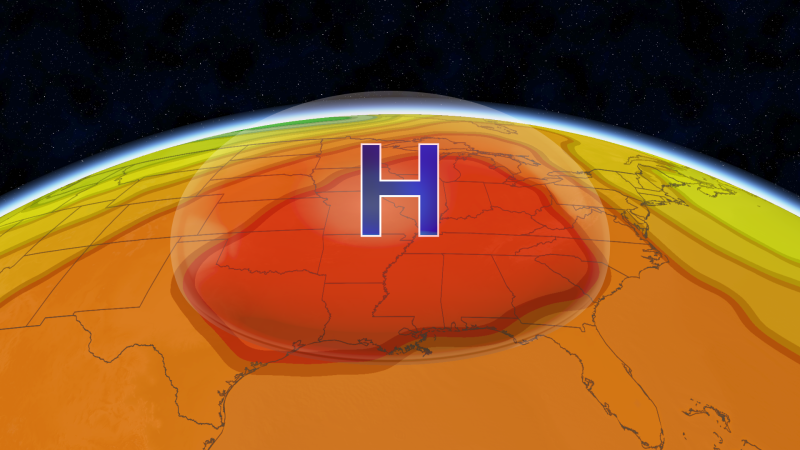
A Widespread Searing Heat Dome Brings Extreme Fire Threats to US
Sandego.net – A widespread searing heat dome is emerging across the central and eastern United States, signaling a major shift in weather patterns that will lead to prolonged sweltering heat and heightened fire risks. This event, marked by a high-pressure system trapping warm air, is expected to intensify over the next several days, creating life-threatening conditions for millions. The heat dome’s effects will be felt from the Deep South to the Midwest, with temperatures projected to climb well above average. Meanwhile, the West experiences a contrasting cooling trend, highlighting the extreme regional differences in weather this week.
Heat Dome Intensifies Across Central and Eastern US
As the heat dome solidifies, it will blanket the central and eastern regions, pushing heat indices to dangerous levels. The National Weather Service (NWS) has already issued warnings for “major” and “extreme” heat risks, emphasizing the potential for record-breaking temperatures. Urban hubs like Chicago, Detroit, and Dallas are particularly vulnerable, with the searing heat dome expected to maintain its grip through early next week. The phenomenon is driven by a reconfigured jet stream, which has shifted to create this thermal imbalance.
Alongside the relentless heat, the searing heat dome is exacerbating fire weather conditions in the Southwest, where dry vegetation and strong winds are creating ideal conditions for wildfires. The NWS reports that areas such as Utah and Arizona are at critical risk, with the Cottonwood Fire already growing under these conditions. The intensity of the heat dome is linked to its duration, as prolonged exposure to high temperatures increases the likelihood of ignition and rapid fire spread.
Extreme Fire Threats Rise in the Southwest
The searing heat dome has intensified fire risks across the Southwest, where blazes are growing at an alarming rate. Strong winds accompanying the cooldown in the West will further fuel these fires, making containment efforts challenging. The NWS has raised the alarm, with the heat dome contributing to the most severe fire weather conditions of the season. “This heat dome is creating the perfect storm for wildfires,” experts warn, as the combination of dry conditions and high temperatures becomes a serious threat to communities and ecosystems.
While the searing heat dome remains a dominant force, some regions may experience temporary relief during the Fourth of July weekend. However, the NWS cautions that the heat will persist in the South, with northern areas seeing only slight cooling. “The searing heat dome will hold its ground, though the Midwest and Great Lakes might see a brief reprieve,” the service noted. This pattern underscores the regional impact of the heat dome, which is now a focal point for weather forecasting and emergency preparedness.
Health Risks from Prolonged Heat Exposure
As the searing heat dome stabilizes, its oppressive grip will raise “feels-like” temperatures to 100–110 degrees in many areas, with some regions hitting 115 degrees. The NWS highlights that this sustained heat poses a severe health risk, as it can lead to heat exhaustion, dehydration, and even heatstroke. “The heat dome’s intensity means people must stay hydrated and avoid prolonged exposure,” the service advised, stressing the importance of taking precautions in urban and rural settings alike.
With nighttime temperatures remaining stubbornly high, the searing heat dome will leave little opportunity for recovery. In the Midwest and Great Lakes, lows are expected to stay in the lower-to-middle 70s, keeping the region in a perpetual heatwave state. “The searing heat dome is preventing much-needed relief, making the risk of heat-related illnesses even greater,” the NWS warned. Climate change is believed to be intensifying these events, creating a growing challenge for public health and infrastructure in the face of extreme weather.