Gavin Newsom Opposes California Wealth Tax, Pushes National Billionaire Tax
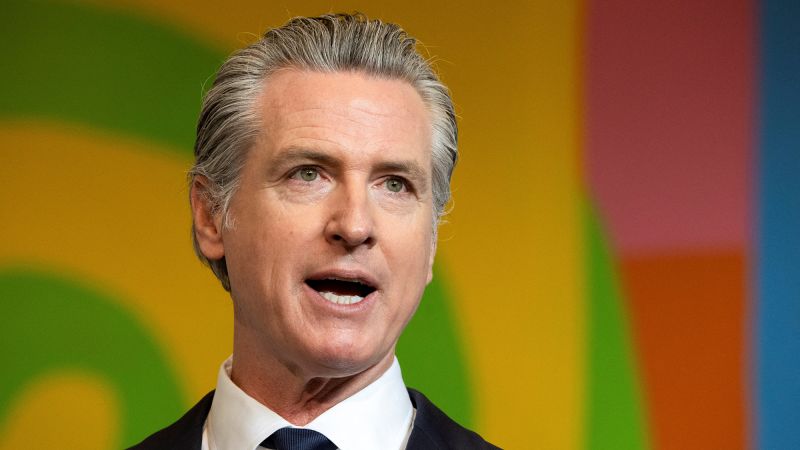
Sandego.net – California Governor Gavin Newsom has firmly rejected a state-level wealth tax proposal, advocating instead for a federal initiative targeting the ultra-wealthy. His recent plan, outlined in a Substack post, positions a national billionaire tax as a key strategy for an “economic reset.” This shift highlights his growing influence as a potential 2028 presidential contender, as he aims to reshape the nation’s fiscal policies to address growing inequality. While the California tax, which seeks to impose a one-time levy on individuals with net worth over $1 billion, is set for voters’ consideration in November, Newsom argues that a broader federal approach is more effective in ensuring fairness for all.
Newsom’s Economic Vision and Policy Priorities
In his push for a national billionaire tax, Newsom emphasizes the need for equitable wealth distribution across the United States. He criticizes the current system, which he claims has allowed wealth to concentrate among a small elite, undermining the principles of opportunity and fairness. His proposal targets individuals with a net worth exceeding $100 million, suggesting a minimum tax rate that would mirror the burden of average workers. This approach aligns with his broader goal of reining in the influence of the wealthiest Americans, particularly in the face of technological advancements like AI that are reshaping the economy.
“The economic system our founders designed was meant to prevent power from accumulating in a few hands, yet decades of policy have allowed that to happen,” Newsom wrote in his Substack post. “A national tax on billionaires would ensure the wealthiest contribute their fair share, preventing a new aristocracy of inherited wealth.”
California’s Wealth Tax and Its Challenges
Newsom’s stance contrasts with his own state’s proposed wealth tax, which is now in jeopardy of being removed from the ballot after failed negotiations with opponents. The measure, backed by over 870,000 signatures, would impose a 5% one-time tax on residents with net worth above $1 billion. Critics argue it could discourage investment in California, while supporters see it as a necessary step to fund public services and reduce economic disparity. Newsom’s opposition to the state tax underscores his belief in a unified national policy that would apply consistently across all jurisdictions.
“We’re competing with 50 states for capital,” Newsom told the World Economic Forum. “If we impose a wealth tax in California, it might push businesses to other states where the tax burden is lighter. That’s not just a local issue—it’s a national challenge.” His comments reflect a strategic emphasis on maintaining California’s economic competitiveness while advocating for systemic change on a larger scale.
Supporting Programs Through a Public Equity Fund
Newsom’s national proposal includes a public equity fund designed to distribute wealth more equitably. This initiative would provide universal benefits like childcare, education, healthcare, and job transition support, funded by taxes on the ultra-wealthy. By redirecting wealth from the top 1% to broader public programs, he aims to address the needs of middle-class families and workers. This idea echoes past Democratic efforts, such as Senator Elizabeth Warren’s 2020 wealth tax plan, but expands the scope to create a cohesive federal strategy.
“If we don’t act, the transfer of wealth to the ultra-rich will solidify a new class of elites, with power concentrated in their hands,” Newsom stated. “A national billionaire tax is the only way to ensure fairness and prevent a permanent aristocracy of inherited wealth.”
Political Strategy and Broader Implications
Newsom’s economic agenda is closely tied to his political ambitions, as his 2028 presidential bid gains momentum. His opposition to the California wealth tax reflects a calculated move to position himself as a leader of national fiscal reform. By focusing on a federal approach, he avoids the risks of a state-level measure that could backfire if it harms California’s economic growth. This strategy also allows him to align with other Democratic leaders who advocate for wealth redistribution, while differentiating his plan from state-specific initiatives.
Newsom’s arguments have sparked debate about the role of state and federal governments in wealth taxation. Supporters of the California measure argue it’s a vital step for state-level action, while critics, including Newsom, claim it lacks the scale needed to truly address inequality. As the November vote approaches, the tension between local and national policies remains a focal point in the broader conversation about economic justice in America.
Ambition and the Road Ahead
The decision to oppose the California tax while championing a national version signals Newsom’s intent to shape a national narrative. He believes that a unified federal tax would prevent the wealthy from exploiting loopholes and ensure consistent accountability across all states. This approach also allows him to frame the issue as a national priority, aligning with his campaign’s focus on leadership and reform. As he continues to position himself as a presidential candidate, his policies on wealth taxation will likely be a key component of his platform.
Newsom’s push for a national billionaire tax highlights the evolving debate on wealth inequality. While the California measure is a critical test case, his broader vision aims to create a lasting impact on the nation’s economic structure. Whether this strategy gains traction will depend on his ability to balance fiscal responsibility with progressive ideals, as well as the support he secures from both voters and political allies.