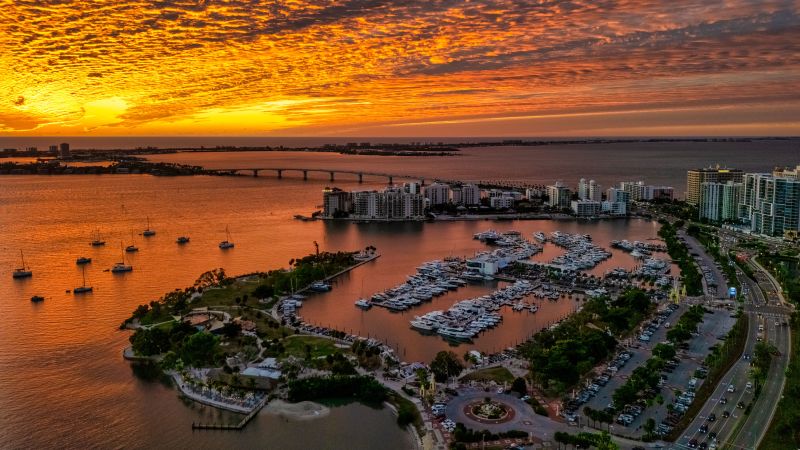
A Cultural Oasis Along the Gulf Coast
This coastal Florida town is world – While Florida is often associated with its sun-soaked beaches, sandy shores, and vibrant coastal life, one city stands out for its unique blend of natural beauty and cultural richness. Sarasota, a mid-sized coastal community with a population of approximately 60,000, has carved a distinct identity as a hub of artistic innovation and sophistication, nestled just an hour south of Tampa. Its reputation as the Sunshine State’s “Cultural Coast” is more than just a label—it’s a testament to the city’s thriving creative scene and historical legacy. For Tammy Hauser, a lifelong arts enthusiast, Sarasota became the perfect destination when she decided to relocate from Minneapolis to the Gulf Coast in 2014. The choice wasn’t made lightly, as Hauser sought a place that combined a vibrant cultural ecosystem with a manageable town size and a lively downtown core.
The Heart of Cultural Innovation
Hauser’s decision was inspired by Sarasota’s reputation for artistic excellence. During a visit to a French bakery, she sat sipping coffee and savored the ambiance of the city, which she described as “a place with so many interesting aspects.” Her call to her daughter marked the beginning of a new chapter, one that would see her embrace a community that nurtures creativity in diverse forms. From theater to dance, music to visual arts, Sarasota offers a dynamic cultural landscape that feels both intimate and expansive. This balance of small-town charm and urban vibrancy is a defining feature of the city, attracting residents and visitors alike.
Sarasota’s cultural fabric is woven into its very foundation. The city’s downtown area, with its historic architecture and modern galleries, serves as a living gallery of artistic expression. Beyond the bustling streets, the proximity to pristine beaches adds to its allure, offering a backdrop of sun, sand, and surf that complements the creative energy. Yet, it’s the city’s cultural institutions that truly set it apart. Among them, the John and Mable Ringling Museum of Art holds a special place, not only as a local landmark but as a symbol of Sarasota’s artistic evolution.
A Legacy of Artistic Excellence
Founded in 1927, the Ringling Museum is a cornerstone of Sarasota’s cultural identity. It was John Ringling, a renowned circus magnate, who transformed the city into a center of artistic and economic growth. Originally a winter retreat for the Ringling family, the estate they built on Sarasota’s waterfront in 1911 became the nucleus of the city’s cultural renaissance. Ringling’s vision extended beyond his personal interests; he established the Ringling Bros. and Barnum & Bailey Circus as the town’s winter headquarters, bringing its grandeur and energy to the region. This move, which shifted the circus’s operations from Connecticut to Florida, helped establish Sarasota as a destination for both entertainment and cultural investment.
Today, the Ringling estate has grown into a sprawling 66-acre complex on Sarasota Bay, housing a collection of art, performance spaces, and historical attractions. The museum itself showcases Baroque and Renaissance masterpieces, including one of North America’s most extensive collections of paintings by Flemish artist Peter Paul Rubens. Adjacent to the art galleries is a pavilion dedicated to studio glass, an Asian art center, and other specialized exhibitions. For those interested in the circus’s history, the estate also features a dedicated museum displaying memorabilia, artistic works, and a meticulously detailed to-scale model of the circus. The Venetian-Gothic mansion Ca’ d’Zan, the couple’s former winter residence, is a striking centerpiece of the complex. Built in 1926, the 36,000-square-foot home boasts intricate painted cypress ceilings and stained-glass windows, reflecting the opulence of the Ringling family’s era.
“When I experienced this work, I realized, in that moment, that this is the kind of thing you would only debut in New York City. That’s the only kind of place where you would see something like this. And here it was in Sarasota, with a crowd that was just lapping it up.”
— Brian Hersh, CEO of the Arts and Cultural Alliance of Sarasota County
Hauser’s move to Sarasota was a response to the city’s cultural depth, which she believed could rival that of larger metropolitan areas. “I found a town that has so many interesting aspects to it. Plus, it’s beautiful, plus it’s on the water, plus it has a downtown,” she recalled. This sentiment is echoed by Hersh, who moved to Sarasota from New York City 18 years ago. He emphasized that the city’s artistic offerings are not only impressive but also unique. “There is absolutely incredible artistic excellence here. Some things you can see in Sarasota that you might not encounter anywhere else, or only in a major metropolitan area,” he noted. This assertion is supported by the array of institutions that call the city home, including the Sarasota Opera, Sarasota Orchestra, and the Asolo Repertory Theatre, which is the only professional theater company on Florida’s Gulf Coast. The city also hosts a contemporary dance company and a black box theater, further diversifying its cultural offerings.
The Sarasota Art Museum, an extension of Ringling College of Art + Design, adds to this rich tapestry. Its 1926 Gothic building and modernist annex provide a physical space for both historical and contemporary art, ensuring that the city remains a vital center for creative exploration. Recently, the city’s chamber music ensemble, ensembleNewSRQ, performed Steve Reich’s “Music for 18 Musicians” at the Sarasota Opera House to commemorate the 50th anniversary of the composition, a milestone that highlighted the city’s ability to host world-class events. Such moments underscore the idea that Sarasota’s cultural scene is not only well-established but also continuously evolving, thanks to the foundation laid by pioneers like John Ringling.
A Fusion of Tradition and Modernity
While the Ringling Museum’s origins are rooted in the past, its influence extends into the present, shaping Sarasota’s artistic trajectory. The estate, once a modest winter home, has transformed into a multifaceted cultural complex that attracts art lovers and performers from across the country. The museum’s collection of Baroque and Renaissance works, including Rubens’ masterpieces, offers a glimpse into the artistic heritage of Europe, while the circus memorabilia and historical exhibits connect the community to its unique history. This blend of tradition and modernity is a hallmark of Sarasota, where historic sites like Ca’ d’Zan coexist with contemporary galleries and performance venues.
Hauser’s perspective on Sarasota’s appeal highlights how the city manages to balance its natural and cultural assets. “It’s not just the beaches—it’s the community, the opportunities, and the artistic environment,” she said. This holistic approach to development has allowed Sarasota to thrive as a place where wealth and sophistication meet creativity. The city’s cultural institutions, many of which were established with Ringling’s vision, continue to attract talent and foster innovation. Whether it’s the Sarasota Opera’s grand performances, the Sarasota Orchestra’s renowned concerts, or the Asolo Repertory Theatre’s intimate productions, the city offers a wide range of experiences that cater to diverse tastes.
Sarasota’s cultural offerings are not limited to established institutions. The city’s arts community is also vibrant and inclusive, with a mix of professional and grassroots initiatives. From street performances to local craft fairs, the creative energy is palpable. This environment has made Sarasota a haven for artists seeking both inspiration and support. As Hersh pointed out, the city’s ability to host high-profile events—such as ensembleNewSRQ’s performance of Reich’s piece—demonstrates its growing influence in the arts. “It’s a place where the arts can flourish without losing their authenticity,” he added. This unique combination of resources and community spirit ensures that Sarasota remains a destination for those who value both natural beauty and cultural depth.
In essence, Sarasota’s appeal lies in its ability to offer more than just a seaside getaway. It’s a city that has cultivated a reputation for artistic innovation, historical significance, and a supportive community. The legacy of John and Mable Ringling continues to shape its cultural landscape, while the efforts of residents like Hauser ensure that the city remains a vibrant and evolving hub. Whether you’re drawn by the art, the music, or the seamless integration of nature and creativity, Sarasota offers a compelling case for why it stands out among Florida’s coastal towns.