Sleeping Through Borders: The Enduring Pull of Overnight Rail
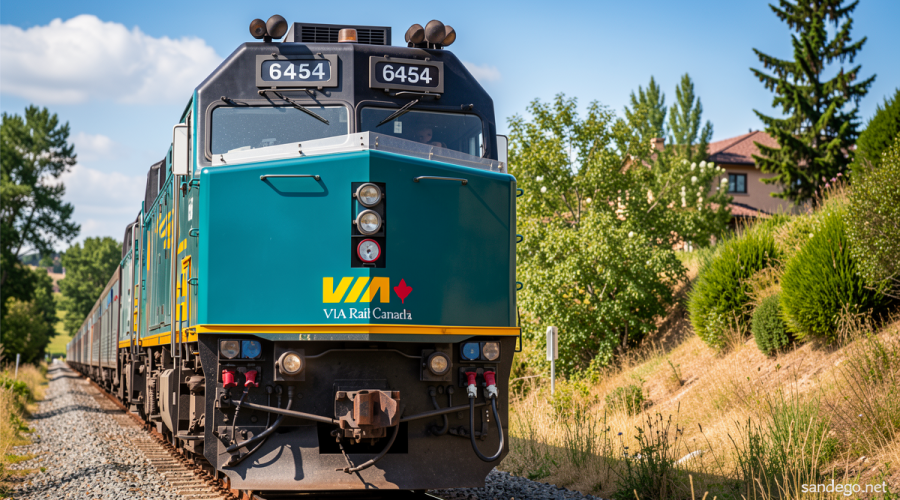
Sandego.net – There is a particular kind of travel fantasy that no airplane can replicate. You buckle into a berth at dusk, watch a city dissolve into darkness through a narrow window, and open your eyes to an entirely different landscape hours later. That is the promise of the sleeper train — a mode of transit that turns the act of sleeping into a form of transportation. Few other vehicles tap so directly into the romantic imagination of long-distance movement, and for rail enthusiasts the appeal is compounded by the sheer geographic spread of available routes: overnight services now operate on six of the world’s seven continents.
The spectrum of experiences is vast. At one end sit opulent rolling hotels that carry passengers toward destinations like Machu Picchu in Peru or the Taj Mahal in India, where the journey itself is curated as a luxury product. At the other end loom the transcontinental giants of North America — the Canadian and American long-haul corridors whose “Vistadome” panorama cars tilt their glass roofs skyward so riders can watch the horizon unobstructed from their seats. Between those poles lie dozens of regional overnight services, each carrying its own character, cuisine, and rhythm.
The cultural footprint of these trains extends well beyond the railfan community. In 2014, chef and television personality Anthony Bourdain boarded the Grand Express, a luxury sleeper service running between Moscow and St. Petersburg, on the eve of the Sochi Winter Olympic Games. His experience was documented for a travel series, and the recent release of a biopic titled Tony has reignited public curiosity about his itineraries and the places he chose to explore.
Rail Arrives in the Arabian Desert
The United Arab Emirates inaugurated its first national passenger rail network earlier this summer. The express line threads across desert terrain and is designed to eventually link 11 cities throughout the region. For a population long defined by car culture, the introduction of intercity trains raised an immediate logistical question: how do passengers get from platform to doorstep? The answer became urgent when summer temperatures routinely exceed 120 °F (49 °C), making the walk from a distant parking lot to a station entrance a genuine health risk. Last-mile connectivity solutions — shuttle buses, ride-hail integration, covered walkways — have therefore become as central to the project’s success as the tracks themselves.
Architecture That Vanishes in Namibia
Farther south, in the vast arid expanses of Namibia, a design philosophy known as “invisible architecture” is gaining traction among hospitality developers. The concept calls for upscale retreats engineered to merge so completely with their surrounding terrain that they are nearly undetectable from a distance. Being difficult to locate is not a flaw in this model; it is the selling point. Exclusivity, in this context, is measured in how many kilometers a guest must travel before the landscape finally reveals a structure.
Meteorites and Meaning at the Vatican Observatory
Perched above Rome, the Vatican Observatory has conducted astronomical research for centuries, occupying a singular position where scientific inquiry and institutional faith share the same roof. Reverend Richard D’Souza, who leads a team there, has described how the group studies meteorite samples and continues the search for extraterrestrial life. The work is methodical and peer-reviewed, yet it unfolds within walls that also house liturgical traditions — a juxtaposition that continues to fascinate both astronomers and theologians.
The Blue Mosque’s Celestial Interior
Completed in 1616, just a few decades after the Vatican Observatory began its operations, Istanbul’s Sultan Ahmed Mosque — universally known as the Blue Mosque — ranks among the world’s most accomplished sacred structures. Its nickname derives from the more than 20,000 Iznik tiles that adorn the upper reaches of its interior. The effect is a permanent wash of celestial blue across the prayer hall’s upper walls, giving the impression that the heavens themselves have been lowered into the room.
Greenville, South Carolina: Uncovering a Waterfall
In a continuing countdown of America’s Best Towns to Visit in 2026, Greenville, South Carolina, holds the No. 3 position. For nearly four decades, the city’s magnificent urban waterfall — a natural feature at the heart of downtown — was buried beneath a four-lane highway bridge. The decision to remove that overpass and restore the falls required both visionary urban planning and sustained political will. Today the area pulses with a creative energy that neighboring cities envy, and an extensive network of pedestrian and bicycle trails stitches together neighborhoods, parks, and cultural attractions.
Earlier entries on the list include Roanoke, Virginia (No. 10), Lawrence, Kansas (No. 9), Iowa City, Iowa (No. 8), Juneau, Alaska (No. 7), Burlington, Vermont (No. 6), Fort Collins, Colorado (No. 5), and Bethlehem, Pennsylvania (No. 4).
Small Incidents, Sharp Lessons
A teenager constructing a sandcastle was pinned beneath shifting sand after the hole he had dug collapsed around him. Rescue crews spent more than an hour digging him free before he could be pulled out unharmed. The incident underscores how quickly loose sand can behave like quicksand under the right conditions.
In a separate matter, a person in Norway received a $5,000 fine after using a foghorn to rouse a sleeping polar bear. Norwegian law prohibits disturbing polar bears unnecessarily, and the penalty reflects the country’s strict wildlife-protection framework, under which even well-intentioned attempts to “wake” a bear can carry serious financial and legal consequences.
A Century of Stars
The Michelin Guide has been awarding stars to restaurants for exactly 100 years. Over that span, the guide’s ratings have shaped dining culture on multiple continents, and the dishes that earned their marks tell a story of culinary ambition, regional tradition, and the slow evolution of what a diner considers worth crossing a city — or a border — to taste.
Related Reading
Frequently Asked Questions
What is The trains that allow you to fall?
The trains that allow you to fall is the main topic of this guide. The article explains the context, practical details, and next steps readers should understand.
Why does The trains that allow you to fall matter?
The trains that allow you to fall matters because readers are looking for a useful answer, not just a short summary. Good content should match search intent and help them decide what to do next.