
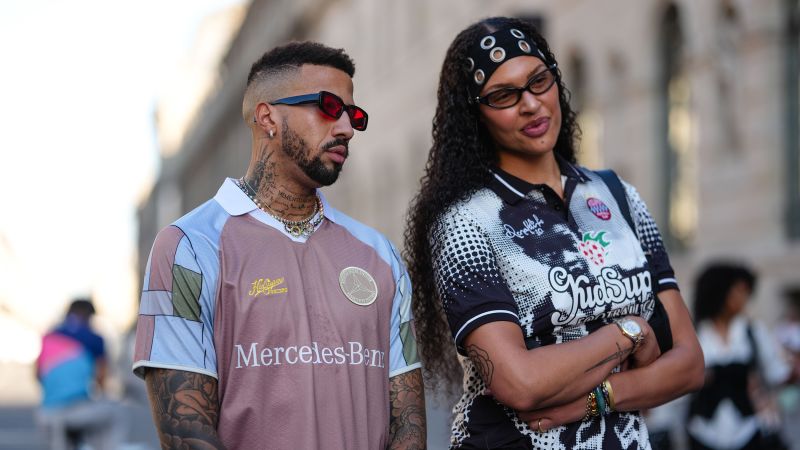
Soccer Jerseys as a Global Fashion Phenomenon
Sandego.net – The World Cup has become more than just a sporting event—it’s a catalyst for a cultural shift, with soccer jerseys stepping out of the locker room and into the spotlight of global fashion. From collaborations with music icons to limited-edition designs from major retailers, the humble jersey is now a versatile symbol of style, transcending its traditional role as a piece of athletic wear. This transformation has sparked both excitement and curiosity, as fans and fashion enthusiasts alike embrace the garment’s potential to reflect personal identity and aesthetic flair.
From Retro Designs to Celeb Collaborations
Olivia Rodrigo, the 18-year-old pop sensation, has joined the ranks of athletes and designers who’ve turned soccer jerseys into statement pieces. Her partnership with Spotify resulted in a now-sold-out throwback FC Barcelona jersey, featuring her signature monogram prominently displayed over the iconic red-and-blue vertical stripes. The design, a nod to retro aesthetics, highlights how soccer’s visual elements can be reimagined for contemporary fashion. Meanwhile, the Gap has introduced two exclusive summer collections inspired by football culture, blending classic sportswear with modern trends. Nike, too, has contributed to the trend with a series of Latin American-themed jerseys, rooted in the rich cultural and emotional history of the game.
Interestingly, the appeal of these jerseys isn’t limited to those who play or watch the sport. Many individuals now wear them for social events, such as concerts or night out gatherings, rather than for matches. For instance, New York City Mayor Zohran Mamdani launched a retro-styled striped jersey to honor the city’s connection to the World Cup. Originally priced at $50 as part of an affordability program, the design has since fetched over $1,000 on luxury resale platforms like Grailed. Unlike traditional team jerseys, Mamdani’s version features a soccer ball emblem instead of a club badge, emphasizing its role as a standalone fashion item rather than a tribute to specific teams.
The Aesthetic Evolution of Soccer Jerseys
Soccer jerseys are no longer confined to the sidelines of matches. Their adaptability in design has allowed them to integrate seamlessly into everyday wardrobes, much like the enduring popularity of polos or rugby stripes. The basic structure—a simple pullover with short or long sleeves and an optional collar—makes them more versatile than basketball or baseball jerseys, which often clash with casual outfits. However, their standout appeal lies in vibrant colors and striking graphics, enabling them to make bold fashion statements.
Markus Ebner, a fashion magazine contributor, captured this evolution with a memorable observation: “That pink Inter Miami jersey, I feel like a cool girl might wear that on the dance floor in New York,” he said. “Not because she’s an Inter Miami fan; because it’s pink and it’s cool.” This sentiment reflects the growing disconnect between the jersey’s original function and its current status as a style-driven garment. The design’s color and pattern, rather than its sports heritage, now dictate its popularity.
Yet, the journey to this point wasn’t immediate. A decade ago, soccer jerseys faced skepticism in the United States, often associated with stereotypes like “footy” or try-hard fandoms. Fashion photographer Phil Oh noted the slow acceptance of the sport, describing how the jersey’s cultural significance has evolved alongside the game itself. “Soccer is the most popular sport globally, but its position in the US has been more of a ‘slow acceptance,’” Oh remarked. This shift has coincided with the jersey’s rise as a mainstream fashion accessory, driven by both cultural change and brand innovation.
Early Adopters and Cultural Shifts
Streetwear brands were among the first to recognize the jersey’s potential beyond sports. In 2005, Supreme teamed up with Umbro to release a soccer jersey that would later become a cult classic. At the time, soccer broadcasts in the US were still niche, airing on specialty channels rather than mainstream networks. This early experimentation laid the groundwork for a broader acceptance of the jersey as a fashion staple. By the early 2010s, figures like Snoop Dogg had further normalized its presence in everyday wear, often sporting jerseys from rival teams without batting an eye.
Celebrities have also played a pivotal role in popularizing the trend. Drake’s 2016 appearance in a pink Juventus away jersey was a bold move, especially for a rapper of his stature. The piece, now a coveted collectible, is still listed on eBay as “Juventus x Drake,” underscoring its crossover appeal. These high-profile endorsements have helped shift perceptions, transforming the jersey from a symbol of die-hard fandom to a stylish, accessible item.
Democratizing Soccer Fashion
The market for soccer jerseys has grown exponentially, with both vintage and modern designs gaining traction. Cult Kits, a vintage soccer jersey retailer, has seen a significant rise in demand, particularly in the US. According to co-founder Josh Warwick, the country has surpassed the UK as the largest market for their products, a testament to the jersey’s widespread appeal. This surge is fueled by a diverse audience, including those who aren’t traditional soccer fans but are drawn to the garment’s aesthetic qualities.
Warwick shared a telling anecdote from a 2022 pop-up event in New York: A group of young women in their early 20s purchased a “really random” neon yellow Blackburn Rovers away shirt from 1996, a relic from an era when the team was part of England’s top-flight league. “That was quite a good illustration of how football shirt culture is diversifying,” he explained. “It’s no longer just about loyalty to a club or love for the sport—it’s about appreciating the design itself.” This trend has also led to the creation of new replicas, with brands like Fanatics and Nike reissuing 1990s classics, while Ebbets Field offers modern gear inspired by the defunct North American Soccer League.
Fast fashion retailers have not been left behind, capitalizing on the trend with affordable options. H&M recently partnered with Lotto to launch a collection that includes a range of jerseys, while ASOS now sells knockoff versions of national team kits. These collaborations make soccer fashion more accessible, further embedding it into everyday culture. As the jersey’s presence in the fashion world expands, it continues to challenge the boundaries between sport and style, proving that the game’s legacy can thrive in unexpected ways.
A New Era of Football Culture
The World Cup season has accelerated this transformation, turning soccer jerseys into a universal fashion statement. Whether worn by fans, celebrities, or casual wearers, the jersey’s design has become the focal point, with its cultural and historical context often secondary. This evolution reflects a broader shift in how people engage with the sport, viewing it not just as a game but as a source of inspiration for self-expression.
As the trend matures, it’s clear that soccer jerseys have found a new identity. No longer just functional attire, they’ve become a canvas for creativity, with brands and designers reinterpreting their heritage in fresh, modern ways. The global demand for these pieces signals a lasting impact, proving that the intersection of sport and style is here to stay. From the retro stripes of NYC to the bold graphics of Latin American collections, the soccer jersey is redefining its place in the world, one stylish statement at a time.
“Soccer jerseys are becoming a bridge between tradition and innovation, much like how other sportswear items have evolved over time,” said Josh Warwick. “They’re not just about the game anymore—they’re about how we see ourselves through fashion.”
With the World Cup serving as a global stage, the soccer jersey’s journey from locker room to runway continues. It’s a reminder that fashion is as much about storytelling as it is about sport, and that the game’s influence extends far beyond the field. As more brands and individuals embrace this trend, the jersey’s role in shaping style and culture is only set to grow.